



15
Mar
Trading automation in 2026: forex and gold guide
Many traders still believe manual trading outperforms automation in 2026, clinging to outdated notions despite overwhelming evidence to the contrary. This misconception costs them consistency and profit potential in forex and gold markets. Automated trading solutions have evolved dramatically, integrating AI-driven decision-making with MetaTrader platforms to deliver superior results. This guide clarifies how industry trends in automated trading are reshaping strategies, what expert advisors truly offer, and how you can leverage automation for measurable gains in your trading portfolio.
Table of Contents
- The Evolution Of Trading Automation In Forex And Gold Markets
- Core Components Of Automated Trading Systems In 2026
- Benefits And Limitations Of Trading Automation In 2026
- Setting Up And Optimizing Trading Automation For Forex And Gold In 2026
- Explore Premium Automated Trading Solutions At FXShop24
Key takeaways
| Point | Details |
|---|---|
| Automation boosts consistency | Expert advisors execute trades with discipline, eliminating emotional bias and human error in forex and gold markets. |
| AI transforms decision-making | Advanced algorithms analyze market patterns faster and more accurately than manual methods in 2026. |
| Setup requires strategic planning | Proper workflow configuration and testing on demo accounts maximize automation success rates. |
| Monitoring remains essential | Automated systems need regular oversight to adapt to changing market conditions and prevent technical failures. |
| Balance benefits with limitations | Understanding both advantages and risks ensures realistic expectations and sustainable trading performance. |
The evolution of trading automation in forex and gold markets
Trading automation has transformed from simple rule-based scripts into sophisticated AI-driven systems that dominate forex and gold markets in 2026. Early automated systems relied on basic technical indicators and fixed parameters, executing trades mechanically without adapting to market shifts. Today’s expert advisors leverage machine learning algorithms that analyze vast datasets, recognize complex patterns, and adjust strategies in real time.
MetaTrader platforms, particularly MT4 and MT5, have become the industry standard for deploying automated trading solutions. These platforms provide robust infrastructure for expert advisors, offering backtesting capabilities, optimization tools, and seamless integration with broker feeds. The combination of accessible technology and powerful computing has democratized automation, making sophisticated strategies available to retail traders who previously lacked institutional resources.
Automated trading has surged due to advances in AI and computing power transforming forex and gold markets by 2026, fundamentally changing how traders approach position management. This evolution has delivered tangible benefits:
- Execution speed measured in milliseconds, capturing opportunities before manual traders react
- Precision in following programmed rules without deviation or second-guessing
- Emotional discipline that prevents fear-based exits or greed-driven overtrading
- Round-the-clock monitoring across multiple currency pairs and gold instruments simultaneously
The shift toward automation reflects a broader recognition that consistent profitability requires systematic approaches rather than discretionary judgment. Human traders excel at strategy development and high-level analysis, while automated systems handle execution with unmatched reliability.
“The integration of AI into trading automation has created a paradigm shift where machines complement human insight rather than replace it, resulting in hybrid approaches that outperform purely manual or fully automated strategies.”
This technological progression has established automation as a core component of professional trading workflows, with expert advisors serving as essential tools for maintaining competitive edge in fast-moving forex and gold markets.
Core components of automated trading systems in 2026
Understanding the building blocks of trading automation helps you select and configure systems that align with your strategy and risk tolerance. Expert advisors form the foundation, acting as software programs that attach to MetaTrader charts and execute trades according to predefined logic. These EAs range from simple moving average crossover systems to complex neural networks that process multiple data streams.
Different types of automated trading systems offer unique features for forex and gold trading optimization, each suited to specific market conditions and trader objectives. The distinction between AI-powered bots and traditional scripted systems significantly impacts performance:
| Feature | AI-Powered Bots | Traditional Scripted Systems |
|---|---|---|
| Adaptability | Learn from market changes and adjust parameters dynamically | Follow fixed rules regardless of market evolution |
| Data Processing | Analyze thousands of variables simultaneously | Limited to predefined indicators and conditions |
| Optimization | Self-optimize through machine learning algorithms | Require manual parameter adjustment and backtesting |
| Complexity | Higher initial setup and computational requirements | Simpler implementation with lower resource needs |
| Performance | Excel in volatile, non-trending markets | Perform best in stable, predictable conditions |
Custom indicators enhance automation by providing specialized market analysis that standard tools cannot deliver. These indicators feed data to expert advisors, enabling more nuanced decision-making based on proprietary calculations or unique market perspectives. Integration workflows connect these components seamlessly, ensuring data flows correctly from price feeds through indicators to execution logic.
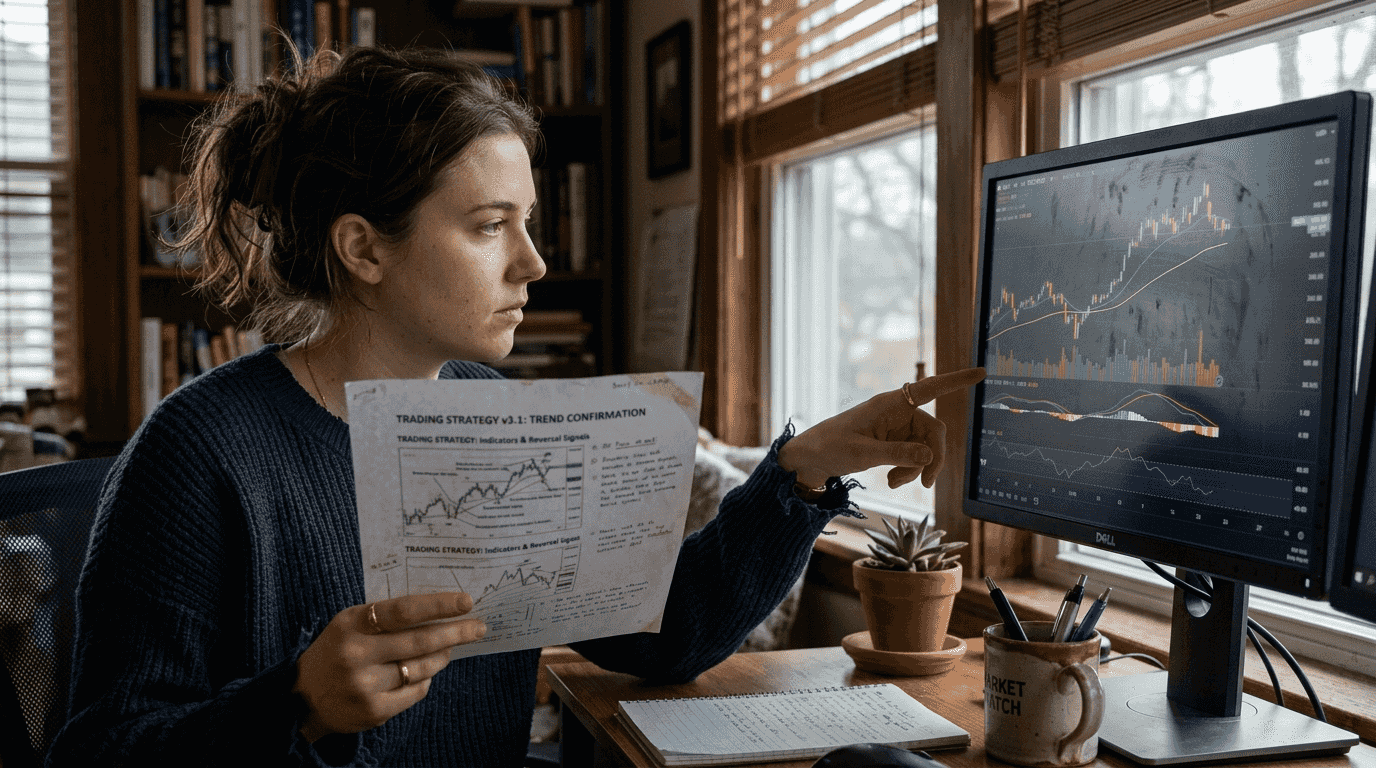
Successful automation requires understanding how these elements interact within your MetaTrader environment. The role of expert advisors in automation extends beyond simple trade execution to encompass position sizing, risk management, and portfolio balancing across multiple instruments.
Pro Tip: Regularly update and backtest expert advisors against recent market data to ensure strategies remain effective as conditions evolve, preventing performance degradation from outdated logic.
The EA trading guide for forex and gold provides detailed implementation steps for traders new to automation, covering installation, configuration, and ongoing maintenance protocols that maximize system reliability.
Benefits and limitations of trading automation in 2026
Automation delivers compelling advantages that explain its widespread adoption among professional traders. Speed stands as the most obvious benefit, with expert advisors executing orders in microseconds compared to the seconds or minutes required for manual entry. This velocity advantage proves critical in forex and gold markets where price movements can invalidate trade setups almost instantly.
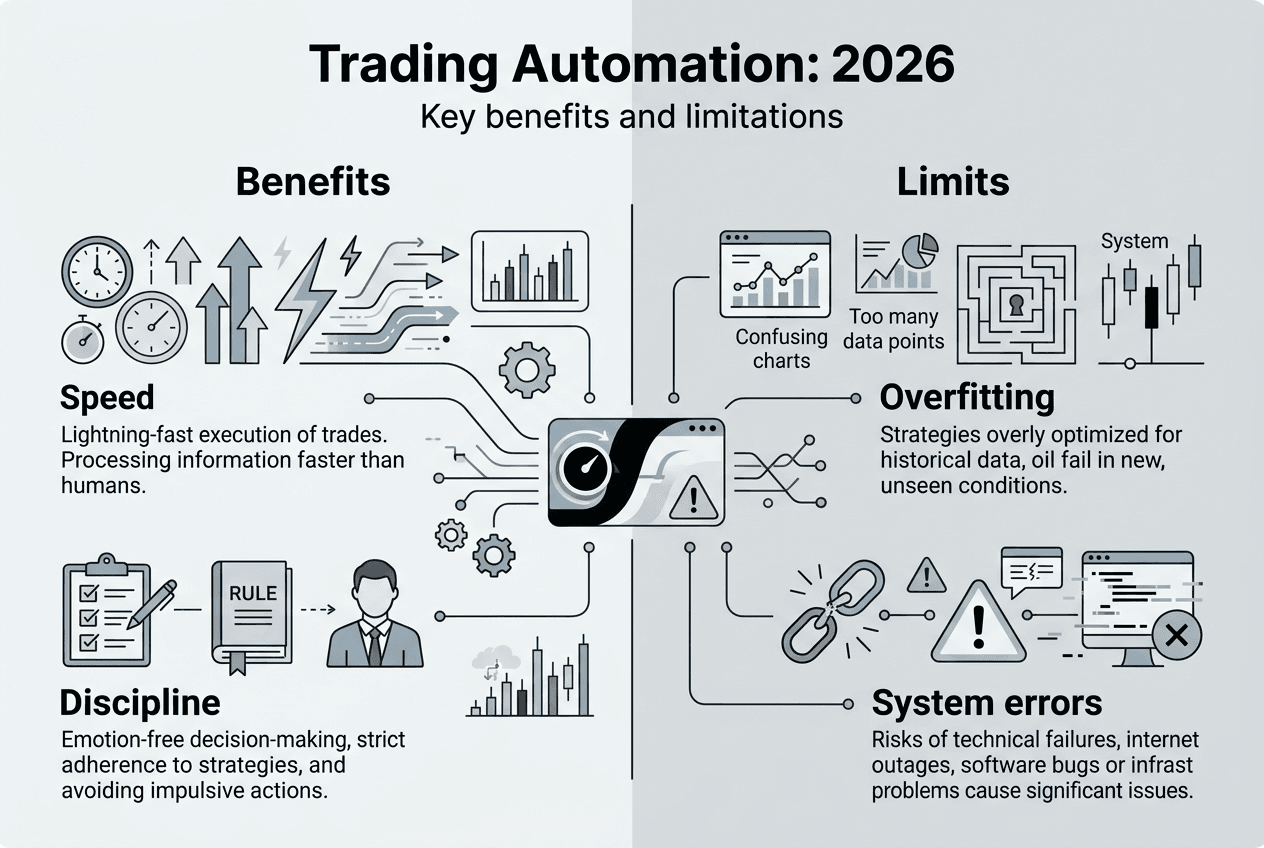
Emotionless execution eliminates the psychological barriers that sabotage manual trading. Fear prevents traders from taking valid setups, while greed encourages position oversizing or holding winners too long. Automated systems follow programmed rules without hesitation or second-guessing, maintaining discipline through volatile periods that shake human conviction.
Additional benefits include:
- 24/7 market monitoring without fatigue or attention lapses
- Simultaneous management of multiple strategies across different timeframes
- Precise adherence to risk parameters and position sizing formulas
- Comprehensive logging of all trades for performance analysis and strategy refinement
However, automation boosts consistency but requires careful oversight to avoid pitfalls like system errors, making blind reliance dangerous. Limitations include dependency on historical patterns that may not predict future price action, particularly during unprecedented market events or regime changes. Black swan events, central bank interventions, or geopolitical shocks can trigger losses that backtesting never anticipated.
Technical vulnerabilities present real risks:
- Internet connectivity failures can prevent order execution or modification during critical moments
- Platform crashes or server outages may leave positions unmanaged
- Broker feed issues can cause expert advisors to receive incorrect price data
- Software bugs or coding errors might trigger unintended trades or miscalculate position sizes
Effective risk management requires monitoring automated systems regularly, reviewing trade logs for anomalies, and maintaining manual override capability. Set maximum daily loss limits within your expert advisor code, implement circuit breakers that pause trading after unusual activity, and maintain sufficient account equity to withstand drawdown periods.
“Successful automation balances the efficiency of algorithmic execution with human oversight that recognizes when market conditions have shifted beyond the system’s design parameters, requiring intervention or temporary shutdown.”
The benefits of expert advisors become fully realized only when traders understand these limitations and implement appropriate safeguards. Evaluating trading robots systematically before live deployment helps identify potential weaknesses and set realistic performance expectations.
Setting up and optimizing trading automation for forex and gold in 2026
Successful automation implementation follows a structured workflow that minimizes risk while maximizing learning opportunities. Begin with careful system selection based on your trading style, risk tolerance, and market focus. Research performance histories, read verified user reviews, and scrutinize backtesting methodology before committing capital.
The workflow for implementing automated forex trading enhances success rates through systematic progression:
- Select expert advisor aligned with your strategy objectives and risk parameters
- Install software on MetaTrader platform following vendor instructions precisely
- Configure initial parameters conservatively, using recommended settings as baseline
- Deploy on demo account to validate functionality without financial risk
- Monitor performance for minimum 30 days, tracking win rate, drawdown, and profit factor
- Optimize parameters based on demo results, testing variations systematically
- Begin live trading with minimum position sizes to verify real-market behavior
- Scale position sizes gradually as confidence and account equity grow
Setup complexity varies significantly across different automation tools:
| Tool Type | Setup Duration | Technical Complexity | Primary Benefit | | — | — | — | | Simple indicator-based EA | 30-60 minutes | Low | Quick deployment, easy troubleshooting | | Multi-strategy portfolio system | 3-5 hours | Medium | Diversification across approaches | | AI-powered adaptive bot | 1-2 days | High | Superior performance in changing markets | | Custom-coded proprietary system | 1-2 weeks | Very high | Complete control over logic and parameters |
Pro Tip: Start with demo accounts to fine-tune parameters before live trading, allowing you to identify optimal settings without risking capital during the learning curve.
Ongoing optimization requires regular performance review and parameter adjustment. Markets evolve, volatility patterns shift, and correlations change, rendering previously effective settings suboptimal. Schedule monthly backtests using recent data, compare current performance against historical benchmarks, and adjust when metrics deteriorate beyond acceptable thresholds.
The forex automation setup workflow emphasizes testing rigor, while the automated trading installation guide provides technical details for MetaTrader configuration. Optimizing trading robots systematically improves results through data-driven parameter refinement rather than guesswork.
The MetaTrader trading robot setup covers platform-specific considerations including VPS hosting for uninterrupted operation, proper symbol selection for forex and gold instruments, and broker compatibility verification to prevent execution issues.
Explore premium automated trading solutions at FXShop24
Now that you understand automation fundamentals and implementation strategies, accessing professional-grade tools becomes your next logical step. FXShop24 specializes in curated expert advisors and trading robots designed specifically for forex and gold markets on MetaTrader platforms. Our catalog features rigorously tested systems with verified performance records, lifetime updates, and comprehensive installation support.
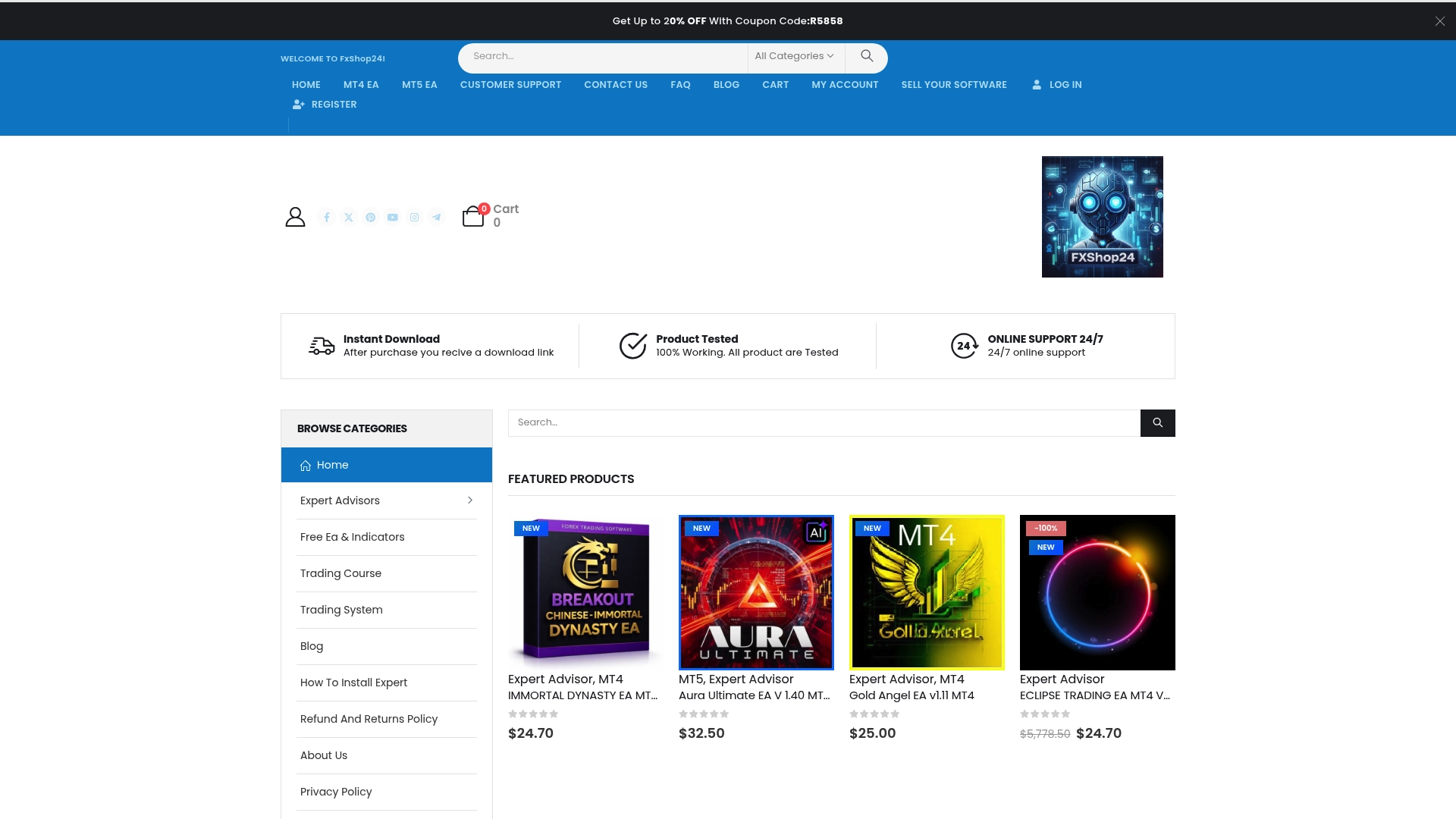
Whether you need types of automated trading systems for diversified strategies or focused solutions for specific market conditions, our platform connects you with tools that match your objectives. Explore detailed performance analytics, access educational resources on maximizing benefits of expert advisors, and leverage our forex automation setup workflow guides to accelerate your transition from manual to automated trading. Our support team assists both retail traders and proprietary firm professionals in selecting and configuring systems that deliver consistent results in 2026’s dynamic markets.
Frequently asked questions
What is trading automation and how does it work in forex and gold?
Trading automation uses software programs called expert advisors to execute trades based on predefined rules without manual intervention. These systems analyze price data, identify setups matching programmed criteria, and place orders automatically on MetaTrader platforms. The EA trading guide for forex and gold explains implementation details for beginners.
How do expert advisors improve trading performance?
Expert advisors execute trades with unwavering discipline according to programmed strategies, eliminating emotional decision-making that undermines manual traders. They process market data faster than humans, capture opportunities within milliseconds, and maintain consistent risk management across all positions. The benefits of expert advisors include 24/7 monitoring and simultaneous management of multiple strategies.
What are the risks of using automated trading systems?
Automation depends on historical data patterns that may fail during unprecedented market events or regime changes. Systems can malfunction due to connectivity issues, platform crashes, or coding errors, potentially leaving positions unmanaged. Technical glitches and over-optimization to past data represent significant risks requiring active monitoring. Evaluating trading robots systematically before deployment helps identify vulnerabilities.
Can beginners effectively use trading automation in 2026?
Beginners can leverage automation successfully with proper education, systematic testing, and conservative initial deployment. Starting with demo accounts allows parameter refinement without financial risk, while gradual position sizing limits exposure during the learning curve. The automated trading installation guide provides step-by-step instructions for new traders implementing their first expert advisors on MetaTrader platforms.