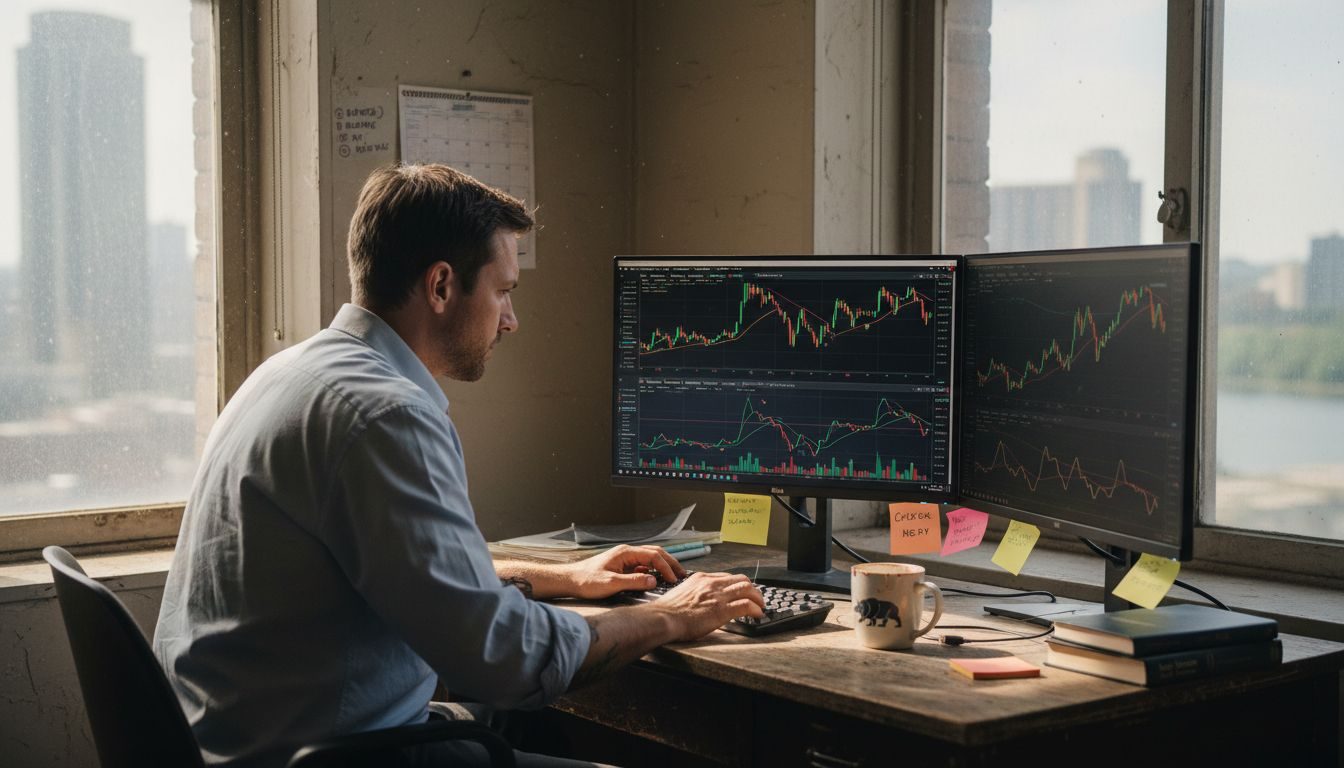
Algorithmic trading now drives about 92 percent of global forex transactions, shifting power from manual decision-making to automated precision. For the american trader and their international peers using MetaTrader, automation has become the key to unlocking reliable, high-profit strategies without emotional pitfalls. This guide unpacks how automated trading works, the essential tools behind it, and the critical steps to safely maximize your forex results using advanced technology.
Sell Forex ProductsTable of Contents
Key Takeaways
| Point | Details |
|---|
| Definition of Forex Automation | Forex automation revolutionizes currency trading, utilizing computer algorithms for trade execution, replacing manual processes with speed and precision. |
| Types of Automated Systems | Automated trading systems range from trend following and scalping to arbitrage, each utilizing unique strategies tailored to market conditions. |
| Benefits for Retail Traders | Traders benefit from increased efficiency and emotional detachment, allowing them to implement complex trading strategies without psychological biases. |
| Compliance and Risk Management | Understanding regulatory requirements and implementing robust risk management is essential for navigating the risks associated with automated trading systems. |
Defining Forex Automation and Core Concepts
Forex automation represents a sophisticated technological approach that transforms traditional currency trading by leveraging computer algorithms to execute trades automatically.
Algorithmic trading dominates approximately 92% of Forex market transactions, demonstrating the profound impact of automated systems on modern financial markets. These advanced systems replace manual trading processes with pre-programmed instructions that analyze market conditions and make trading decisions in milliseconds.At its core,
forex automation utilizes Expert Advisors (EAs) - specialized software programs designed to open, manage, and close trading positions without direct human intervention.
These automated systems enable rapid market analysis using advanced statistical and mathematical models, facilitating complex trading strategies such as high-frequency scalping, grid trading, and volume-based approaches. The fundamental goal is to eliminate emotional decision-making, enhance trade precision, and capitalize on market opportunities faster than human traders can react.The primary components of forex automation include algorithmic trading systems, Expert Advisors, and trading robots that operate across platforms like MetaTrader 4 and MetaTrader 5. These technologies employ various strategies including trend following, statistical arbitrage, and momentum trading. Each strategy is built on sophisticated mathematical models that evaluate multiple market variables simultaneously - including price movements, trading volume, historical patterns, and real-time economic indicators.
Pro tip: When exploring forex automation, start by testing automated strategies on demo accounts to understand their performance without risking actual capital, and gradually transition to smaller live trades as you build confidence in the system’s effectiveness.Types of Automated Forex Trading Systems
Automated forex trading systems represent a sophisticated spectrum of technological approaches designed to execute trades across diverse market conditions. Automated trading strategies encompass multiple strategic classifications, ranging from simple rule-based algorithms to complex high-frequency trading platforms, enabling traders to implement sophisticated market approaches with precision and speed.The primary categories of automated forex trading systems include
trend trading strategies,
channel strategies,
mathematical price models, and
arbitrage algorithms. Each system operates differently, utilizing unique methodologies to generate trading signals and manage risk. For instance, trend trading systems identify and follow market momentum, while channel strategies focus on price movements within established trading ranges. Mathematical price models leverage complex statistical algorithms to predict potential market movements, and arbitrage algorithms exploit price discrepancies across different markets.These automated systems can be further categorized based on their operational characteristics, such as trading frequency, risk management protocols, and specific market timeframes. Some systems specialize in high-frequency scalping, executing multiple trades within minutes, while others focus on longer-term trend following strategies that maintain positions for hours or days. Grid trading and volume-based systems offer additional specialized approaches, allowing traders to implement nuanced market strategies without constant manual intervention.Here is a comparison of common automated forex trading strategies and their typical characteristics:
| Strategy Type | Typical Timeframe | Complexity Level | Main Objective |
|---|
| Trend Following | Hours to days | Moderate | Ride established trends |
| Scalping | Seconds to minutes | High | Profit from tiny moves |
| Arbitrage | Milliseconds | Very High | Exploit price gaps |
| Grid Trading | Hours to weeks | High | Capture range swings |
| Volume-Based | Varies | Moderate | React to volume changes |
Pro tip: Before implementing any automated forex trading system, thoroughly backtest the strategy using historical market data and start with small trade volumes to validate its performance and risk management capabilities.
Expert Advisors (EAs) in MetaTrader platforms represent sophisticated automated trading systems designed to execute trades with precision and speed, transforming how traders interact with financial markets. These powerful software programs operate as intelligent intermediaries between traders and broker servers, analyzing complex market conditions and making instantaneous trading decisions based on predefined algorithmic rules.

The core functionality of
MetaTrader EAs revolves around their ability to continuously monitor market data, including price movements, technical indicators, and trading volumes.
These trading robots vary in complexity, ranging from simple signal generators to advanced systems optimized for specific strategies like scalping, trend following, and hedging. Each EA is essentially a custom-coded script that can interpret market signals, calculate entry and exit points, and execute trades automatically without requiring constant human supervision.Under the hood, MetaTrader EAs utilize sophisticated programming languages like MQL4 and MQL5, which allow traders to create highly customized trading algorithms. These robots can be programmed to implement complex trading strategies that would be challenging or impossible for human traders to execute manually. They can simultaneously track multiple currency pairs, assess risk parameters, manage position sizing, and implement precise money management protocols across different market conditions.
Pro tip: Always thoroughly backtest and validate your MetaTrader Expert Advisor on historical data and run extended periods of forward testing on demo accounts before deploying real capital to ensure consistent performance and risk management.Benefits and Limitations for Retail Traders
Automated trading systems offer retail traders unprecedented advantages in executing sophisticated financial strategies, transforming how individual investors approach forex markets. These technological solutions provide traders with capabilities that were traditionally reserved for institutional investors, enabling more efficient and precise trading approaches that transcend human limitations.
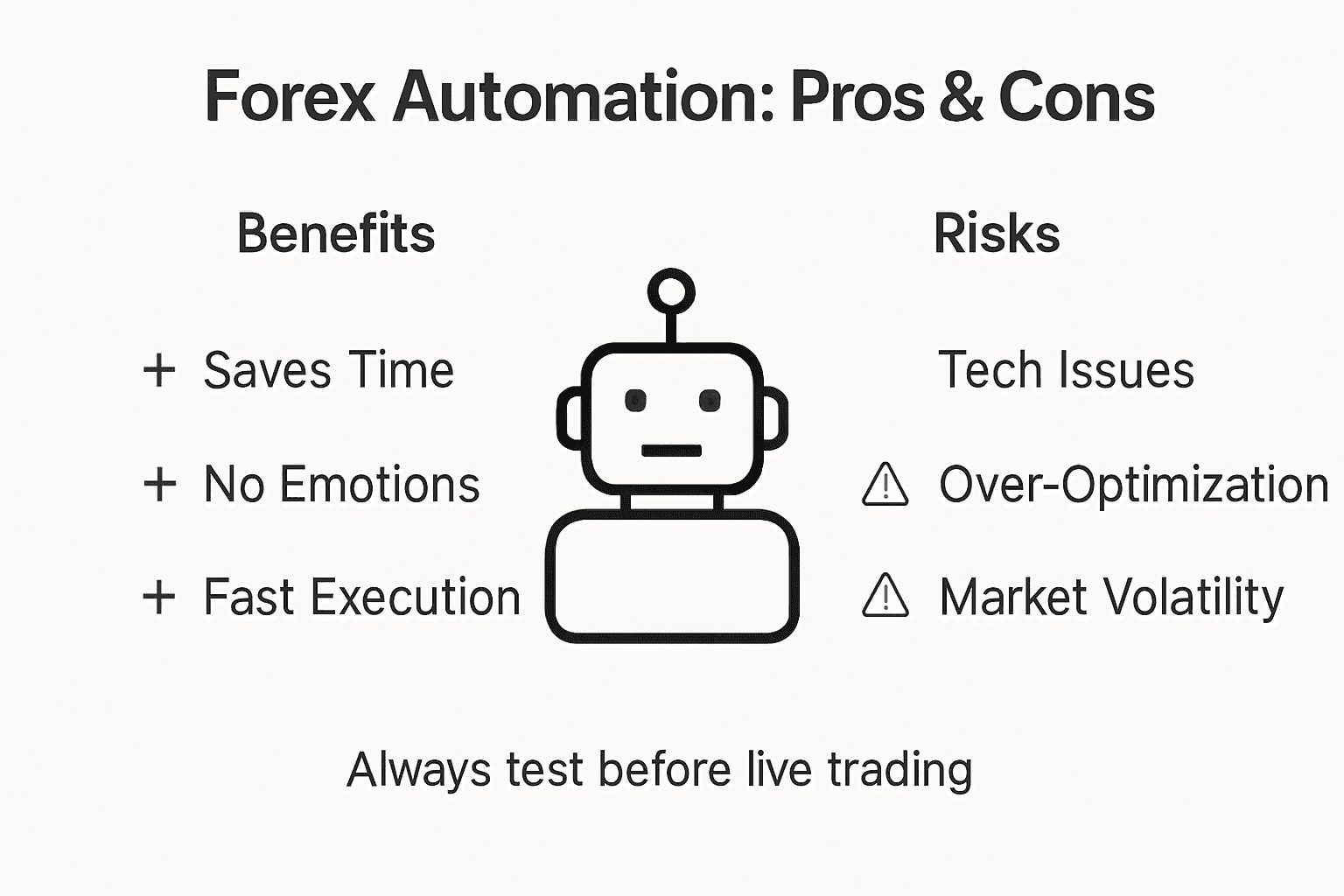
The primary
benefits of automated trading include remarkable efficiency and emotional detachment. These systems enable traders to implement complex strategies with consistent precision, eliminating psychological barriers like fear and greed that often compromise manual trading performance. Automated systems can simultaneously monitor multiple currency pairs, execute trades instantaneously, and maintain strict adherence to predefined risk management protocols. They operate continuously, capitalizing on market opportunities 24/7 without human fatigue or inconsistent decision-making.However, automated trading is not without significant limitations. Retail traders must recognize potential risks such as technological dependencies, software vulnerabilities, and the complex challenge of developing robust algorithms. Mechanical failures, unexpected market conditions, and the potential for over-optimization can undermine system performance. Successful implementation requires continuous monitoring, periodic strategy refinement, and a deep understanding of both technological and financial dynamics. The most effective automated trading approaches blend algorithmic precision with strategic human oversight.
Pro tip: Invest at least 100 hours in backtesting and paper trading before committing real capital to any automated trading system, carefully analyzing performance across different market conditions and economic scenarios.Risks, Safety, and Compliance in Automated Trading
Automated forex trading introduces complex regulatory challenges that require traders to navigate intricate legal and operational frameworks, ensuring market integrity and investor protection. The landscape of automated trading demands rigorous understanding of potential risks, regulatory requirements, and strategic safeguards that protect both individual traders and the broader financial ecosystem.Regulatory bodies like the Commodity Futures Trading Commission (CFTC) and National Futures Association (NFA) have established comprehensive guidelines to mitigate potential risks in automated trading systems.
These regulations emphasize the critical importance of implementing robust risk management protocols, ensuring transparent trading practices, and maintaining stringent cybersecurity measures. Key compliance requirements include mandatory registration, accurate risk disclosures, and adherence to standards that prevent fraudulent activities and protect retail investors from potential technological vulnerabilities.The table below summarizes key compliance requirements for automated forex trading in the U.S.:
| Requirement | Overseen By | Purpose |
|---|
| Registration | CFTC/NFA | Prevent unauthorized activity |
| Accurate Risk Disclosures | CFTC/NFA | Inform and protect investors |
| Robust Cybersecurity Measures | CFTC/NFA | Defend systems from breaches |
| Transparent Trading Practices | CFTC/NFA | Promote fair market behavior |
The primary risks in automated forex trading encompass technological failures, algorithmic errors, market volatility exposure, and potential cybersecurity breaches. Traders must develop comprehensive risk mitigation strategies that include continuous system monitoring, periodic algorithm auditing, and maintaining flexible risk management protocols. Understanding the nuanced interaction between technological capabilities and regulatory frameworks is essential for developing reliable and compliant automated trading systems that can withstand unpredictable market conditions.
Pro tip: Conduct quarterly comprehensive audits of your automated trading systems, verifying algorithmic performance, compliance status, and potential security vulnerabilities to maintain optimal trading reliability and regulatory adherence.Explore FXShop24 Expert Advisors by market and platform
Put the strategies in this guide into context with three products from our Exclusive EAs collection. Open each product page for specifications and current pricing.
Choose a setup you can understand and test. Product selection does not establish future performance or suitability for your account.
Ask us about compatibility and included files →
Frequently Asked Questions
What is forex automation?
Forex automation refers to the use of computer algorithms to execute currency trades automatically, transforming traditional trading by eliminating manual decision-making and enhancing trade speed and precision.
How do Expert Advisors (EAs) work in forex trading?
Expert Advisors are specialized software programs that analyze market conditions and make trading decisions autonomously. They continuously monitor market data and execute trades based on predefined algorithmic rules without human intervention.
What are the benefits of automated forex trading systems?
Automated trading systems offer benefits such as increased efficiency, emotional detachment from trading decisions, and the ability to monitor multiple currency pairs simultaneously, which helps capitalize on market opportunities 24/7.
What risks are associated with forex automation?
Risks include technological failures, algorithmic errors, exposure to market volatility, and potential cybersecurity breaches. It’s essential to implement robust risk management strategies and ensure compliance with regulatory guidelines to mitigate these risks.
Recommended
Article generated by BabyLoveGrowth