
11
Feb
What Is Trading Strategy and Why It Matters
Finding the right trading strategy can feel overwhelming with so many options and approaches available for Forex and Gold markets. For traders using MT4 and MT5, understanding the core principles behind systematic trading strategies is essential for building consistent performance. This guide walks through proven concepts including risk management, market analysis techniques, and the latest advances in automated trading, helping you navigate the choices and customize strategies that fit your goals.
Table of Contents
- Defining Trading Strategy: Key Principles
- Popular Forex and Gold Strategy Types
- How Automated Strategies Operate on MT4/MT5
- Factors in Choosing or Creating a Strategy
- Common Pitfalls and Risk Management Essentials
Key Takeaways
| Point | Details |
|---|---|
| Effective Trading Strategies | A successful trading strategy requires clear rules for entry, exit, risk management, and performance evaluation. |
| Algorithmic Trading | Automated systems enhance execution speed and minimize emotional decision-making, allowing for real-time trading adjustments. |
| Risk Management | Essential techniques include position sizing, stop-loss orders, and maintaining psychological discipline to protect capital. |
| Continuous Adaptation | Regularly review and refine strategies to align with market changes and personal growth in trading knowledge. |
Defining Trading Strategy: Key Principles
A trading strategy represents a systematic approach to identifying and executing financial market opportunities through structured decision-making processes. At its core, a trading strategy transforms raw market data into actionable investment plans by establishing predefined rules for entry, exit, risk management, and portfolio allocation.
The fundamental components of an effective trading strategy encompass several critical elements:
- Risk Management: Defining acceptable loss thresholds and position sizing techniques
- Market Analysis: Utilizing statistical arbitrage techniques to evaluate potential trades
- Performance Metrics: Establishing clear benchmarks for evaluating strategy effectiveness
- Technical Indicators: Selecting appropriate mathematical models to generate trading signals
- Psychological Discipline: Maintaining consistent execution regardless of market volatility
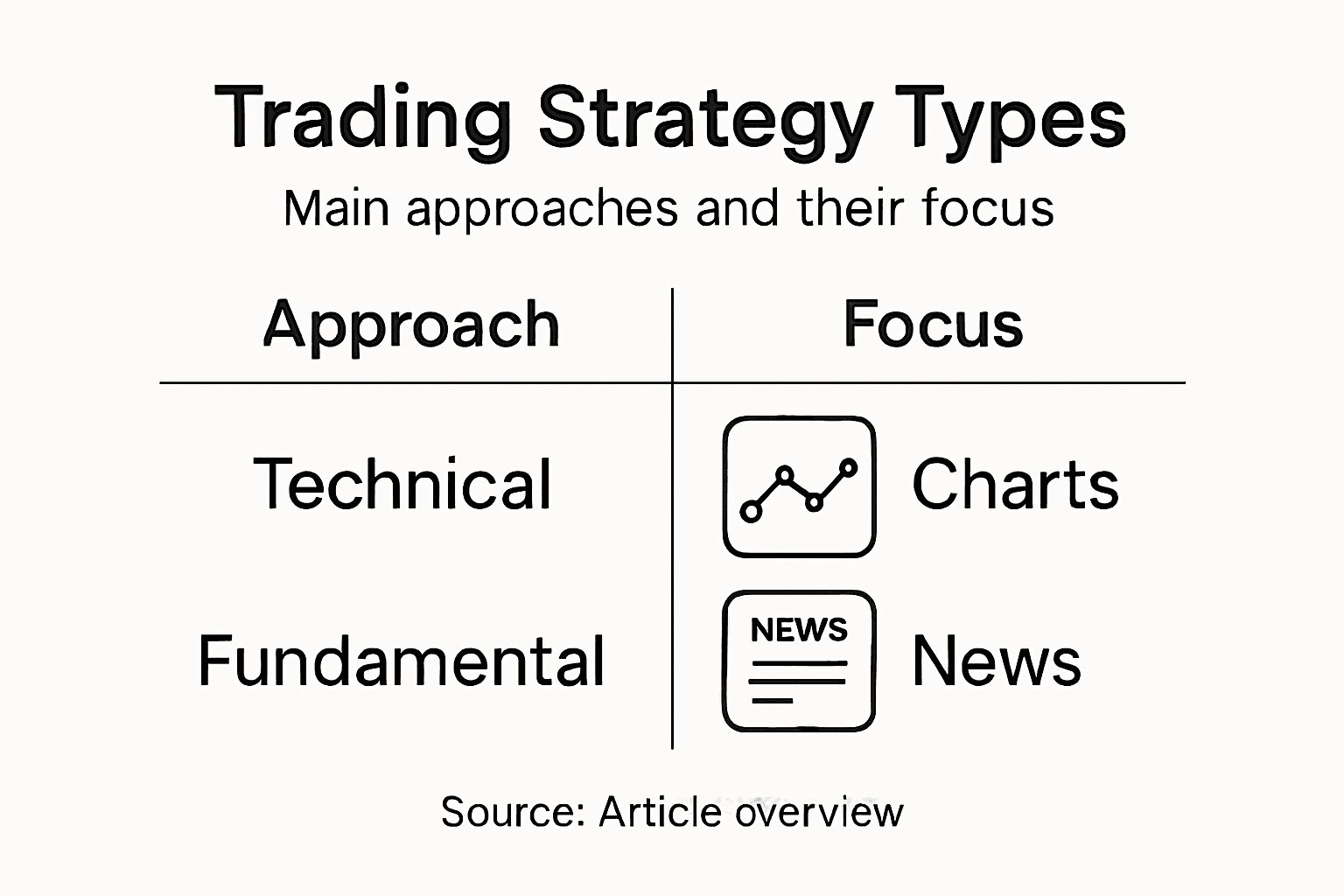
Trading strategies can be broadly classified into several primary approaches, each with unique characteristics and application domains. Technical strategies rely on historical price patterns and mathematical indicators, while fundamental strategies analyze underlying economic and financial metrics. Quantitative approaches leverage advanced statistical models and computational techniques to identify market inefficiencies and potential profit opportunities.
Here’s a concise comparison of major trading strategy types and their distinctive features:
| Approach | Focus | Data Used | Typical Tools |
|---|---|---|---|
| Technical | Price trends | Historical prices | Charts, indicators |
| Fundamental | Economic value | Financial metrics | Reports, news data |
| Quantitative | Market inefficiencies | Statistical data | Algorithms, models |
| Hybrid | Multiple factors | Mixed sources | Custom systems |
Algorithmic trading has revolutionized strategy development by enabling automated execution and real-time decision-making. Modern trading strategies increasingly incorporate machine learning algorithms that can adapt to changing market conditions, providing traders with more sophisticated and responsive investment frameworks.
Pro tip: Develop a comprehensive trading strategy by backtesting your approach using historical data and maintaining rigorous performance documentation.
Popular Forex and Gold Strategy Types
Forex and gold trading strategies represent sophisticated approaches designed to capitalize on market opportunities across different financial instruments. Forex trading strategies encompass diverse methodologies ranging from manual signal interpretation to fully automated algorithmic systems, each tailored to specific trader preferences and market conditions.
Key strategy types for forex and gold trading include:
- Scalping Strategies: Ultra-short-term trades capturing minimal price movements
- Swing Trading: Capturing price movements over several days or weeks
- Trend Following: Identifying and trading with dominant market directional movements
- Range Trading: Exploiting price oscillations between established support and resistance levels
- Breakout Strategies: Entering trades when price breaks through critical technical levels
Gold trading strategies possess unique characteristics driven by the metal’s status as a safe-haven asset. Unlike forex pairs, gold trading requires deeper understanding of macroeconomic indicators, geopolitical tensions, and USD strength. Traders typically employ advanced gold trading approaches that integrate fundamental and technical analysis to predict price movements.

Modern trading increasingly relies on algorithmic and quantitative strategies that leverage machine learning and statistical modeling. These advanced approaches enable traders to develop more robust, data-driven investment frameworks capable of adapting to complex market dynamics and minimizing emotional decision-making.
Pro tip: Develop a multi-strategy approach by combining different trading methodologies and continuously backtesting your strategies against historical market data.
How Automated Strategies Operate on MT4/MT5
Automated trading strategies transform financial markets by enabling computer-driven execution of complex trading instructions across MetaTrader platforms. Automated trading systems leverage Expert Advisors (EAs) to analyze market conditions, execute trades, and manage risk without direct human intervention, providing traders unprecedented precision and efficiency.
Key components of automated trading on MT4/MT5 include:
- Expert Advisors (EAs): Programmed trading robots that execute predefined strategies
- MQL5 Programming Language: Custom scripting environment for developing trading algorithms
- Backtesting Tools: Simulation platforms to evaluate strategy performance historically
- Real-time Market Analysis: Continuous monitoring of price movements and technical indicators
- Risk Management Protocols: Automated position sizing and stop-loss mechanisms
The technical architecture of MT4/MT5 automated trading involves sophisticated algorithmic processes. These platforms enable traders to create, test, and deploy trading robots that can operate continuously, removing emotional bias and ensuring consistent strategy implementation. Auto trading mechanisms eliminate human error by executing trades based on precise mathematical rules and predefined conditions.
This summary highlights common automated trading components and their impact:
| Component | Main Function | Business Impact |
|---|---|---|
| Expert Advisor (EA) | Executes trades automatically | Streamlines execution speed |
| MQL5 Scripts | Customizes algorithms | Enables unique strategy logic |
| Backtesting Engine | Simulates past trades | Improves strategy reliability |
| Real-time Analysis | Monitors markets 24/7 | Reduces manual workload |
Advanced automated strategies increasingly integrate machine learning and artificial intelligence, allowing trading systems to adapt dynamically to changing market conditions. These next-generation approaches enable more responsive and intelligent trading algorithms that can process complex market signals with remarkable speed and accuracy.
Pro tip: Always thoroughly backtest and forward-test your automated trading strategy using multiple market scenarios before deploying real capital.
Factors in Choosing or Creating a Strategy
Developing an effective trading strategy requires careful consideration of multiple interconnected factors that align with individual trading goals and market dynamics. Trading strategy development begins with understanding personal investment objectives, risk tolerance, and available time commitment for market engagement.
Critical factors in strategy selection include:
- Market Ideology: Choosing between chart patterns, fundamental analysis, or smart money concepts
- Trading Style: Matching strategy to available time (day trading, swing trading, position trading)
- Risk Management: Defining precise entry and exit rules with clear risk-reward parameters
- Performance Metrics: Establishing quantifiable benchmarks for strategy evaluation
- Psychological Compatibility: Ensuring the strategy aligns with personal temperament and emotional control
Technical analysis plays a crucial role in strategy development, requiring traders to evaluate multiple dimensions beyond simple price movement. Systematic trading approaches demand rigorous analysis of historical data, market conditions, and potential algorithmic implementations that can minimize behavioral biases and maximize consistent performance.
Successful strategy creation is an iterative process that demands continuous learning and adaptation. Traders must remain flexible, regularly reviewing and adjusting their approaches to maintain alignment with evolving market conditions, technological advancements, and personal growth in market understanding.
Pro tip: Document every trade’s rationale and outcome to build a comprehensive performance database that enables data-driven strategy refinement.
Common Pitfalls and Risk Management Essentials
Successful trading hinges on understanding and mitigating potential risks that can rapidly erode trading capital. Trading risk management fundamentally requires disciplined approaches to controlling potential losses and preserving long-term investment potential.
Key risk management strategies include:
- Position Sizing: Limiting individual trade risk to 1-2% of total trading capital
- Stop-Loss Orders: Establishing predetermined exit points to prevent catastrophic losses
- Diversification: Spreading risk across multiple trading instruments and markets
- Risk-Reward Ratio: Maintaining a minimum 1:2 ratio for potential profits versus potential losses
- Emotional Control: Developing psychological resilience against impulsive trading decisions
Systematic risk control demands comprehensive understanding of multiple risk dimensions. Advanced risk management techniques go beyond simple loss prevention, incorporating sophisticated approaches that analyze market volatility, leverage risks, and potential systemic disruptions that could impact trading performance.
Traders must recognize that risk management is not about eliminating risk entirely, but about creating robust frameworks that allow controlled exposure to market opportunities while protecting core trading capital. This requires continuous education, disciplined execution, and willingness to adapt strategies in response to changing market conditions.
Pro tip: Create a detailed trading journal documenting every trade’s risk parameters, actual performance, and psychological state to systematically improve your risk management approach.
Unlock the Power of Automated Trading Strategies Today
Many traders struggle with consistently executing a well-defined trading strategy that balances risk management and market opportunity. This article highlights the critical challenges such as maintaining psychological discipline, rigorous backtesting, and seamlessly applying complex strategies like algorithmic or hybrid approaches. If you want to overcome these obstacles and harness precision in forex and gold trading, automating your strategy is essential.
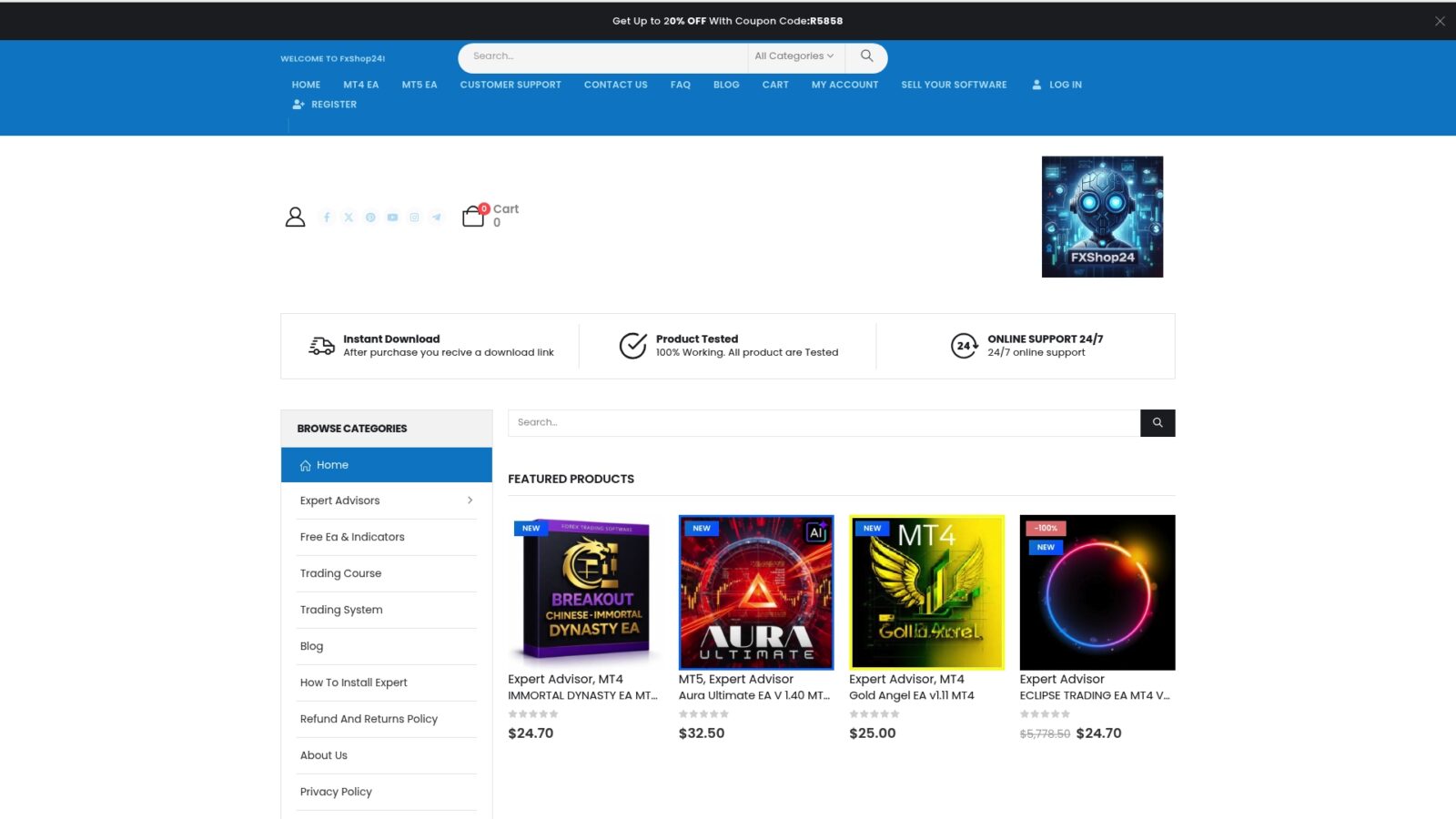
Discover a comprehensive suite of expert advisors, AI-powered trading robots, and premium systems tailored specifically for MetaTrader 4 and MetaTrader 5 at FxShop24. Our products offer tested, prop firm-ready solutions that help you implement systematic risk management and capitalize on market inefficiencies without emotional bias. Start improving your trading performance with software designed to adapt to volatile conditions and deliver real-time market analysis. Don’t wait to turn your trading strategy into a reliable, automated advantage—visit FxShop24 now and explore our full range of automated trading tools and indicators.
Frequently Asked Questions
What is a trading strategy?
A trading strategy is a systematic approach for identifying and executing market opportunities based on defined rules for entry, exit, risk management, and portfolio allocation.
Why is risk management important in a trading strategy?
Risk management is crucial as it defines acceptable loss thresholds and techniques like position sizing to protect a trader’s capital and ensure long-term success in the market.
What are the different types of trading strategies?
Common types of trading strategies include technical strategies, fundamental strategies, quantitative approaches, and hybrid strategies that utilize a combination of methods to identify profitable trades.
How can I create an effective trading strategy?
Creating an effective trading strategy involves defining personal investment goals, understanding market dynamics, utilizing market analysis tools, and continuously backtesting and adjusting the strategy based on evolving conditions.