

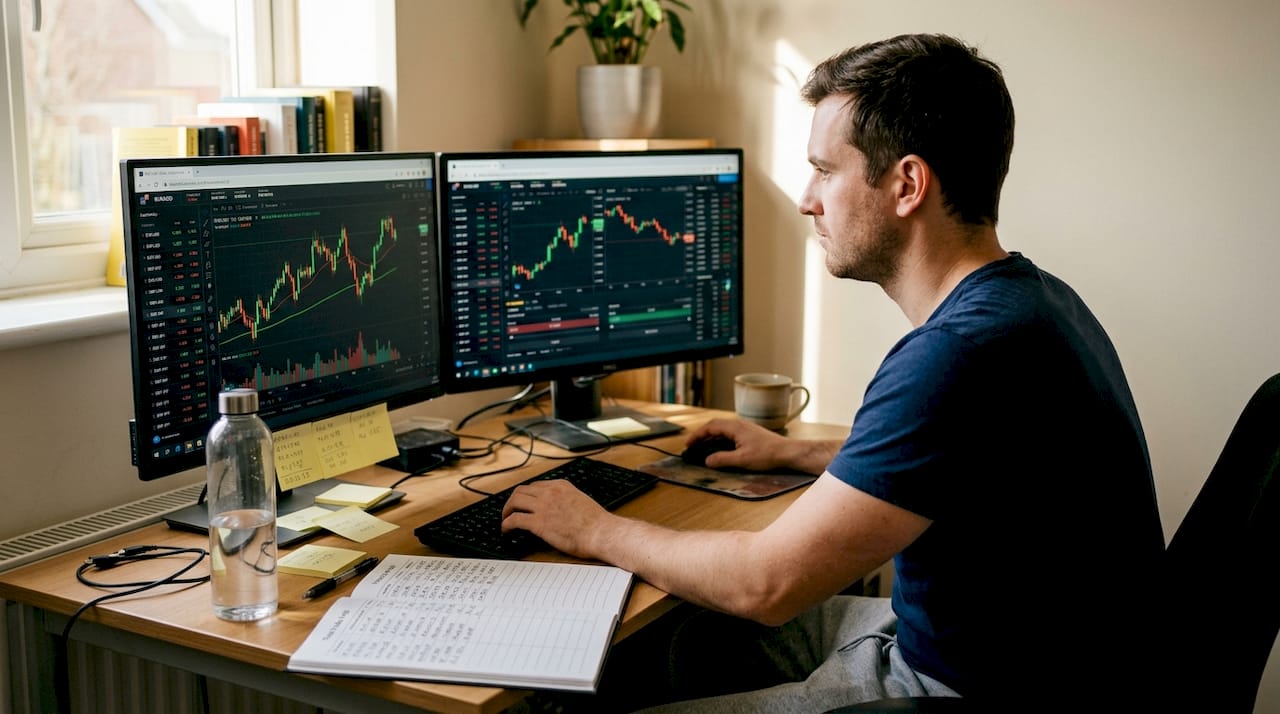
9
Apr
Trading psychology: the real key to forex and gold success
TL;DR:
- Over 62% of poor forex trades stem from emotional triggers like FOMO and overconfidence, not analysis.
- Trading success relies more on discipline and psychology management than on strategy or indicators.
- Building resilience through routines, journaling, and pre-trade checks enhances long-term trading consistency.
Over 62% of poor trade entries among retail forex traders come not from bad analysis, but from emotional triggers like FOMO and overconfidence. That single fact should stop you cold. Most traders spend months refining indicators, backtesting strategies, and hunting for the perfect setup, while the real leak in their account is sitting between their ears. This guide breaks down the major psychological forces that shape your forex and gold trading decisions, shows you exactly where they cost you money, and gives you a practical framework to manage them before they manage you.
Table of Contents
- Why trading psychology matters more than analysis
- The psychological traps traders face and the costs
- How psychological biases impact automated vs manual trading
- Building psychological resilience for consistent performance
- Why most traders undervalue mindset and what actually works
- Boost your trading with expert tools and proven strategies
- Frequently asked questions
Key Takeaways
| Point | Details |
|---|---|
| Mindset over analysis | Most trading failures happen because of poor discipline and emotional decisions, not bad strategies. |
| Common psychological traps | FOMO, overconfidence, and loss aversion are the biggest causes of account drawdowns. |
| Manual vs automated | Even automation can be sabotaged by emotional reactions if you override your plan. |
| Build resilience | A repeatable edge comes from steady routines and mental practices, not just technical skills. |
Why trading psychology matters more than analysis
Here’s a belief most traders hold: if a strategy stops working, the strategy is broken. The uncomfortable truth is that most winning strategies fail because of the person using them, not the logic behind them. You can have a statistically proven edge and still blow your account if you can’t execute it consistently under pressure.
“90% of trader failures aren’t due to analysis, but discipline and execution problems.”
That quote reframes everything. It means the strategy is rarely the problem. The problem is you overriding the strategy when fear spikes, or doubling down when ego takes over after a big win. Understanding why retail traders fail almost always leads back to psychology, not methodology.
Here are the most common ways psychological breakdowns show up in live trading:
- Revenge trading: After a loss, you immediately re-enter the market trying to “win back” what you lost, ignoring your rules entirely.
- Overconfidence after wins: A strong week makes you feel invincible, so you increase position sizes or skip your usual checks.
- Freezing on losses: A trade goes against you and you can’t pull the trigger to cut it, hoping the market will reverse.
- Analysis paralysis: You keep adding indicators and conditions until no setup ever looks clean enough to take.
These behaviors aren’t personality flaws. They’re predictable cognitive patterns that every trader faces. The difference between traders who survive long-term and those who don’t is recognizing these patterns early and having a system to counter them.
Automation doesn’t fully solve this either. Even traders using expert advisors on MT4 or MT5 can undermine their systems by interfering at the wrong moment. Getting the basics of trading psychology right is what separates consistent performers from those who cycle through systems endlessly.
The psychological traps traders face and the costs
With the stakes of trading psychology clear, let’s map out the specific emotional traps that cost traders real money. These aren’t abstract concepts. They show up in your account balance every single month.
| Psychological trap | Common trigger | Typical outcome |
|---|---|---|
| FOMO (fear of missing out) | Seeing a big move already in progress | Late entries, poor risk/reward, fast losses |
| Overconfidence | A string of winning trades | Oversized positions, skipped rules |
| Loss aversion | Any open losing trade | Holding losers too long, cutting winners too soon |
| Revenge trading | A sudden unexpected loss | Impulsive re-entries, account drawdown |
| Paralysis by analysis | Market uncertainty | Missed setups, inaction at key moments |
FOMO causes 62% of poor trade entries, and overconfidence after wins leads directly to oversized positions that one bad trade can wipe out. These aren’t edge cases. They’re the norm for most retail traders.
Here’s what a typical emotional rollercoaster looks like after a big loss:
- Shock: The trade hits your stop loss or goes far beyond it. Your first reaction is disbelief.
- Denial: You tell yourself it was a one-off, the market was manipulated, or your setup was still valid.
- Anger: Frustration builds and you start looking for someone or something to blame.
- Impulsive action: You jump back in without a clear setup, trying to recover the loss quickly.
- Compounding the damage: The revenge trade also loses, making the original loss worse.
- Withdrawal or overhaul: You either step away entirely or start changing your whole strategy unnecessarily.
In gold trading, this cycle is especially dangerous because gold moves fast around news events. A sharp spike can trigger all six stages in under an hour. Getting support for mental recovery after losses is not optional. It’s part of your trading process.

Pro Tip: Keep a trade journal that includes your emotional state before, during, and after every trade. Over time, you’ll see clear patterns in which emotions lead to which mistakes, and that awareness alone is worth more than any indicator.
Even traders using automated systems make trading bot mistakes that trace back to emotional interference, not software errors.
How psychological biases impact automated vs manual trading
Beyond the basic traps, let’s compare how your psychology interacts with both manual and automated trading systems. Many traders assume that switching to an EA removes psychology from the equation. It doesn’t.
| Factor | Manual trading | Automated trading |
|---|---|---|
| Entry decisions | Fully emotion-driven | Rule-based, but setup by a human |
| Exit decisions | Often delayed by fear or greed | Automated, unless manually overridden |
| Drawdown response | Panic, revenge trades | Turning off the EA, changing settings |
| Post-win behavior | Oversize next trade | Increasing lot sizes on the EA settings |
| Consistency | Varies with mood and energy | High, unless interfered with |
Traders become risk-seeking after big wins, regardless of whether they’re trading manually or running an automated system. The bias doesn’t disappear just because a robot is placing the orders.
Here’s what emotional interference with automation actually looks like:
- Turning off the EA mid-drawdown because you’re convinced it’s broken, only to watch it recover without you.
- Increasing lot sizes after a winning streak because you feel the system is “on fire.”
- Switching to a different EA after three losing trades, resetting the performance clock every time.
- Manually closing trades the EA opened because the position feels uncomfortable, even when the logic is sound.
Avoiding common robot mistakes requires the same discipline as avoiding manual trading errors. The tool changes. The human using it doesn’t.
Partial automation is where most traders land, and it still requires emotional discipline. You might let the EA handle entries and exits but manage overall risk parameters yourself. That’s fine, as long as those risk decisions are made when you’re calm and clear-headed, not in the middle of a drawdown. Solid EA money management starts with rules you set before the market opens, not reactions to what’s happening in real time.
Building psychological resilience for consistent performance
Knowing the traps isn’t enough. Here’s how to minimize their impact and protect your profits with a practical, repeatable approach.
Start with a pre-trade mental checklist. Before you place any trade or activate any system, run through these steps:
- Check your emotional baseline: Are you anxious, overconfident, or distracted? If yes, reduce your position size or skip the session.
- Review your rules: Read your trading plan out loud or in writing. This activates your rational thinking rather than your reactive instincts.
- Set your maximum loss for the day: Decide in advance what drawdown will make you stop trading. Commit to it before the market opens.
- Identify your key levels: Know where you’ll enter, where your stop is, and where you’ll take profit before you touch the order screen.
- Log your starting mindset: Write one sentence in your journal about how you feel and what your intention is for the session.
Risk preference shifts are predictable after market shocks, but they can be managed through structured discipline. The traders who survive long drawdowns aren’t emotionless. They just have better systems for managing their reactions.
Daily and weekly habits matter as much as in-the-moment decisions. Review your trades every evening, not to judge yourself, but to identify patterns. Weekly, look at whether your emotional state correlated with your worst trades. Most traders find the same two or three triggers showing up again and again.
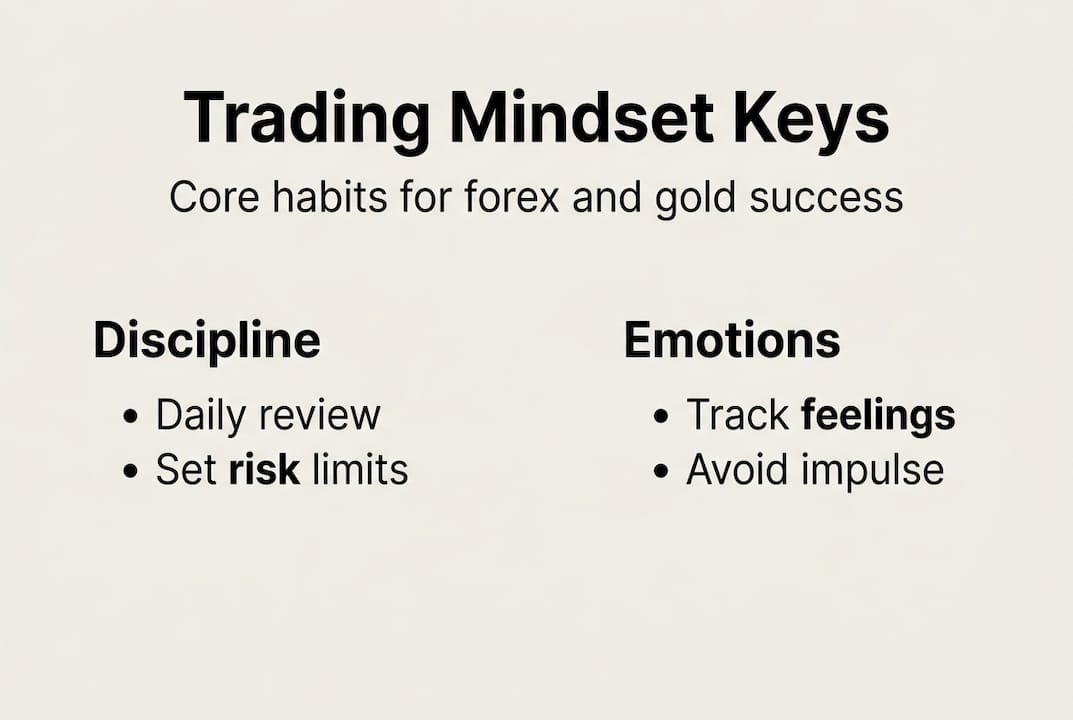
For deeper support, resources on mental resilience for traders can help you build routines that extend beyond the trading screen. Physical exercise, sleep, and structured breaks all directly affect decision quality.
Pro Tip: Use automation for execution, but always set your risk parameters, lot sizes, and daily loss limits when you’re calm, ideally the night before or early morning before the market gets active. Never adjust risk settings during a live drawdown.
Building a forex trading strategy that accounts for your psychological tendencies from the start is far more effective than trying to fix your mindset after a blowup.
Why most traders undervalue mindset and what actually works
Here’s the uncomfortable pattern we see repeatedly: traders spend months hunting for the perfect system, the right indicator combination, or the EA with the best backtest numbers. When results disappoint, they blame the tool and move on to the next one. The cycle repeats indefinitely.
The real issue is that no perfect trading strategy exists. Every system faces losing streaks. Every EA goes through drawdown periods. The traders who come out ahead are the ones who stay disciplined through those periods, not the ones who found a magic formula.
Mindset is undervalued because it doesn’t feel like progress. Backtesting a new strategy feels productive. Sitting with a losing trade and not touching it feels passive. But that second skill is worth ten times more over a trading career. Understanding what a trading strategy actually is helps clarify that execution is always part of the strategy, not separate from it.
The traders who genuinely turn things around aren’t the ones who found a better system. They’re the ones who stopped blaming the system and started tracking their own behavior. That shift in focus is the real edge.
Boost your trading with expert tools and proven strategies
Mastering your mindset is the foundation, but having the right tools makes execution far easier. When your psychology is stable and your rules are clear, automation can handle the mechanical work so your emotional energy goes toward high-level decisions instead of second-guessing every entry.
At FxShop24, you’ll find automated futures trading systems and a full range of trading software for forex and gold markets built for MT4 and MT5. If you’re ready to pair disciplined psychology with a proven execution tool, the FOREX GOLD Investor EA is a strong starting point, designed specifically for gold and forex markets with prop firm compatibility and lifetime updates.
Frequently asked questions
What is trading psychology and why is it important?
Trading psychology refers to how your emotions and mental state influence every trading decision you make. It’s critical because 90% of trader failures trace back to discipline and execution problems, not flawed analysis.
How does FOMO affect forex trading results?
FOMO pushes traders into chasing setups that have already moved, leading to late entries with poor risk/reward ratios. Research shows FOMO drives 62% of poor trade entries in retail forex markets.
Can trading bots eliminate psychological bias?
Bots remove emotion from the execution itself, but traders still interfere by turning off EAs during drawdowns or changing settings after wins. Risk-seeking behavior after wins shows up regardless of whether you’re trading manually or automated.
What’s the fastest way to improve my trading mindset?
Start a trade journal that tracks both your decisions and your emotional state for each session. Consistent routines and disciplined execution over any single strategy will produce better long-term results than chasing the perfect setup.