



16
Sep
Are You Making These Common Forex Robot Mistakes That Kill Your Trading Account?
Ever watch your trading account slowly bleed out while your "profitable" Expert Advisor runs in the background? You're not alone. Most traders jump into automated trading thinking they've found the holy grail, only to discover their forex robot is quietly destroying their capital one trade at a time.
The harsh reality? Over 90% of retail forex robots fail not because the technology is flawed, but because traders make critical mistakes in selection, setup, and management. These aren't small oversights: they're account-killing errors that can wipe out months of profits in a single trading session.
Let's dive into the five most devastating mistakes that separate successful automated traders from those who keep funding their brokers' Christmas bonuses.
Mistake #1: Falling for Marketing Hype Instead of Hard Data
Here's the uncomfortable truth: most forex robots you see advertised are designed to sell, not to trade profitably. Those flashy websites showing "900% returns in 3 months" aren't showcasing legitimate trading systems: they're showcasing masterful marketing.
The biggest red flag? Vendors who won't provide verified third-party results or detailed backtesting data. Real profitable EAs come with transparent performance metrics, including maximum drawdown, win rates across different market conditions, and verified trading statements from independent sources like MyFXBook or FXBlue.
Before purchasing any Expert Advisor, demand answers to these questions:
- What's the maximum historical drawdown?
- How does it perform during major news events?
- What's the average holding time per trade?
- Has it been tested across multiple market conditions?
If the vendor can't provide detailed answers, walk away. Your trading account will thank you.
Mistake #2: Ignoring Risk Management Settings
This one's a killer, literally. Many traders install a forex robot, use the default settings, and assume the EA will handle risk management automatically. Wrong. Most EAs come with aggressive default settings designed to show impressive short-term results in demos, not protect your capital long-term.
The three risk management settings you must customize:
- Lot sizing: Never risk more than 1-2% of your account per trade
- Stop loss levels: Ensure every trade has a defined maximum loss
- Maximum drawdown limits: Set kill switches to stop trading after significant losses
A properly configured EA should never risk more than 10-15% of your account balance during its worst-case scenario. If your robot doesn't have these safeguards built-in, you're essentially gambling with leverage.

Mistake #3: Running Multiple EAs Without Portfolio Diversification
Think running five different forex robots means you're diversified? Think again. Most retail EAs use similar technical indicators and trade the same major pairs during overlapping market sessions. Instead of diversification, you're creating correlation: multiplying your risk while thinking you're spreading it.
True EA diversification means:
- Different trading strategies (scalping vs swing trading)
- Varied market sessions (London vs New York vs Asian)
- Diverse currency pairs (majors, minors, exotics)
- Independent signal sources (price action vs news-based vs sentiment)
Before adding another EA to your portfolio, analyze its correlation with your existing systems. Two robots that both trade EUR/USD breakouts during London open aren't diversification: they're redundancy that amplifies losses during adverse conditions.
Mistake #4: Neglecting Regular Performance Monitoring
Set-and-forget is the fastest way to lose everything. Markets evolve, volatility patterns change, and what worked last quarter might be a capital drain this month. Yet most traders install an EA, see initial profits, and assume the good times will roll forever.
Professional algorithmic traders review their EAs weekly, analyzing:
- Recent win/loss ratios compared to historical averages
- Changes in average trade duration
- Drawdown patterns during different market volatility
- Performance correlation with major economic events
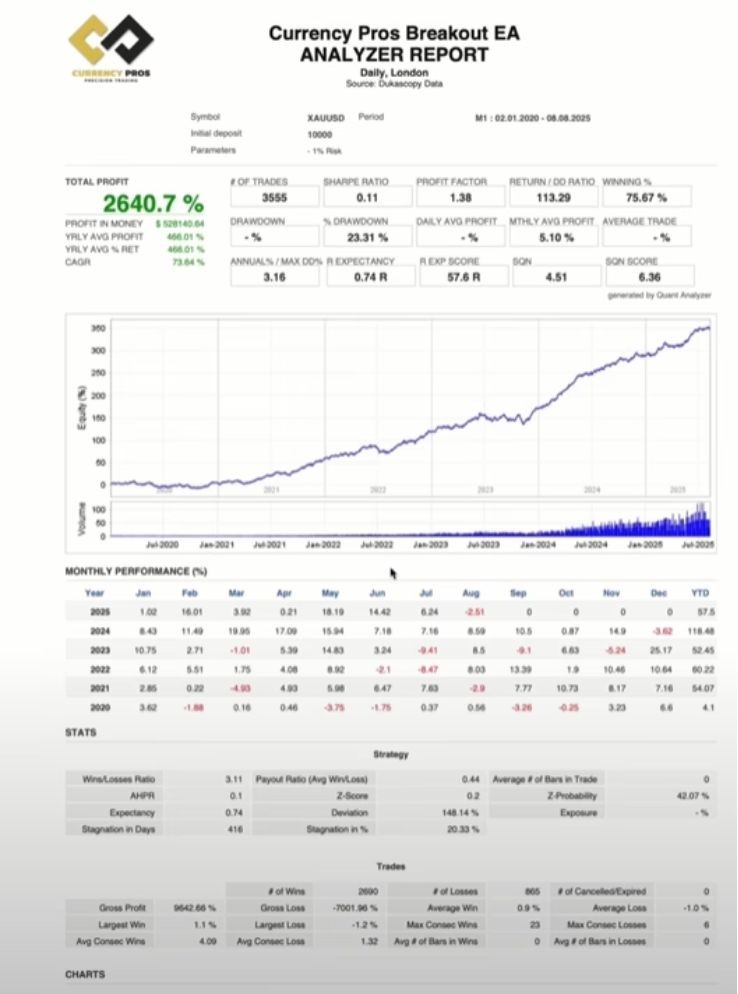
When an EA's performance deviates significantly from its historical norms, it's time to investigate. Market conditions may have shifted beyond the robot's programmed parameters, requiring strategy adjustments or temporary deactivation.
Mistake #5: Insufficient Capital and Unrealistic Expectations
This mistake compounds all the others. Traders with $500 accounts expect to generate $200 monthly income using high-frequency scalping EAs. The math doesn't work: and the psychology makes it worse.
Undercapitalized accounts force traders into:
- Excessive lot sizes to generate meaningful returns
- High-risk EAs that promise quick profits
- Emotional interference when small losses feel significant
- Premature strategy abandonment during normal drawdown periods
Professional automated trading requires sufficient capital to weather the inevitable rough patches. A good rule of thumb: your EA should be profitable even if you halve the recommended lot sizes. This buffer protects against unexpected volatility spikes and gives you emotional space to let your system work.
The Technical Realities Most Vendors Won't Tell You
Beyond psychological mistakes, forex robots face technical challenges that can destroy accounts even when everything else is done correctly:
Data Feed Dependencies: EAs rely on accurate, timely price feeds. Even minor delays or price discrepancies can trigger incorrect trades or missed opportunities. Always test your robot on the same data feed you'll use for live trading.
Server Connectivity Issues: VPS downtime or internet disconnections can prevent EAs from managing open positions or executing stop losses. This is why serious automated traders use redundant systems and monitoring alerts.
Platform Compatibility Problems: An EA optimized for MetaTrader 4 may behave differently on MT5, even if it loads without errors. Always verify your robot works exactly as intended on your specific platform and broker setup.
Building Your Defense Strategy
Protecting your trading capital from these common mistakes requires a systematic approach:
Start with paper trading any new EA for at least 30 days, regardless of backtesting results. Live market conditions reveal issues that historical data can't predict.
Implement position sizing rules that prevent any single EA from risking more than 5% of your account balance. This creates a safety buffer even if multiple systems hit their maximum drawdown simultaneously.
Keep detailed performance logs for each EA, noting not just profits and losses but market conditions, news events, and any manual interventions you make. This data becomes invaluable when evaluating whether to continue, modify, or discontinue a particular system.
Consider exploring our curated selection of prop-firm-approved EAs that have been tested under professional trading conditions.
Your Next Steps
Forex robot trading isn't a guaranteed path to riches, but it's not a guaranteed path to ruin either. The difference lies in approaching automated trading as a business, not a lottery ticket.
Review your current EAs against these five mistakes. If you're making any of them, address those issues before adding new systems or increasing your trading capital. Sometimes the best trade is the one you don't make: and sometimes the best EA is the one you don't buy.
The robots aren't the problem. The approach is. Fix your strategy, and your results will follow.