


12
Nov
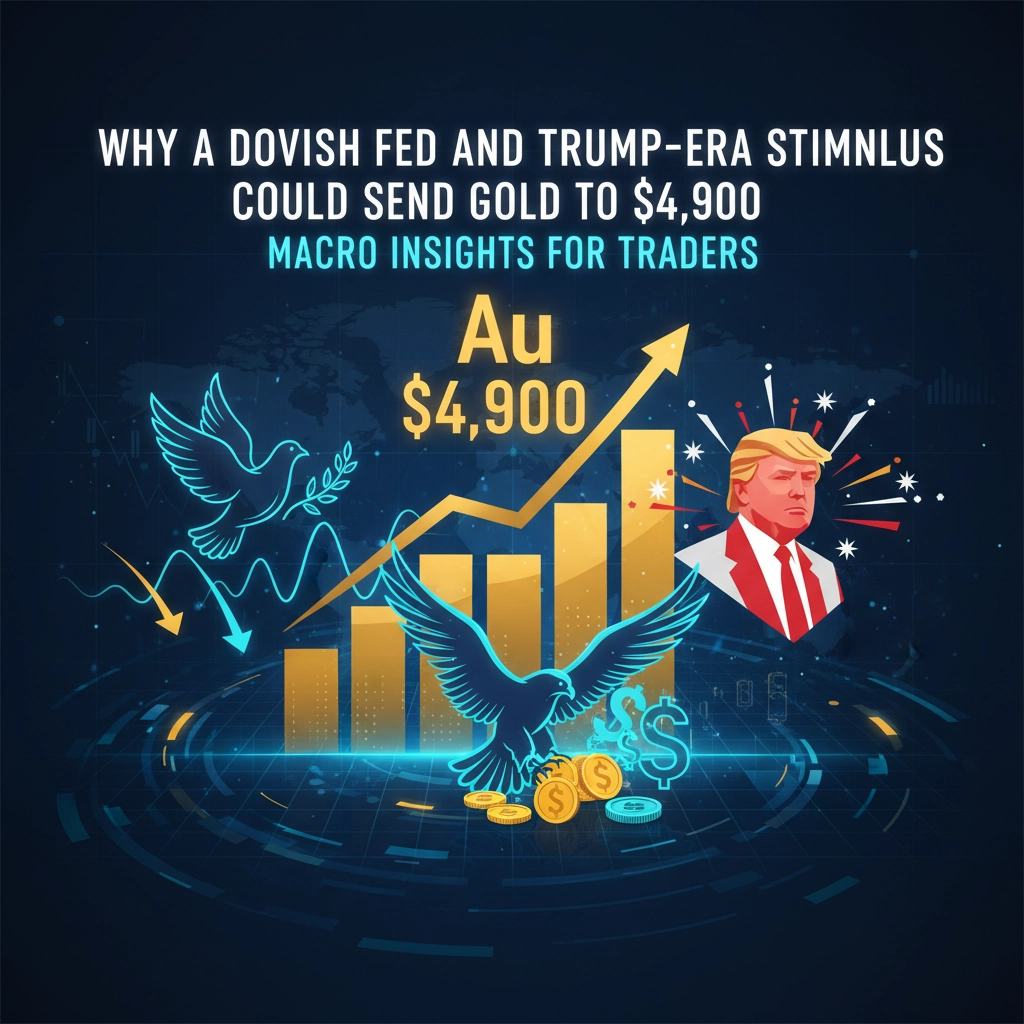
Why A Dovish FED and Trump-Era Stimulus Could Send Gold to $4,900: Macro Insights for Traders
Ever feel like you're trading in the dark while the big money moves are happening right under your nose? While most retail traders obsess over 15-minute charts and scalping strategies, institutional money is positioning for a massive macro shift that could send gold soaring to $4,900 per ounce.
Here's the thing: understanding macro dynamics isn't just for hedge fund managers anymore. If you're trading gold, Bitcoin, or even major forex pairs, these political and monetary shifts will dictate your P&L more than any technical indicator ever could.
The Fed's Dovish Pivot: Jerome Powell's Swan Song
Jerome Powell's term as Fed Chair ends mid-2026, and the writing is already on the wall. With the latest Federal Reserve meeting minutes showing growing concerns about employment weakness, we're witnessing a fundamental shift from inflation-fighting to growth preservation.
The Fed has already delivered two consecutive 25 basis point cuts, bringing rates down to 3.75%-4.00%. But here's where it gets interesting for traders: Trump's incoming administration is expected to appoint a significantly more dovish successor who will aggressively pursue rate cuts.
The math is simple:
- Current inflation running around 3% (forget the Fed's 2% fantasy)
- Expected Fed funds rate: pushed toward 2% or lower
- Real yield = Interest rate minus inflation = negative territory
When real yields go negative, holding dollars becomes a guaranteed way to lose purchasing power. Smart money doesn't sit around losing value: it flows into hard assets.
Trump Stimulus: "Dividends" or Inflation Fuel?
Whether Trump calls them stimulus checks or "citizen dividends," the economic impact remains the same: massive fiscal injection into an already overheated economy. Reports suggest $2,000 payments to roughly 85% of Americans, which translates to approximately $500 billion in direct consumer spending.
This isn't just political theater: it's monetary rocket fuel. Every dollar of stimulus that hits consumer bank accounts gets spent, creating demand-pull inflation that forces the Fed into an impossible position: raise rates and crash the economy, or keep them low and let inflation run hot.
Guess which option a dovish Fed chair will choose?
The genius of this setup is that it creates a feedback loop. Stimulus drives inflation higher, which makes real yields more negative, which drives more money into gold and other hard assets. It's a trade that feeds itself.
Dollar Debasement: The Silent Wealth Transfer
Here's what mainstream financial media won't tell you: the U.S. dollar is being systematically weakened through policy design, not accident. With national debt exceeding $36 trillion and annual interest payments approaching $1 trillion, the government has two choices: default or inflate the debt away.
They're choosing inflation.
Lower interest rates combined with fiscal stimulus create the perfect storm for dollar weakness. For forex traders, this means:
- XAUUSD trending higher as gold becomes the preferred store of value
- DXY breaking key support levels as real yields turn negative
- Emerging market currencies gaining strength against a debased dollar
The currency weakness isn't a side effect: it's the strategy. A weaker dollar makes U.S. exports more competitive while inflating away the massive debt burden.

Gold's Mathematical Path to $4,900
The $4,900 gold target isn't pulled from thin air: it's based on historical precedent and monetary dynamics. During the 1970s stagflation period, gold rose from $35 to over $800 per ounce as real yields went deeply negative.
Today's setup is even more extreme:
- Debt-to-GDP ratios far exceed 1970s levels
- Money supply expansion unprecedented in peacetime
- Global central bank coordination ensures competitive debasement
- Geopolitical tensions driving safe-haven demand
Using the 1970s playbook adjusted for current monetary base expansion, gold at $4,900 represents fair value in a world of negative real yields and persistent 3-4% inflation.
The timeline? Raphael Bostic's exit from the Atlanta Fed removes another hawkish voice, giving Trump a clear path to reshape monetary policy by late 2026. If history rhymes, we could see gold approach these levels within 18-24 months.
Bitcoin and Stocks: The Parallel Plays
While gold takes center stage as the "original hedge against government irresponsibility," Bitcoin and equities offer parallel opportunities:
Bitcoin benefits from the same negative real yield environment while attracting younger institutional money. The digital gold narrative strengthens as traditional monetary policy loses credibility.
S&P 500 companies with hard assets, international exposure, and pricing power thrive in inflationary environments. Real assets disguised as stock certificates become inflation hedges.
But here's the key insight: gold leads, others follow. When institutional money rotates into hard assets, gold moves first because it's the most liquid store of value. Smart traders position in gold first, then layer in Bitcoin and selective equities.
Trading the Macro Shift: Practical EA Strategies
Understanding the macro picture is worthless without execution. Here's how sophisticated traders are positioning for this shift using automated strategies:
Gold EA Strategies:
- Trend-following systems that ride the multi-month uptrend in XAUUSD
- Breakout EAs designed to capture momentum moves above key resistance levels
- Mean reversion algorithms for tactical entries during pullbacks
For traders looking to automate this thesis, consider Expert Advisors specifically designed for precious metals volatility. The Alpha Scalper Pro EA Gold Expert Advisor for MetaTrader 5 is engineered for exactly these market conditions.
Bitcoin EA Approaches: BTCUSD benefits from similar macro dynamics but with higher volatility. Automated systems can capture the explosive moves that manual traders often miss. The key is using EAs that can handle Bitcoin's unique price behavior while riding the underlying trend higher.
Risk Management: The biggest mistake traders make in macro trends is overleveraging. These moves take months to play out, not hours. Use position sizing that allows you to ride through inevitable pullbacks without getting stopped out of the bigger picture.

Political Timeline: Key Dates for Traders
Mid-2026: Powell's term expires, new dovish Fed Chair appointed Q4 2025-Q1 2026: Major stimulus package likely approved 2026-2027: Full implementation of new monetary regime
The beauty of this setup is the timeline gives you months to position properly. This isn't a day trading opportunity: it's a structural shift that rewards patient positioning over quick scalps.
Why Most Traders Will Miss This Move
The biggest macro moves happen slowly, then all at once. Most retail traders will dismiss this as "too slow" or "too boring" compared to scalping 5-minute charts. They'll keep chasing patterns and indicators while missing the trade of the decade.
Institutional money is already positioning. Central banks are buying gold at record pace. Smart money is rotating out of bonds and into real assets.
The question isn't whether this will happen: it's whether you'll be positioned when it does.
Ready to Trade the Macro Shift?
The confluence of dovish Fed policy, Trump-era stimulus, and dollar debasement creates the perfect environment for gold's run to $4,900. But understanding the thesis is only half the battle: execution determines results.
Whether you're looking for gold EAs, Bitcoin automation, or comprehensive trading strategies that can capitalize on this multi-year trend, the tools exist to position yourself properly.
Don't let the trade of the decade pass you by because you were too focused on the trees to see the forest. The macro picture is clear, the timeline is set, and the tools are available.
The only question left: are you positioned for what's coming?