


7
Feb
What Is Gold Trading and Why It Matters
Trading gold offers far more than simple buy and sell decisions for retail forex traders. In a constantly active market that connects participants from every country and time zone, understanding the core principles behind gold trading is crucial for those seeking consistent returns with automated strategies. Whether using MetaTrader platforms or advanced EAs, mastering the foundations of liquidity, price transparency, and risk management in global gold trading dynamics gives you a real edge in a complex financial ecosystem.
Table of Contents
- Gold Trading Defined: Core Principles Explained
- Key Ways to Trade Gold Today
- How Automated Gold Trading Works
- Major Risks and Common Pitfalls
- Comparing Gold Trading With Alternatives
Key Takeaways
| Point | Details |
|---|---|
| Importance of Diversification | Combining multiple gold trading strategies can enhance portfolio stability and performance. |
| Market Awareness | Stay informed about geopolitical events and central bank policies as they heavily influence gold prices. |
| Automated Trading Benefits | Leveraging automated trading technologies can provide speed and precision in executing trades. |
| Understanding Risk Factors | Familiarize yourself with the unique risks associated with gold trading to develop effective risk management strategies. |
Gold Trading Defined: Core Principles Explained
Gold trading represents a sophisticated global financial activity where investors buy and sell gold as a strategic asset across multiple markets. This complex ecosystem involves trading gold through various instruments including physical bullion, futures contracts, exchange-traded funds (ETFs), and derivatives. Strategic global asset trading requires understanding fundamental market dynamics and operational principles.
The gold trading landscape encompasses several key participant categories that drive market interactions:
- Physical Traders: Miners, refiners, and jewelry manufacturers
- Financial Institutions: Banks, hedge funds, and investment firms
- Individual Investors: Retail traders seeking portfolio diversification
- Speculative Traders: Professionals executing short-term trading strategies
Gold markets operate on core principles that distinguish them from other financial instruments. These foundational elements include:
- Liquidity across global exchanges
- Price transparency and continuous market access
- Risk management through hedging mechanisms
- Capital preservation during economic uncertainties
- Inflation protection through tangible asset ownership
Traders engage with gold through multiple sophisticated mechanisms, each offering unique advantages. Futures contracts allow standardized trading with predefined quantities and delivery dates, while spot markets enable immediate transactions based on current pricing. Exchange-traded funds provide exposure without physical ownership, representing a modern approach to gold investment.
Gold trading is not merely a transaction, but a strategic financial decision involving complex global economic interactions.
Pro tip: Always monitor geopolitical events and central bank policies, as these significantly influence gold price movements and trading opportunities.
Key Ways to Trade Gold Today
Gold trading has evolved dramatically, offering investors multiple sophisticated strategies to participate in this dynamic market. Digital trading platforms and strategies now provide unprecedented access and flexibility for traders worldwide. Modern investors can choose from several primary methods to engage with gold as a financial instrument.
The primary gold trading methods include:
- Physical Gold: Bullion bars and coins
- Gold ETFs: Exchange-traded funds tracking gold prices
- Gold Futures Contracts: Standardized agreements for future gold delivery
- Gold Mining Stocks: Shares in companies extracting gold
- Gold Derivatives: Complex financial instruments linked to gold value
- Digital Gold Trading Platforms: Online exchanges enabling instant transactions
Each trading method offers unique advantages and risk profiles. Physical gold provides tangible asset ownership, while futures contracts enable speculative trading without holding the actual metal. Exchange-traded funds represent a convenient middle ground, allowing investors to gain gold exposure without managing physical storage or security concerns.

Here’s a quick comparison of the main gold trading methods and their key investor considerations:
| Method | Capital Requirements | Typical Risk Level | Investor Control |
|---|---|---|---|
| Physical Gold | High initial outlay | Low to moderate | Direct asset ownership |
| Gold ETFs | Moderate investment | Moderate | Indirect, traded on exchanges |
| Gold Futures Contracts | Margin-based, variable | High (leverage risk) | Requires active management |
| Gold Mining Stocks | Variable (stock price) | Tied to company/factors | Dependent on firm performance |
| Gold Derivatives | Wide range | High (complexity, leverage) | Less direct, complex structures |
| Digital Trading Platforms | Low entry threshold | Variable (depends on strategy) | High automation potential |
Automated trading technologies have revolutionized gold market participation. Advanced algorithmic strategies now enable traders to execute complex trading plans with minimal human intervention. Automated trading mechanisms can rapidly analyze market conditions, identify potential opportunities, and execute trades across multiple global exchanges.
Successful gold trading requires understanding market dynamics, risk management, and technological capabilities.
Pro tip: Diversify your gold trading approach by combining multiple strategies and continuously educating yourself about global economic trends that impact gold pricing.
How Automated Gold Trading Works
Automated gold trading represents a sophisticated technological approach to financial markets, leveraging advanced computational strategies to execute trades with unprecedented speed and precision. Electronic trading systems connect global markets, enabling instantaneous transactions and real-time price analysis across multiple trading venues.
The core components of automated gold trading include:
- Algorithmic Engines: Advanced software analyzing market conditions
- Machine Learning Models: AI systems predicting price movements
- High-Speed Execution Platforms: Rapid trade implementation technologies
- Real-Time Data Feeds: Continuous market information streams
- Risk Management Protocols: Automated safeguards against potential losses
Modern automated trading systems utilize complex algorithms that can simultaneously monitor multiple market indicators. These sophisticated programs can execute trades within microseconds, analyzing thousands of data points including geopolitical events, currency fluctuations, and historical price patterns. The computational power enables traders to capitalize on microscopic price differentials that would be impossible to detect through manual trading.
Artificial intelligence has dramatically transformed gold trading strategies. Machine learning models can now adapt to changing market conditions, continuously refining their trading parameters based on real-world performance. Advanced AI trading mechanisms enable unprecedented levels of market responsiveness, allowing traders to implement complex, multi-layered trading strategies with minimal human intervention.
Automated gold trading bridges the gap between human intelligence and computational efficiency, creating a new paradigm of financial market participation.
Pro tip: Develop a comprehensive understanding of your automated trading system’s parameters and continuously monitor its performance to ensure optimal configuration.
Major Risks and Common Pitfalls
Gold trading involves complex financial risks that can significantly impact investor outcomes. Significant investment risks require careful navigation and comprehensive understanding of potential market challenges. Successful traders must develop sophisticated risk management strategies to protect their capital and minimize potential losses.
The primary risks in gold trading include:
- Price Volatility: Sudden and unpredictable market fluctuations
- Counterparty Risk: Potential default in derivative transactions
- Storage Challenges: Physical gold security and insurance costs
- Liquidity Constraints: Difficulty converting gold assets quickly
- Fraudulent Schemes: Unauthorized or misleading investment opportunities
Speculative trading introduces additional layers of complexity and potential financial exposure. Investors frequently encounter challenges related to leverage, where borrowed funds can amplify both potential gains and substantial losses. Understanding the intricate mechanics of margin trading and potential downside scenarios becomes crucial for maintaining financial stability.
Fraudulent activities represent another significant risk in the gold trading ecosystem. Comprehensive fraud prevention strategies are essential for protecting investors from predatory schemes. Unscrupulous dealers may exploit inexperienced traders through high-pressure sales tactics, unrealistic return promises, and complex financial instruments designed to obscure true market risks.
Successful gold trading demands constant vigilance, continuous education, and disciplined risk management approaches.
Pro tip: Always verify dealer credentials, understand all transaction costs, and never invest more than you can afford to lose in speculative gold markets.
Comparing Gold Trading With Alternatives
Investors exploring financial markets face complex decisions when comparing gold trading with alternative investment strategies. Digital asset investment landscape reveals significant differences in risk profiles, market behaviors, and potential returns across various asset classes. Understanding these nuanced distinctions becomes crucial for making informed investment decisions.
Key comparative attributes include:
- Volatility Levels:
- Gold: Moderate, stable price movements
- Stocks: High variability
- Cryptocurrencies: Extreme price fluctuations
- Regulatory Environment:
- Gold: Established, transparent frameworks
- Stocks: Heavily regulated
- Cryptocurrencies: Inconsistent global regulations
- Liquidity Characteristics:
- Gold: Consistent global market
- Stocks: High trading volumes
- Cryptocurrencies: Varying market depth
Gold distinguishes itself through unique investment characteristics that set it apart from conventional financial instruments. Unlike stocks, which generate dividends, or cryptocurrencies, which represent speculative digital assets, gold maintains intrinsic value and serves as a reliable store of wealth. Global asset trading strategies demonstrate gold’s consistent performance during economic uncertainties, making it an attractive portfolio diversification tool.
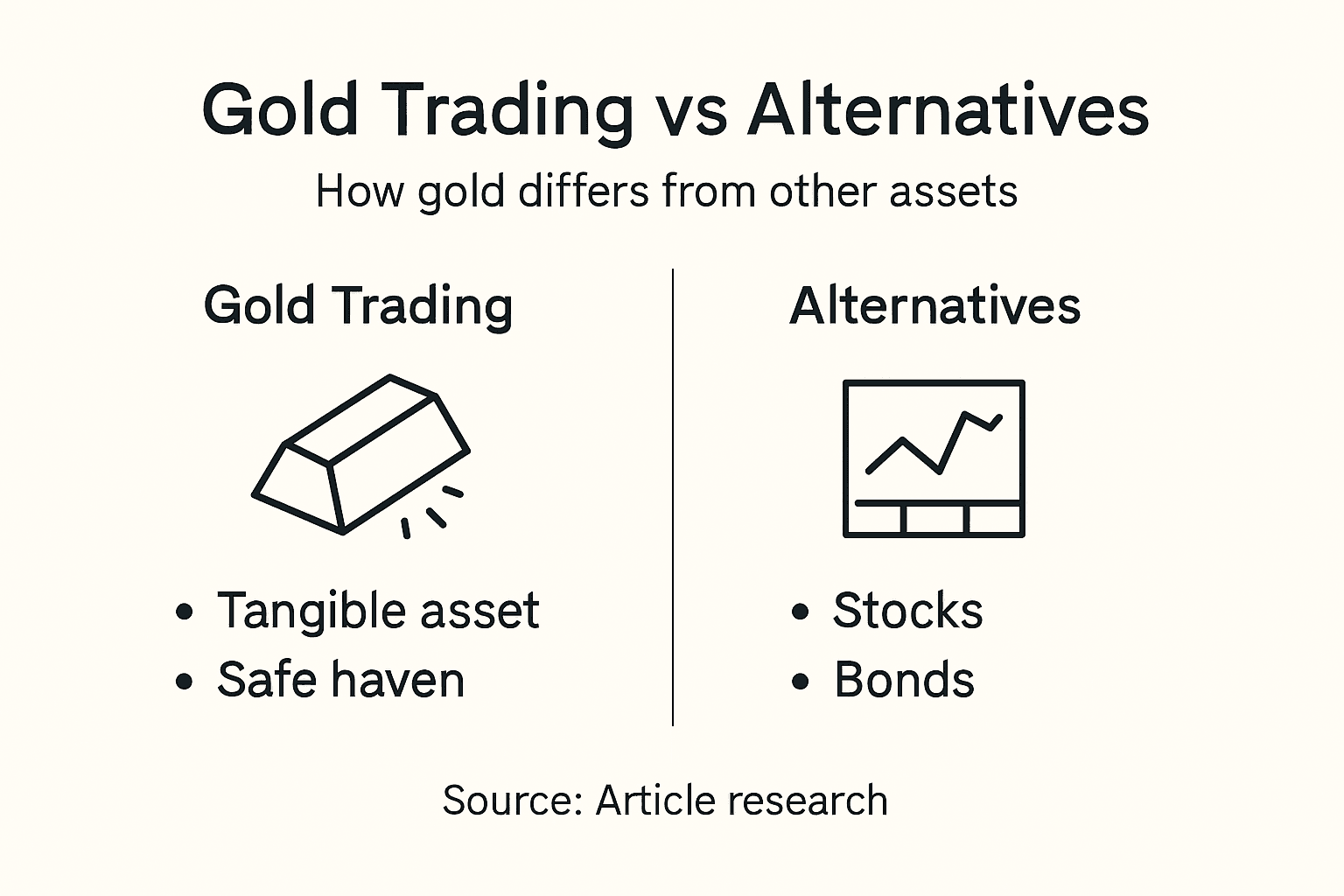
This table summarizes core differences between gold, stocks, and cryptocurrencies for portfolio decision-making:
| Attribute | Gold | Stocks | Cryptocurrencies |
|---|---|---|---|
| Intrinsic Value | Tangible, enduring | Based on company assets | Largely speculative |
| Income Potential | None (no dividends) | Dividends possible | Usually none |
| Use in Diversification | High diversifier | Moderate | Potentially high but volatile |
| Typical Regulation | Stable, established | Extensive, transparent | Evolving, inconsistent |
| Key Vulnerabilities | Storage, liquidity | Market cycles, earnings | Security, hacks, price swings |
The investment landscape requires careful evaluation of risk tolerance, market understanding, and long-term financial objectives. Each asset class presents distinct advantages and challenges, with gold offering a balanced approach between traditional and emerging investment mechanisms.
Investment success demands comprehensive understanding of each asset’s unique market dynamics and potential risks.
Pro tip: Diversify your investment portfolio by allocating resources across multiple asset classes, using gold as a strategic stabilizing component.
Unlock the Power of Automated Gold Trading Today
Gold trading demands precision, swift decision-making, and an expert grasp of market dynamics to manage risks and maximize profits. If navigating price volatility, complex trading strategies, and real-time execution challenges feels overwhelming, you are not alone. Many traders seek reliable tools to automate their gold trading, reduce emotional stress, and capitalize on every opportunity with confidence.
FxShop24 specializes in delivering cutting-edge automated trading software designed specifically for the gold and forex markets. Whether you aim to harness AI-driven expert advisors or leverage proven trading systems compatible with MetaTrader 4 and MetaTrader 5, our platform offers everything you need for a high-performance gold trading experience. Start transforming your strategy by accessing test-tested, prop firm-ready EAs that come with lifetime updates and unlimited licenses.
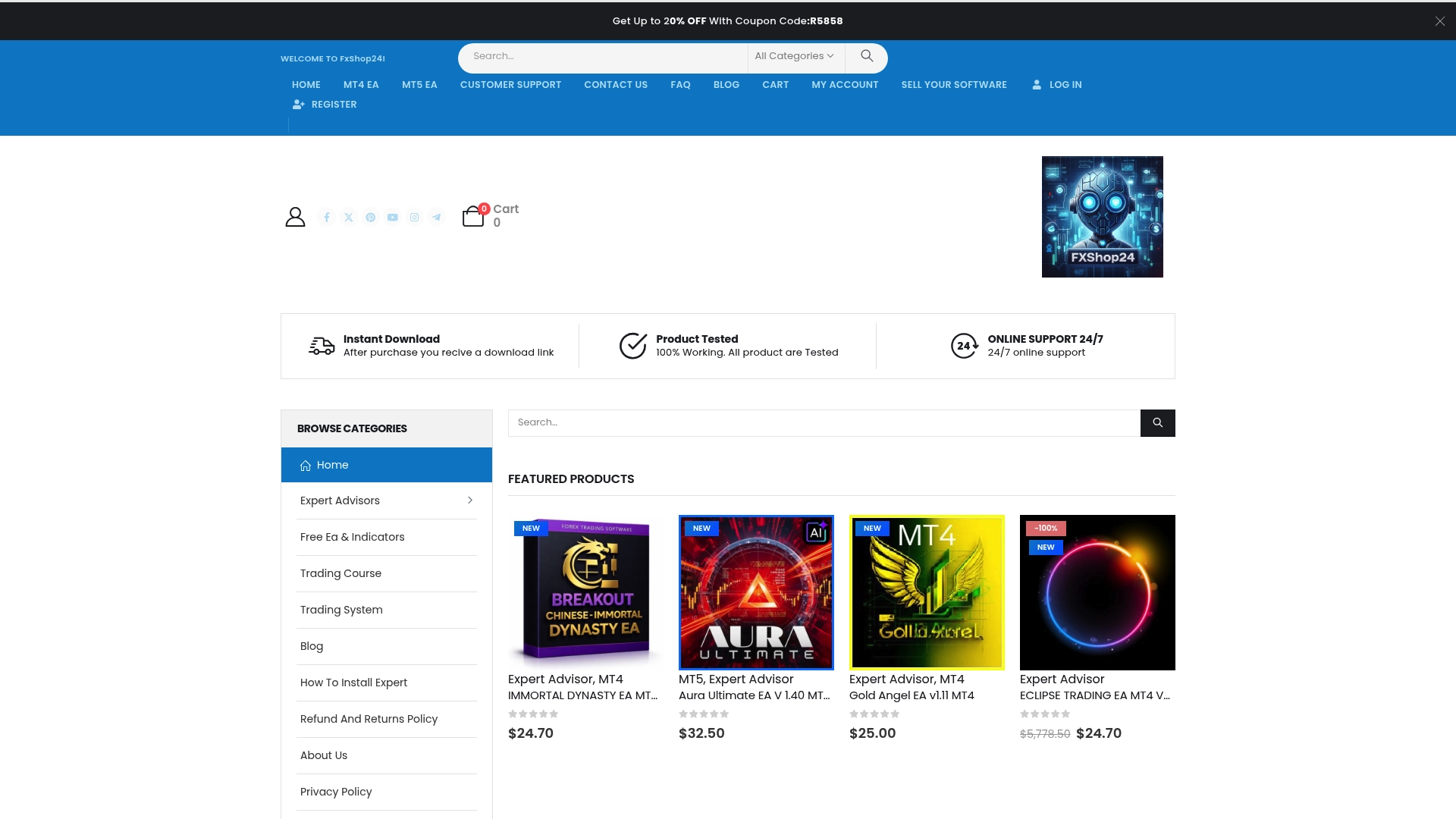
Take control of your gold trading journey now with automated trading solutions crafted to increase consistency and reduce manual errors. Explore expert advisors and premium systems to tailor your approach and stay ahead in fast-moving markets. Visit FxShop24 today to download instantly and join a growing community of traders who trust automation for smarter, faster gold trading.
Frequently Asked Questions
What is gold trading?
Gold trading is the act of buying and selling gold as a financial asset using various instruments, such as physical bullion, futures contracts, exchange-traded funds (ETFs), and derivatives.
What are the main types of gold trading methods?
The primary methods of trading gold include physical gold (bullion bars and coins), gold ETFs, gold futures contracts, gold mining stocks, and digital gold trading platforms.
Why is gold considered a valuable asset during economic uncertainties?
Gold is viewed as a reliable store of value and a safeguard against inflation and economic instability, making it appealing for capital preservation during uncertain times.
What are the risks associated with gold trading?
Gold trading involves several risks, including price volatility, counterparty risk, storage challenges, liquidity constraints, and exposure to fraudulent schemes, which require careful management.
Recommended
- Gold Trading Software: Boosting Automated Profits
- EA Gold Stuff V7.0 MT4 Without DLL Setfiles | FxShop24 Marketplace
- Gold X Gorilla EA MT4 - Expert Advisor For XAU/USD Trading - Build 1431+ DownloadGold X Gorilla EA MT4 - Expert Advisor For XAU/USD Trading - Build 1431+ DownloadGOLD X GORILLA EA V2 EA MT4 With Setfile BUILD 1431+ Download | FxShop24 Marketplace
- How To Automate Gold Trading On MT4 And MT5 Platforms
- Understanding Why Invest in Gold Jewelry: A Comprehensive Guide – Malibu Vibes Jewelry
- 3 Reasons Gold Hit Record Highs — and 1 Key Reason It’s Falling Now