



25
Sep
Struggling to Pass Prop Firm Challenges? 7 Proven Prop Firm EA Setups That Actually Work in 2025
Looking for a prop firm EA that actually passes challenges in 2025? You’re not aloneEver stared at another failed prop firm challenge, wondering why your EA that crushed it in backtesting couldn't survive two weeks of evaluation? You're not alone. The harsh truth is that 95% of traders fail prop firm challenges not because their EAs can't trade, but because they're configured for live market conditions: not the strict, unforgiving rules of evaluation phases.The difference between passing and failing isn't about finding some magical algorithm. It's about understanding that prop firm challenges require EAs built for survival, not glory. Here are 7 proven EA setups that actually work within the constraints that matter. Why It Works: London session provides the perfect storm: high liquidity, predictable patterns, and tight spreads. More importantly, it keeps you away from the dangerous Asian session gaps and volatile US close.The Setup: Restrict trading to 08:00-12:00 GMT only. Set risk per trade to 0.25% maximum with 15-pip stop losses. Enable spread filters (no trades above 2 pips spread) and implement a daily profit cap of 1.5%. The magic happens in the consistency, not the individual trade size.Critical Component: Your EA must have built-in session management. Most failures occur when scalping EAs continue trading into low-liquidity periods, triggering larger-than-expected losses that violate daily drawdown limits.
 Why It Works: High-impact news creates the exact conditions that destroy prop firm challenges: unpredictable volatility, widened spreads, and gap openings. EAs that completely avoid these periods eliminate the biggest challenge killer.The Setup: Integrate an economic calendar filter that stops all trading 30 minutes before and 60 minutes after major news releases. Focus on pairs like EUR/GBP or AUD/NZD during calm periods. Set conservative targets (10-15 pips) with tight stops (8-12 pips).The Psychology: This isn't about missing opportunities: it's about avoiding account killers. One unexpected NFP move can wipe out weeks of careful progress. News avoidance EAs trade boring, predictable setups that keep you in the game.
 Why It Works: By analyzing multiple timeframes simultaneously, these EAs avoid the whipsaws that kill single-timeframe systems. They enter on pullbacks in established trends: high probability setups with clear stop placement.The Setup: Use daily timeframe for trend direction, 4-hour for entry timing, and 1-hour for precise execution. Risk 0.3% per trade with stops below recent swing lows. Maximum 3 trades per currency pair per week to avoid overtrading.Advanced Feature: Implement correlation filters: no EUR trades when GBP/USD is already running, preventing portfolio concentration risk that can trigger daily limits unexpectedly.
1. Conservative Swing Trading EAs: The Foundation Play
Why It Works: Swing trading EAs naturally align with prop firm psychology. They take fewer trades, hold positions for days rather than hours, and typically risk 0.5-1% per trade, well within most firms' daily limits.The Setup: Configure your swing EA for maximum 0.3% risk per trade with a 2% daily equity stop. Enable session filters to avoid overnight gaps and set maximum concurrent trades to 1. The key is patience: these EAs might only take 2-3 trades per week, but each one is calculated.Real Example: A EUR/USD swing EA running on daily timeframes with RSI divergence and moving average confirmation can easily maintain the consistency prop firms demand. One trader passed FTMO using nothing but a simple swing system that averaged 0.8% monthly returns with 1.2% maximum drawdown.2. London Session Scalping EAs: Precision in High Volume
 Why It Works: London session provides the perfect storm: high liquidity, predictable patterns, and tight spreads. More importantly, it keeps you away from the dangerous Asian session gaps and volatile US close.The Setup: Restrict trading to 08:00-12:00 GMT only. Set risk per trade to 0.25% maximum with 15-pip stop losses. Enable spread filters (no trades above 2 pips spread) and implement a daily profit cap of 1.5%. The magic happens in the consistency, not the individual trade size.Critical Component: Your EA must have built-in session management. Most failures occur when scalping EAs continue trading into low-liquidity periods, triggering larger-than-expected losses that violate daily drawdown limits.
3. Gold Trading EAs: The Volatility Advantage
Why It Works: XAUUSD's volatility creates obvious opportunities, but more importantly, its trending nature allows for clearly defined risk parameters. Gold EAs can capture significant moves while maintaining strict position sizing.The Setup: Focus on trend-following logic with dynamic position sizing based on ATR. Risk 0.2% per trade base amount, scaled by volatility. Implement time filters avoiding major news releases and Asian session gaps. Set daily maximum of 2 trades to prevent overtrading during volatile periods.Pro Tip: Gold EAs like the AI Gold Sniper EA excel in prop challenges because they're specifically designed for XAUUSD's unique characteristics: sudden spikes, clear technical levels, and predictable session behaviors.4. News Avoidance EAs: Playing It Safe
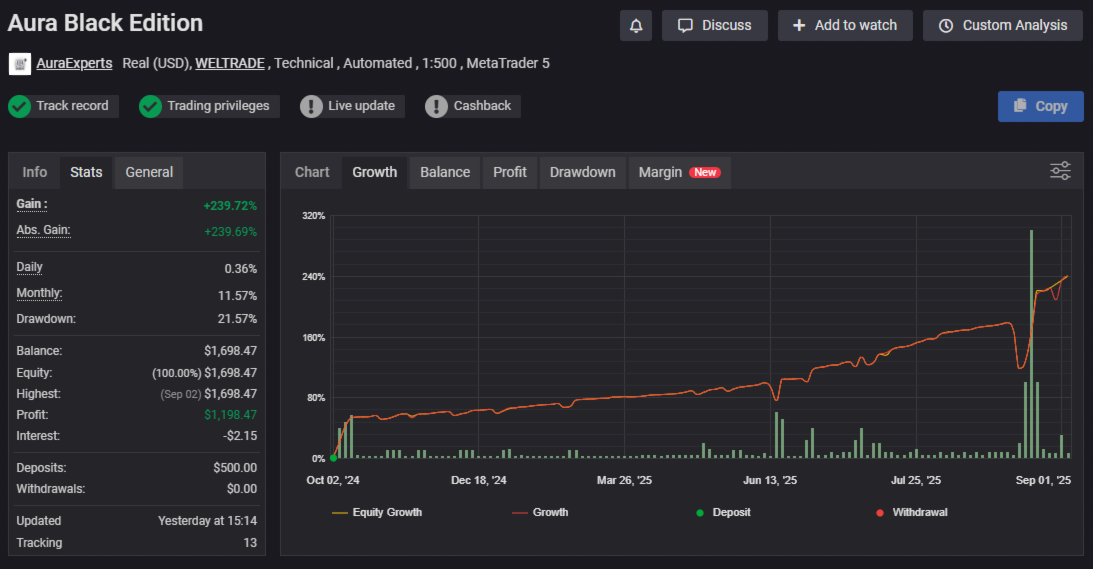 Why It Works: High-impact news creates the exact conditions that destroy prop firm challenges: unpredictable volatility, widened spreads, and gap openings. EAs that completely avoid these periods eliminate the biggest challenge killer.The Setup: Integrate an economic calendar filter that stops all trading 30 minutes before and 60 minutes after major news releases. Focus on pairs like EUR/GBP or AUD/NZD during calm periods. Set conservative targets (10-15 pips) with tight stops (8-12 pips).The Psychology: This isn't about missing opportunities: it's about avoiding account killers. One unexpected NFP move can wipe out weeks of careful progress. News avoidance EAs trade boring, predictable setups that keep you in the game.
5. Mean Reversion EAs: Betting on Normal
Why It Works: Markets spend 70% of their time in ranges, not trends. Mean reversion EAs capitalize on this statistical reality while naturally limiting risk through their buy-low, sell-high logic.The Setup: Use Bollinger Bands or RSI-based entries with strict position sizing. Set take profits at the opposite band (typically 20-30 pips) with stops just beyond the extreme (15-20 pips). Limit to major pairs during London/NY overlap for best execution.Risk Management: The key is avoiding trending markets entirely. Implement trend filters using ADX or moving average slopes. No trades when ADX > 25 or when price is more than 2 standard deviations from the mean.6. Breakout EAs: Momentum with Discipline
Why It Works: Clean breakouts offer excellent risk-to-reward ratios, and the clear technical levels make stop placement objective. When configured properly, breakout EAs provide the occasional big winner that accelerates challenge completion.The Setup: Focus on daily or 4-hour support/resistance breaks with volume confirmation. Risk 0.4% per trade maximum, targeting 2:1 reward ratios. Implement false breakout filters: wait for hourly close beyond the level before entry.Example: A EUR/USD breakout EA that only trades major psychological levels (1.1000, 1.1100, etc.) with proper filtering can maintain 60%+ win rates while capturing substantial moves when they occur.Studies show that systematic breakout trading remains one of the most reliable approaches for consistent returns when properly implemented with risk management protocols.7. Multi-Timeframe Trend Following EAs: The Complete System
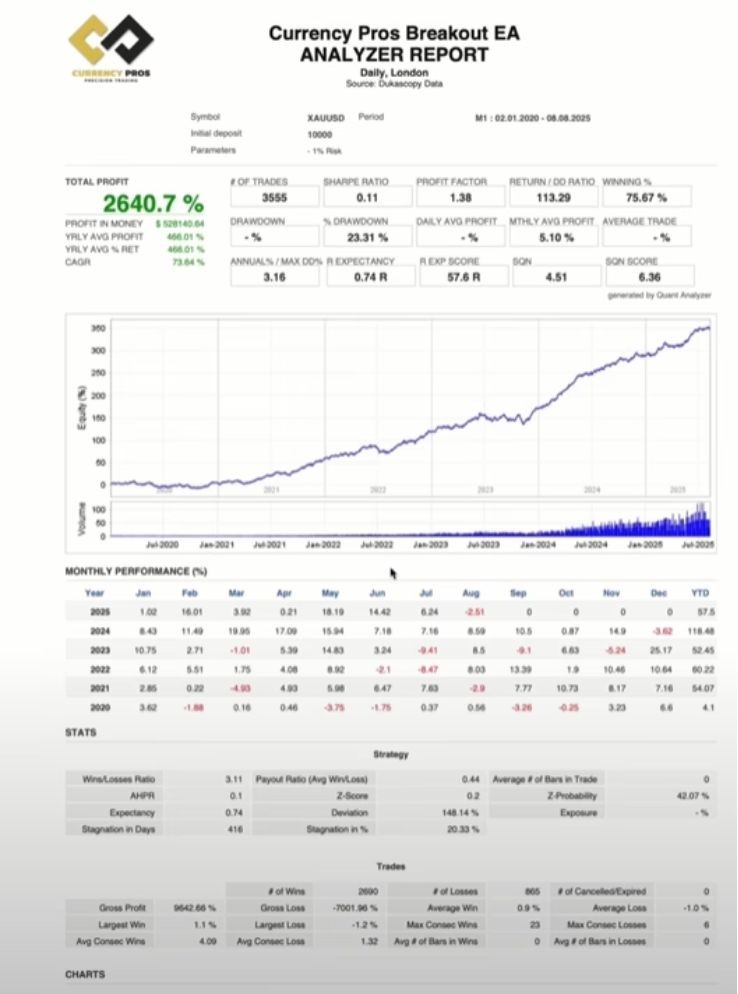 Why It Works: By analyzing multiple timeframes simultaneously, these EAs avoid the whipsaws that kill single-timeframe systems. They enter on pullbacks in established trends: high probability setups with clear stop placement.The Setup: Use daily timeframe for trend direction, 4-hour for entry timing, and 1-hour for precise execution. Risk 0.3% per trade with stops below recent swing lows. Maximum 3 trades per currency pair per week to avoid overtrading.Advanced Feature: Implement correlation filters: no EUR trades when GBP/USD is already running, preventing portfolio concentration risk that can trigger daily limits unexpectedly.
Choosing Your Perfect EA Setup: The Decision Framework
Match Your Prop Firm: Different firms have different rules. FTMO's 5% drawdown limit allows slightly more aggressive setups than funded Next's 4% limit. Always configure for the most restrictive rule.Consider Your Schedule: If you can't monitor during London session, avoid scalping EAs entirely. Swing systems work better for part-time traders who need set-and-forget functionality.Backtest in Evaluation Conditions: Most traders backtest over years of data, but your EA only needs to survive 30 days. Focus on consistency over total return. A steady 8% over 30 days beats 50% with a 6% drawdown spike.Start Conservative: You can always increase risk after funding, but you can't resurrect a blown challenge. Begin with 0.2% risk per trade and scale up only after proving consistency.The harsh reality is that prop firm challenges aren't about trading skill: they're about following rules under pressure. These 7 EA setups work because they're designed for the evaluation game, not the live trading game. Choose the one that matches your risk tolerance and schedule, configure it conservatively, and let mathematics handle the rest.Your next challenge success isn't about finding a better EA: it's about using the right settings for the right environment. Stop trying to trade your way to funding, and start systematically following your way there.
Share: