16
Oct
Gold Trading in 2026: How XAUUSD Really Moves (and Where Automation Fits)
Gold is the most traded commodity on earth, and XAUUSD is the pair where retail traders burn the most money. Not because gold is hostile — but because trading it manually means sitting through 23 hours of sessions, news spikes from the Fed and NFP, and spread explosions at the London open. This guide explains how gold actually moves in 2026 and where a rules-based automated approach can remove the weakest link: you, at 3 a.m., revenge-trading a spike.
Why gold, and why now
XAUUSD combines three properties no currency pair has at the same time: deep institutional liquidity, strong trending behaviour on higher timeframes, and violent mean-reversion on lower ones. Central-bank buying, real yields and risk sentiment keep gold in sustained multi-week trends — the exact environment trend-following systems are built for. The catch: the same volatility that creates trends also triggers emotional decisions. A 200-pip adverse spike is where manual accounts die and predefined rules survive.
How gold moves: the three regimes
- Trend regime (H1–H4): clean directional legs during London and New York. This is where systematic strategies harvest most of their edge.
- Chop regime (Asian session, holidays): tight ranges, fake breakouts, spread widening. Systems with session filters simply stand aside — manual traders usually don't.
- Event regime (CPI, FOMC, NFP): 5-minute candles that look like vertical lines. No EA should hold naive exposure into red-folder events without protection logic.
The manual trader's real bottleneck
Gold on H1 prints 20–40 meaningful setups per month. Evaluating each one consistently — same indicators, same risk, same exits — is not humanly sustainable. Backtests consistently show the same pattern: the strategy is fine; the execution isn't. Missed entries, oversized lots after a loss, closing winners early. Automation doesn't find a magic edge — it executes your edge without variance.
What a serious gold EA looks like in 2026
Forget "set and forget $10k/month" marketing. A credible automated gold system has: session and news awareness, per-direction risk controls, a drawdown circuit breaker, published backtest methodology (in-sample vs out-of-sample, real spread, real swaps), and settings you can inspect. Martingale, when used, must be bounded and reset per direction — not the classic account-killer ladder.
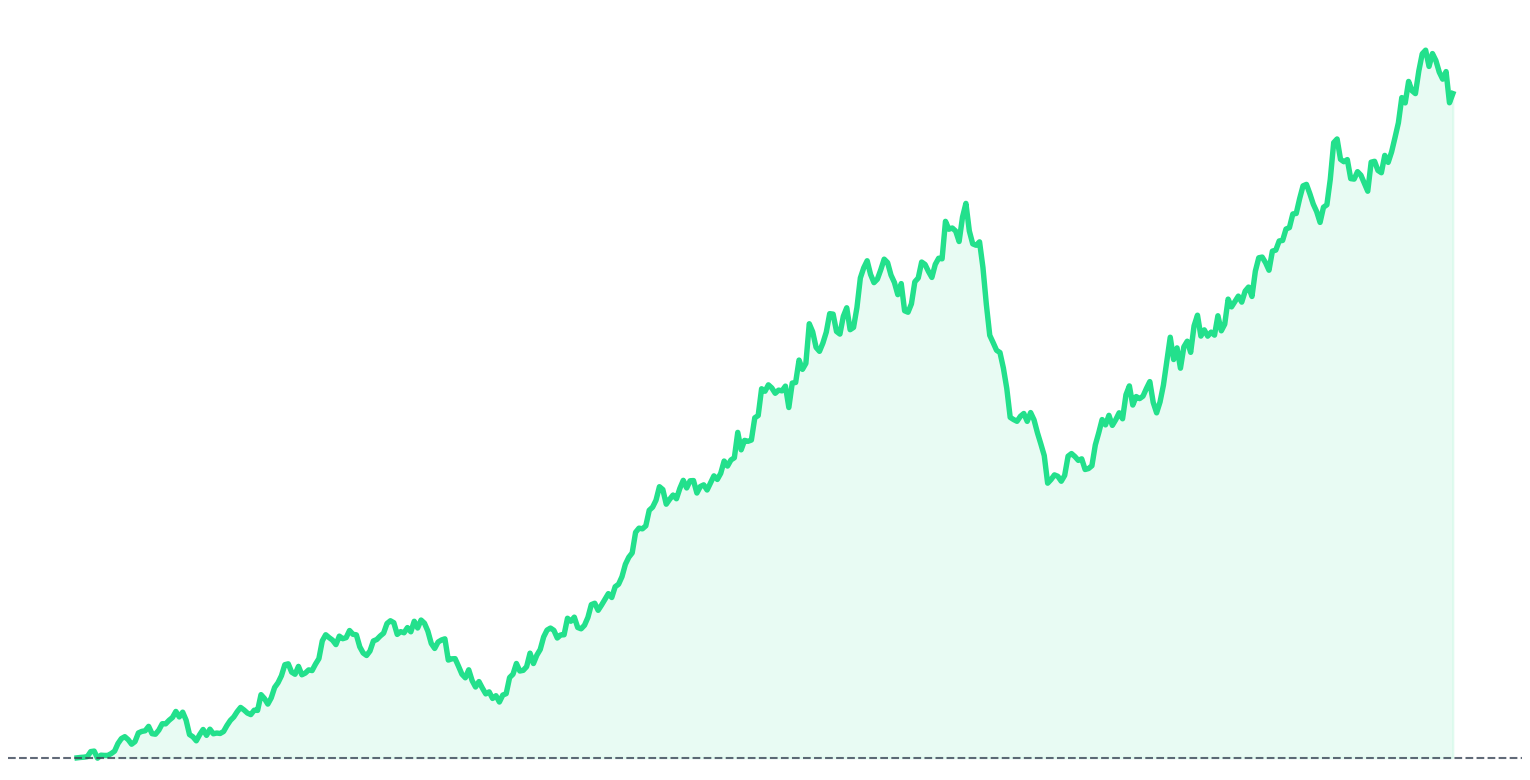
This is exactly the design philosophy behind Fort Knox EA v2.21, our XAUUSD H1 engine for MT4: a multi-indicator core with 15 parallel shadow agents re-optimizing parameters every cycle, TradeLong/TradeShort switches, trailing stop and breakeven, plus a Prop Firm Protection layer (daily loss limit + max drawdown guard with auto-close) built for FTMO-style challenges. We publish the full simulated equity curve and methodology — no cherry-picked screenshots.
See Fort Knox EA v2.21 — full specs & simulated performance
Prefer to read the deep dive first? Here's our complete Fort Knox EA review: settings, licence model, real expectations.
Risk, said plainly
Automated trading does not remove risk — it makes risk explicit. Gold can gap through stops; backtests are simulations, not promises; any EA can and will have losing weeks. Position size so that a full stop-out hurts but doesn't end the account, keep prop-firm limits enabled, and never trade money you need. Simulated past performance never guarantees future results.
Bottom line
If you trade gold manually and keep breaking your own rules, the cheapest upgrade isn't a new indicator — it's removing yourself from the execution loop. Fort Knox EA v2.21 ($199, lifetime PRO licence, 2 MT4 accounts) gives you an inspectable, risk-guarded way to do exactly that. Trading involves risk of loss. Trade responsibly.