


26
Sep
How Do Prop Firms Work? A Simple Guide for Aspiring Forex Traders
Ever stare at your trading screen and wonder, “If only I had more capital, I could finally play on a bigger stage”? Prop firms are reshaping that trading dream into a real shot: even if your personal bankroll is limited. But how do prop firms work, what hooks come with that “free money,” and why are so many traders zeroed in on these funded account challenges right now? This guide walks you through the exact mechanics and delivers the details successful traders never skip.
What Is a Prop Firm?
A proprietary trading firm: just “prop firm” to most: is a company that puts its own capital on the line, letting skilled traders use the firm’s money in exchange for a slice of the profits. Forget risking your family savings or staying boxed in by a tiny account; prop firms hand you the firepower and set clear, hard lines on how much you can risk.
Imagine stepping into a casino where you play with the house’s chips, but walk away with most of the winnings if you beat the odds. That’s the essential setup: without the smoky tables and bright lights.
The Prop Firm Process: Step-by-Step
How do prop firms work on a practical level, from signup to your first withdrawal?
Step 1: The Challenge
- Almost every reputable prop firm starts new applicants with a trading challenge, also called an evaluation or audition. You’re given a demo account loaded with virtual dollars: often $10,000, $50,000, or even $200,000 balances: and assigned strict targets and rules. Typical hurdles:
- Reach a set profit target (usually 7–10%) within a fixed period
- Observe maximum daily/theoretical drawdowns
- Adhere to rules like mandatory stop-losses, position size limits, or minimum trading days
- Almost every reputable prop firm starts new applicants with a trading challenge, also called an evaluation or audition. You’re given a demo account loaded with virtual dollars: often $10,000, $50,000, or even $200,000 balances: and assigned strict targets and rules. Typical hurdles:
Step 2: Verification
- Pass the initial challenge, and you may move to a second “verification” round. This phase often has lighter targets and double-checks you didn’t just get lucky once.
Step 3: Trading a Funded Account
- Nail both phases, and the firm funds a live account in your name. Now you’re trading real capital, aiming for consistent, sustainable profit.
Step 4: Profit Splits
- Periodically (often monthly), the firm pays you your share: commonly 70–90%: of what you generate in profits. Withdrawals arrive via bank, crypto, or payment processor.
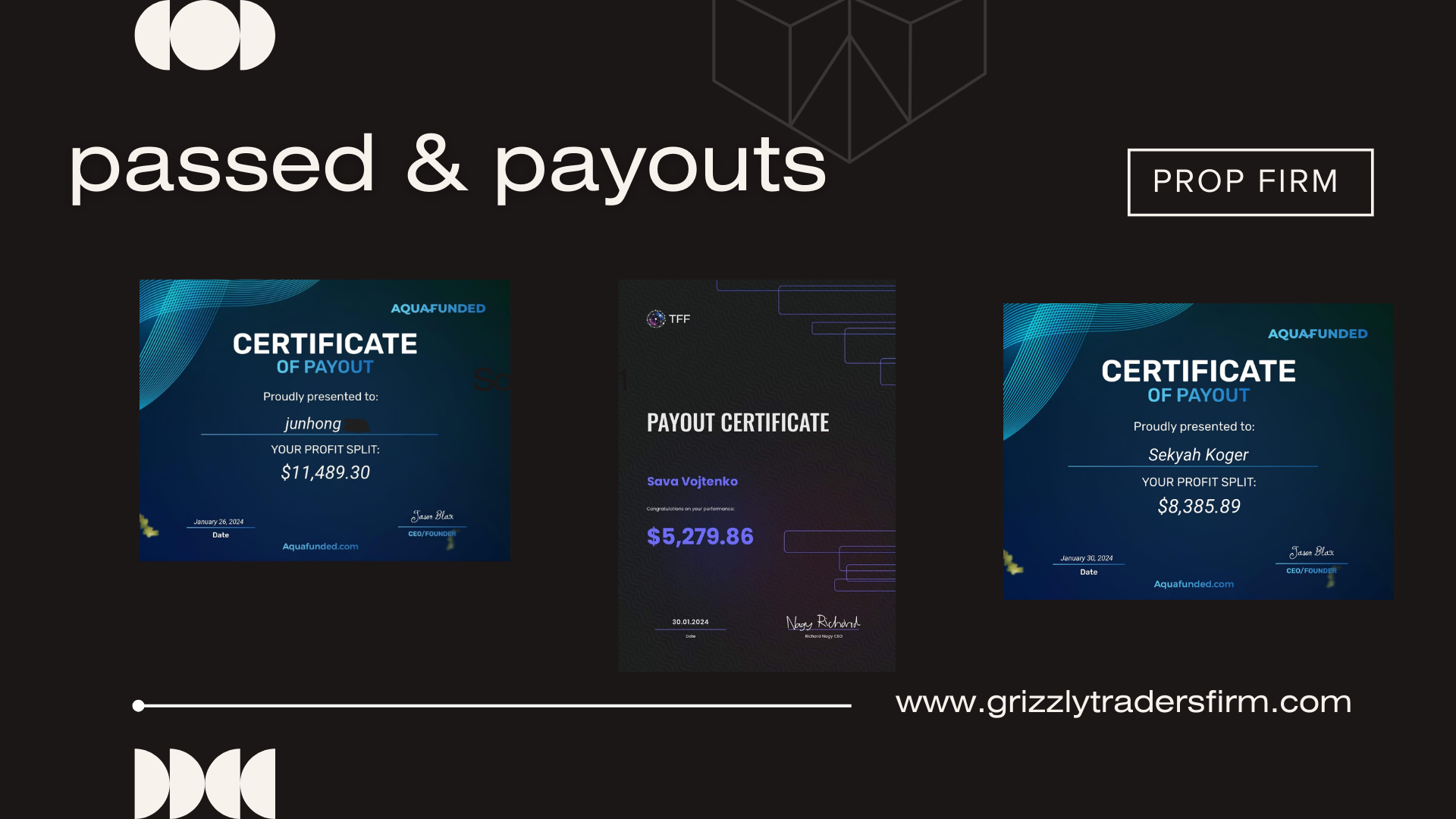
Real payout certificates show how successful traders get paid by leading prop firms: $5K, $8K, and $11K+ prizes in these documented cases.
Prop Firms Versus Regular Trading: What Changes?
Why do thousands of forex traders, from veteran scalpers to weekend swing traders, flock to prop firms? At the core:
- Capital Leverage Without Personal Risk: You’re playing with the firm’s funds. The only money at risk is the evaluation fee (often refunded if you pass).
- Strict Risk Control: Proprietary companies set hard limits. Break a max drawdown rule or skip stop-losses and your account is frozen: no second chances.
- Performance-Only Pay: No salary. You eat what you kill; passive trading won’t cut it.
- No Client Fund Management: Unlike traditional asset managers, you’re not handling other people’s money, just trading with the firm’s war chest.
Common Prop Firm Rules (And Why They Matter)
Here’s what you’re up against: and why the discipline prop firms demand quietly shapes trader behavior for the better:
- Max Daily Loss: Blow past this (say, 5% of account value), and you’re done for the day: or the whole challenge.
- Overall Loss Limit: If your equity dips below a set threshold (often 8–10%), you lose the account.
- Profit Target: You must reach a pre-set return: without breaking risk rules: before time expires.
- Trading Minimums: Some firms require 5–10 active trading days to prove consistency.
- Leverage Caps: Don’t expect 1000:1: most keep leverage between 1:10 and 1:100 to rein in risk.
- Banned Strategies: Grid, martingale, copy trading, and news spikes may be prohibited.
Tip: Read the rulebook. Every major prop firm posts their requirements publicly. Knowing the rules is the difference between passing and starting over: again.
Real-Life Example: Forex Prop Firm Challenge
Imagine you join a popular prop firm offering $100,000 challenges:
- You pay a $499 evaluation fee
- Must reach $8,000 in profits (+8%) in 30 days
- Cannot drop more than $5,000 in a day or $10,000 overall
- Must trade a minimum of 10 days (one trade per day)
- No holding over weekends/news events
Pass? You get the firm’s $100,000 account, and a 80/20 profit split starts kicking in. That means, on a $5,000 month, you walk away with $4,000: no personal drawdown, just steady trading under tight guardrails.
Why Choose a Prop Firm? The Psychological Edge
Ever feel the sting of risking your own mortgage payment on a trade? Prop firms strip out that stress. You focus on executing high-probability setups and sticking to a killer process, not fretting losses. This unlocks better psychology: no more “revenge trades” or overleveraging just to grow a micro account.
Plus, operating under professional rules (and knowing you’re watched) forces you to develop habits elite traders rely on, like:
- Consistent lot sizing aligned to account risk
- Tight stop-loss and take-profit discipline
- Trading only well-defined signals, not gambling on gut feel
How Do Prop Firms Make Money?
If prop firms hand out capital and most traders fail, is the business sustainable? Here’s the inside math:
- Entry Fees: Only a slice of traders pass the evaluation. The rest pay, lose, and retry: covering the firm’s costs.
- Profit Share: When top traders win, the firm earns a cut. Star performers subsidize less skilled applicants.
- Refunds for Success: If you pass, top-tier firms often refund your evaluation fee: further incentivizing smart, risk-managed trading.
Pro insight: Firms are always searching for rare, consistently profitable traders who can scale. Being consistent and rule-abiding is more valuable than being wildly aggressive.
Top Tips to Succeed with Prop Firms
- Obsess Over Drawdown Rules: Know your numbers. Losing track of max loss is the #1 pitfall.
- Master Your Strategy Beforehand: Don’t use the challenge to “test” a new EA or scalp under pressure. Try robust, prop-firm-approved EAs here.
- Journal Every Trade: Capture what worked, what failed: iterate relentlessly.
- Trade Fewer, Better Setups: Quality destroys quantity. Pick the highest-probability entries.
- Stay Calm After Losses: Reset; don’t chase: this breaks most challenges.

FAQ: How Do Prop Firms Work?
What is the minimum capital I can get funded with at a prop firm?
Most firms start with $10,000, but serious evaluations offer up to $200,000 or more for top performers.
What forex pairs can I trade?
Most prop firms let you trade all major pairs (EUR/USD, GBP/USD, USD/JPY), plus minors and sometimes gold or indices.
Can I use Expert Advisors (EAs)?
Many prop firms allow EAs: but they ban grid, martingale, and copy-trading bots. Use only prop-firm-compliant EAs, like these verified solutions.
What happens if I break a rule?
Your account is closed or reset: no appeals. Some charge a reset fee; others require you to start from scratch.
Do I have to use my own money?
You’ll pay a non-refundable (or sometimes refundable) evaluation fee but never need to deposit trading capital beyond that.
See a breakdown of common rules and strategies for passing prop firm challenges here.
Practical Benefits of Forex Prop Trading Firms
- Unlock access to 10x–100x more capital than the average solo account
- Get professional feedback and advanced analytics tools
- Protect your personal savings: only your entry fee is at risk
- Level up your discipline, consistency, and trading psychology
Ready to step into the big leagues? Learn more about top prop-firm-compatible EAs and trading solutions at FXShop24. The leap from home trader to prop-funded pro starts with mastering these fundamentals: and never breaking the rules that keep capital safe.
Want strategies the pros use to beat prop firm challenges? Check out this external guide for deeper dives on how the business works and what sets successful traders apart.