


15
Sep
Stop Wasting Time—Prop Firm EA Selection Hacks Every Trader Should Know
Prop firm EA selection is the key to passing trading challenges without burning through accounts. If you’ve been stuck downloading ‘promising’ Expert Advisors only to watch them demolish your prop firm challenge within days? You're not alone. Most traders burn through multiple challenge attempts because they fall for flashy marketing claims instead of focusing on what actually works in prop firm environments.The brutal truth? 90% of forex robots marketed as "prop firm ready" will violate trading rules faster than you can say "maximum daily loss." But here's the thing: the 10% that actually work share specific characteristics that separate them from the crowd.Let's cut through the noise and focus on what matters: five proven hacks that prop traders use to identify EAs that consistently pass challenges and generate sustainable profits. Here's what to look for: EAs with documented pass rates from actual users. Some experienced traders report finding systems with 92% success rates for prop firm challenges, but only after testing dozens of different expert advisors in live conditions. The key word here is "live."When evaluating performance claims, dig deeper than surface-level statistics. Ask for myfxbook links, live account statements, and user testimonials from traders who've actually used the EA in challenge environments. If a vendor can't provide this level of transparency, move on.Pro tip: Look for EAs that update their performance data every 30 minutes. This real-time monitoring shows they're confident in their system's consistency and aren't hiding unfavorable periods.Look for comprehensive account protections including:The most reliable systems show consistent performance across different market cycles, not just trending or ranging conditions. They've weathered volatility spikes, central bank interventions, and the unpredictable events that backtests can't simulate.Bottom line: If an EA can't show you at least six months of forward-tested results in current market conditions, it's not ready for your prop firm challenge.The most reliable providers are transparent about both opportunities and limitations. They provide educational resources about prop firm selection, realistic performance expectations, and honest discussions about market conditions that may affect EA performance.Warning signs to avoid: Vendors making unrealistic profit promises, those who refuse to show live trading results, or providers who disappear after purchase. Stick with established names that have been serving the prop trading community for years.
Hack #1: Demand Verified Live Performance Records
Stop falling for backtested fairy tales. The first rule of prop firm EA selection is simple: if it hasn't proven itself in live market conditions, it's not worth your time.Real prop trading robots come with documented live trading history across multiple MT4/5 accounts. You want to see actual trades, real drawdown periods, and transparent performance data: not optimized backtests that look perfect on paper but crumble under market pressure.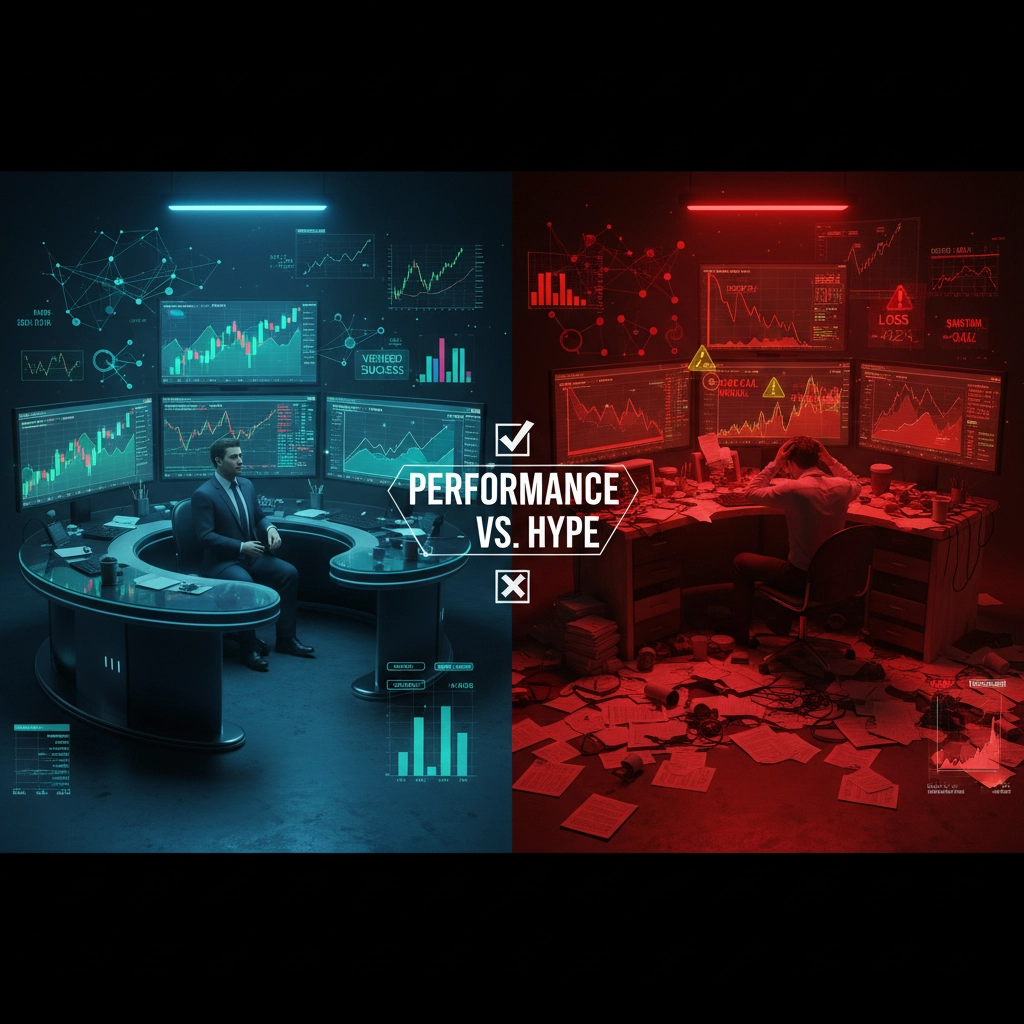 Here's what to look for: EAs with documented pass rates from actual users. Some experienced traders report finding systems with 92% success rates for prop firm challenges, but only after testing dozens of different expert advisors in live conditions. The key word here is "live."When evaluating performance claims, dig deeper than surface-level statistics. Ask for myfxbook links, live account statements, and user testimonials from traders who've actually used the EA in challenge environments. If a vendor can't provide this level of transparency, move on.Pro tip: Look for EAs that update their performance data every 30 minutes. This real-time monitoring shows they're confident in their system's consistency and aren't hiding unfavorable periods.
Hack #2: Ensure Built-In Prop Firm Rule Compliance
Most traders overlook this critical factor: prop firms actively monitor for duplicate trading strategies across multiple accounts. If you're running the same EA as hundreds of other traders, you're setting yourself up for account termination.The best prop firm EAs include strategy randomization features that make each account's trading approach unique. This isn't just about avoiding detection: it's about adapting to different market conditions and account parameters. Look for comprehensive account protections including:
- Maximum daily loss limits that align with your firm's rules
- Minimum equity requirements to prevent margin calls
- Challenge target controls that help you hit profit goals without overtrading
- Maximum capital allocation rule adherence
Hack #3: Prioritize Forward-Tested Systems Over Backtests
Here's a uncomfortable truth: most EAs are curve-fitted to historical data and fail spectacularly when market conditions change. Forward-tested systems, on the other hand, prove their effectiveness in current market environments.Forward testing means the EA has been trading live for extended periods, adapting to real market volatility, news events, and changing spread conditions. This approach provides realistic expectations for actual trading results, not theoretical performance based on cherry-picked historical data.When evaluating an EA, ask these questions:- How long has it been forward-tested in live conditions?
- What was the performance during major market events (NFP, FOMC meetings, Brexit-style volatility)?
- How does it handle weekend gaps and low liquidity periods?
 The most reliable systems show consistent performance across different market cycles, not just trending or ranging conditions. They've weathered volatility spikes, central bank interventions, and the unpredictable events that backtests can't simulate.Bottom line: If an EA can't show you at least six months of forward-tested results in current market conditions, it's not ready for your prop firm challenge.
Hack #4: Select EAs with Robust Risk Management Features
Risk management separates profitable EAs from account killers. The best prop firm robots include multiple layers of protection that prevent catastrophic losses while maximizing profit potential.Essential risk management features include:- Entry filters: Maximum spread controls during volatile sessions, position limits during news events
- Position sizing: Dynamic lot calculations based on account equity and volatility
- Stop loss protection: Multiple exit strategies including time-based, equity-based, and technical exits
- Drawdown controls: Circuit breakers that halt trading when predetermined loss thresholds are reached
Hack #5: Choose Established Providers with Ongoing Support
The forex robot market is flooded with fly-by-night vendors selling systems they've never actually traded. Established providers with track records, active user communities, and responsive support make all the difference when challenges arise.Look for vendors who offer:- Comprehensive setup instructions for both novice and experienced traders
- Ongoing optimization updates as market conditions change
- Active user forums or communities where traders share experiences
- Responsive customer service for technical issues
- Clear documentation about optimal timeframes and prop firm compatibility
 The most reliable providers are transparent about both opportunities and limitations. They provide educational resources about prop firm selection, realistic performance expectations, and honest discussions about market conditions that may affect EA performance.Warning signs to avoid: Vendors making unrealistic profit promises, those who refuse to show live trading results, or providers who disappear after purchase. Stick with established names that have been serving the prop trading community for years.
Implementation Strategy: Less Is More
Rather than deploying multiple EAs simultaneously, focus on thorough testing to identify the current top performer for your specific challenge requirements. The prop trading landscape changes rapidly, and what worked six months ago may not be optimal today.Use real-time performance data to select the best-performing robots from recent periods: typically the top 3 performers from the previous week or month. This approach keeps you aligned with current market dynamics rather than relying on historical performance that may no longer be relevant.Final thought: The goal isn't to find the perfect EA (it doesn't exist), but to identify systems that consistently perform within prop firm parameters while adapting to changing market conditions. Focus on proven reliability over promised perfection, and you'll dramatically increase your challenge success rate.Remember, successful prop trading is about consistent, sustainable performance: not home runs that risk everything. Choose your EAs accordingly, and watch your challenge pass rate transform from frustrating failure to reliable success.
Share: