


10
Oct
The Small Account Trader's Guide to Money Management with Expert Advisors (Start with $100)
Ever stare at your $100 trading account and wonder if it's even worth powering up MetaTrader? You're not alone. Most traders starting with small accounts feel like they're bringing a water pistol to a gunfight. But here's the thing: that $100 might be the most valuable money you'll ever invest in your trading education.
Small accounts aren't limitations; they're laboratories. While the forex influencers flash their million-dollar screenshots, the real pros know that mastering a $100 account teaches you skills that no amount of capital can buy. Let's dive into how Expert Advisors can turn your modest start into a disciplined, scalable trading machine.
Setting Realistic Expectations (The $100 Reality Check)
Starting with $100 won't make you rich overnight, and that's actually perfect. Your primary goal isn't generating life-changing income: it's building unshakeable trading habits while risking real money. This psychological pressure creates learning that paper trading simply can't match.
With proper risk management (risking only 1-2% per trade), you're looking at $1-2 at risk per position. Sounds tiny? It should. According to the Bank for International Settlements, retail traders who survive their first year consistently follow conservative risk protocols.
A realistic 5% monthly gain might seem boring compared to those "turn $100 into $10,000" promises, but compound that over 12 months and you're looking at nearly doubling your account. More importantly, you're building the muscle memory for when you're trading with serious capital.

Core Money Management Principles That Actually Work
The 1-2% Rule (Your Account's Life Insurance)
This isn't negotiable: never risk more than 1-2% of your account balance per trade. With $100, that means $1-2 maximum loss per position. Most small account traders break this rule chasing bigger wins and end up joining the 80% who blow up within their first year.
Your position sizing formula becomes critical here. If you're trading EUR/USD with a 20-pip stop loss, your lot size calculation ensures you hit that exact risk amount. Most MT4/MT5 platforms have position size calculators, but mastering the math builds confidence in your risk management.
Smart Leverage Usage
Forget the "trade with 1:500 leverage" advice you see everywhere. For beginners with small accounts, 1:10 leverage provides enough flexibility without the account-destroying potential of higher ratios. Remember: leverage amplifies both gains and losses, and small accounts have zero room for error.

The Compounding Mindset
Every dollar you make gets reinvested. No withdrawals, no "treating yourself" to celebrate small wins. Your $100 account grows through compounding: that boring mathematical principle that creates millionaires. A consistent 3% monthly return compounds to 43% annually. Not flashy, but sustainable.
Expert Advisors for Small Accounts (Separating Gold from Garbage)
What to Look For
Most EAs marketed to small account traders are sophisticated account-destruction devices. They use martingale strategies, promise unrealistic returns, and work just long enough to build false confidence before catastrophic failure.
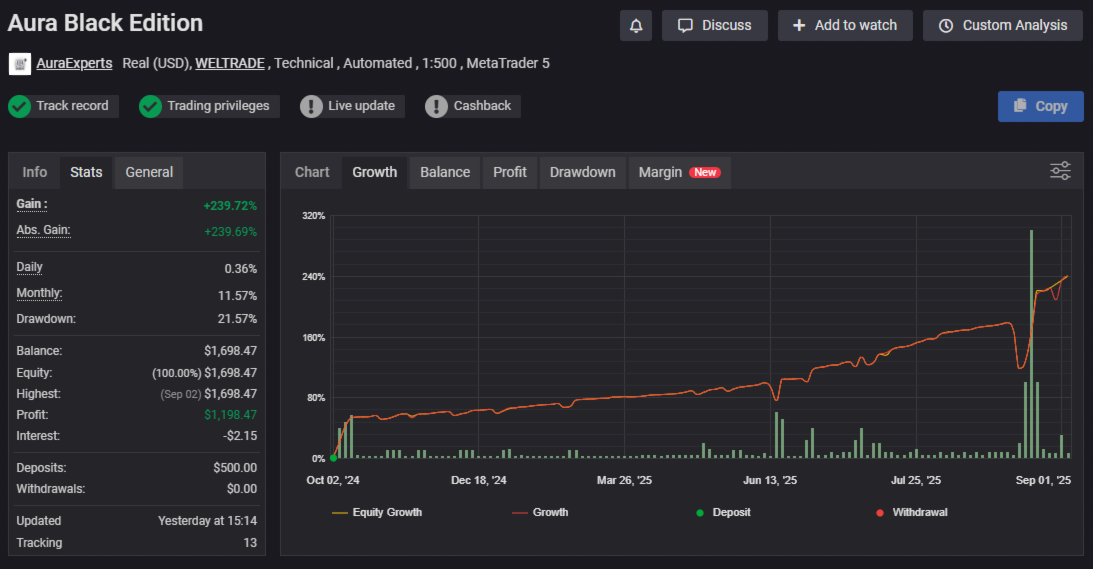
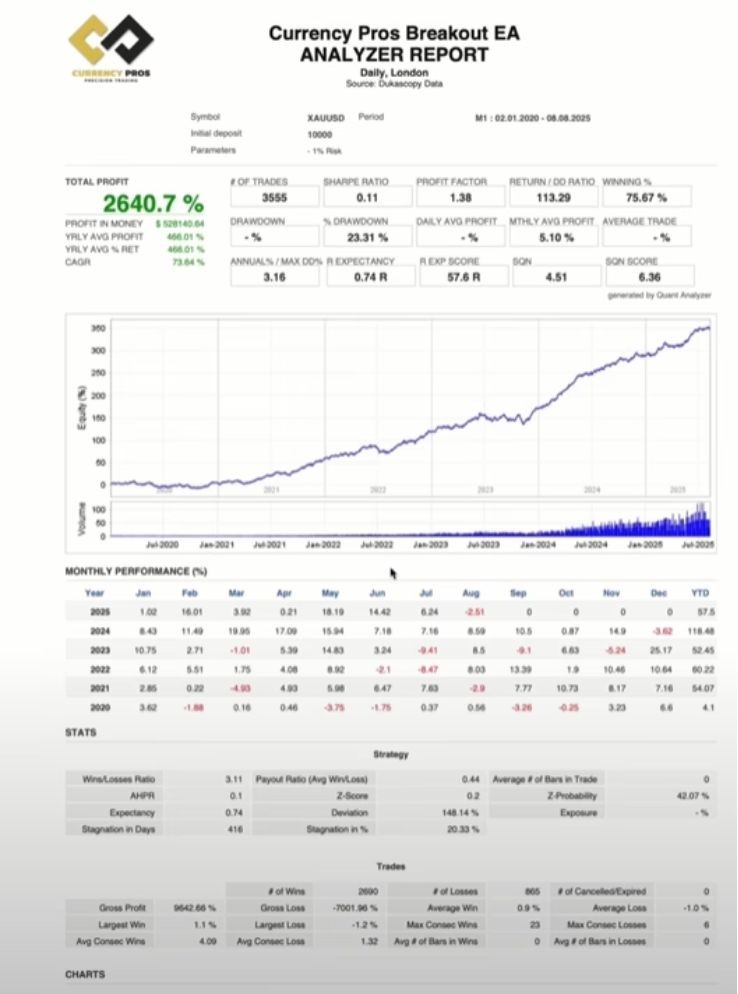
Look for EAs with verified track records, conservative drawdown percentages (under 20%), and transparent trading logic. The best small account EAs focus on consistency over explosive gains. They should have built-in risk management settings that align with your 1-2% risk rule.
Technical Requirements
Your broker choice becomes crucial with small accounts. High spreads will devour your tiny profits faster than bad trading decisions. Look for brokers offering:
- Tight spreads (under 1 pip for major pairs)
- Micro or cent account options
- Reliable execution during news events
- MT4/MT5 compatibility with your chosen EA
The Selection Process
Start with demo testing any EA for at least 30 days. Watch how it handles different market conditions: trending, ranging, high volatility news events. The EA should maintain consistent risk levels regardless of market behavior.
Avoid any EA that:
- Promises guaranteed profits
- Uses aggressive lot sizing
- Lacks stop-loss protection
- Shows only winning trades in marketing materials
- Requires frequent manual intervention
Building Your Small Account Growth Plan
Month 1-3: Foundation Building
Focus entirely on survival and consistency. Your goal is ending each month with more than you started, even if it's just a few dollars. This phase teaches you to respect the market and builds confidence in your system.
Set micro-goals: "I will not lose more than 2% in any single day" or "I will follow my EA's signals without manual interference." Small account trading is about building habits, not chasing profits.
Month 4-6: Optimization
Once you've proven consistent growth, you can start optimizing your approach. This might mean adjusting EA parameters, adding complementary trading pairs, or fine-tuning your risk management ratios.
Document everything. Small account traders who keep detailed logs consistently outperform those who "wing it." Track not just profits and losses, but emotional states, market conditions, and EA performance metrics.
Scaling Strategies
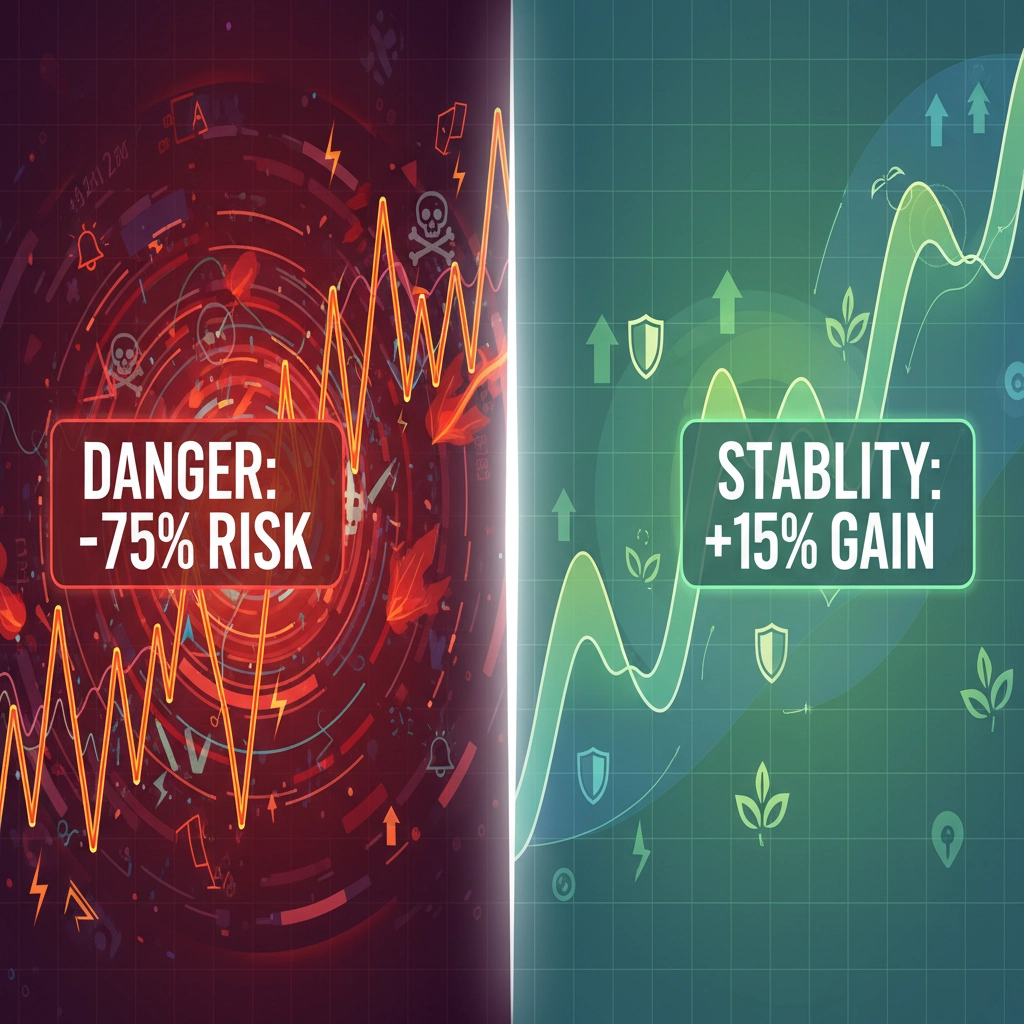
As your account grows from $100 to $200, then $500, resist the urge to increase risk percentages. Keep risking 1-2% of your current balance. The absolute dollar amounts increase naturally through account growth.
Consider graduating to different account types as you grow. Many brokers offer progression paths from cent accounts to standard accounts, with improved trading conditions at higher balance levels.
Common Pitfalls (And How to Dodge Them)
The Revenge Trading Trap
Small accounts make every loss feel personal. Lose $10 and suddenly you're down 10% of your capital. The temptation to "make it back quickly" destroys more small accounts than bad EAs ever could.
Solution: Set daily loss limits. If you hit your max loss for the day, close the platform and walk away. Tomorrow brings fresh opportunities with a clear head.
EA Overoptimization
Just because your EA had three losing trades doesn't mean you need to change settings. Small accounts magnify normal trading variance, making every drawdown feel catastrophic. Trust your backtesting and give strategies time to prove themselves over larger sample sizes.
The Upgrade Addiction
Every trading forum is full of "this new EA is the holy grail" posts. Small account traders get particularly susceptible to constantly switching systems, chasing the latest promised breakthrough. Pick one proven EA, master it completely, then consider alternatives.
Advanced Small Account Strategies
Multi-Timeframe Approach
Even with limited capital, you can run multiple EA instances on different timeframes or currency pairs. The key is maintaining overall account risk below 5% across all positions. This diversification can smooth out performance curves and reduce emotional stress from single-strategy dependence.
News Event Management
Small accounts can't absorb surprise volatility spikes during major economic announcements. Configure your EAs to reduce position sizes or pause trading around high-impact news events. The few pips you might miss are insignificant compared to the account-destroying moves you'll avoid.
Performance Metrics That Matter
Track metrics beyond just profit/loss:
- Maximum consecutive losses
- Average trade duration
- Win rate during different market conditions
- Drawdown recovery time
- Risk-adjusted returns
These metrics help you understand your EA's behavior and make informed decisions about position sizing and strategy adjustments.
The Psychology of Small Account Growth
Trading with limited capital creates unique psychological pressures. Every loss feels magnified, every win feels insufficient. This emotional intensity is actually your secret weapon: it forces you to develop the mental discipline that separates profitable traders from the majority who consistently lose money.
Successful small account traders develop what professionals call "process focus": caring more about following their system perfectly than about any individual trade result. This mindset shift is easier to develop with small amounts at risk but becomes invaluable when you're managing larger capital.
Moving Forward: Your Next Steps
Your $100 trading account isn't about the money: it's about proving to yourself that you can consistently follow a profitable system under pressure. The habits you build managing this small account will serve you whether you're eventually trading $1,000 or $100,000.
Start simple: choose one proven EA from a reputable source like FXShop24, set up proper risk management, and commit to following the system for at least 90 days without major changes. Document everything, celebrate small wins, and remember that every professional trader started exactly where you are now.
The difference between those who succeed and those who blow up their accounts isn't starting capital: it's discipline, patience, and the willingness to treat trading like a business rather than a lottery ticket. Your $100 journey starts now.