



20
Oct
Forex Crossover Bots: Are Multi-Asset EAs the Secret Advantage in 2025?
Ever notice how your single-pair EA crushes it for weeks, then suddenly tanks when market conditions shift? You're watching EUR/USD like a hawk while gold rockets past resistance and crypto pairs carve out perfect setups. Meanwhile, your bot sits there, laser-focused on one instrument, missing every other opportunity in the market.
Welcome to the multi-asset revolution. Forex crossover bots: EAs that trade multiple asset classes simultaneously: are quietly becoming the secret weapon of successful prop firm traders in 2025. These aren't your grandfather's single-pair robots. They're sophisticated systems that spread risk across forex, metals, and even crypto pairs, adapting to whatever the market throws at them.
What Are Forex Crossover Bots?
Think of traditional EAs as specialists: they master one currency pair like EUR/USD and stick to it religiously. Crossover bots are generalists with multiple specialties. They simultaneously monitor and trade forex pairs, precious metals like gold (XAU/USD), and increasingly, cryptocurrency crosses.
The game-changer? These systems don't just add more pairs to trade. They actively manage correlation risk, position sizing, and market exposure across different asset classes. When your forex pairs hit choppy waters, the bot might be banking profits on a gold breakout or riding a crypto momentum play.
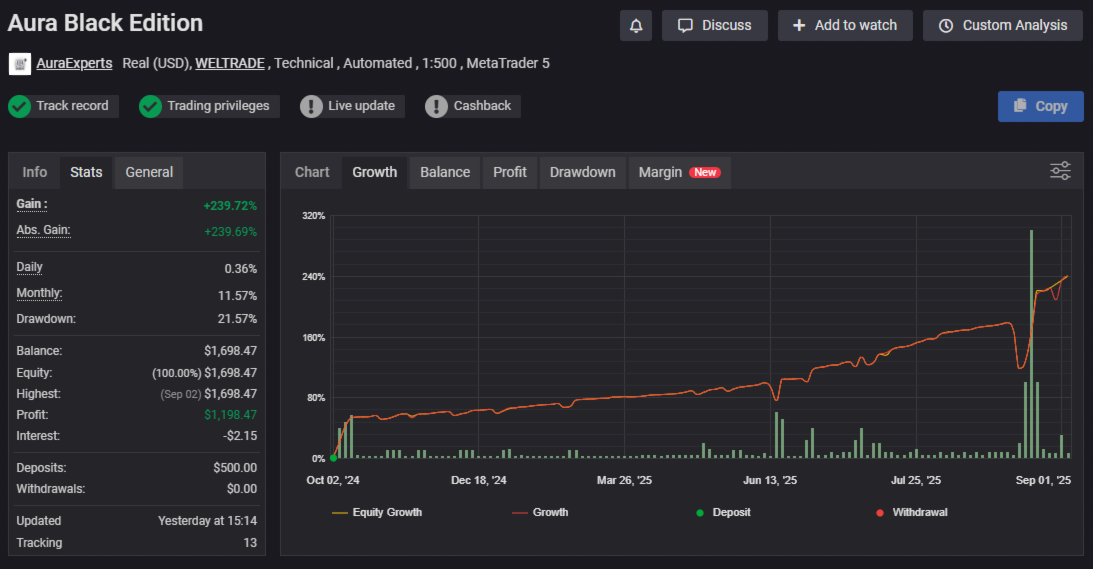
Modern multi-asset EAs like the systems shown in live performance dashboards demonstrate how diversification creates smoother equity curves. Instead of the violent swings you see with single-pair strategies, these bots generate more consistent returns by spreading risk across uncorrelated markets.
Why Multi-Asset EAs Are Exploding in 2025
The prop firm landscape changed everything. Challenge requirements favor consistent, low-drawdown performance over flashy single-pair gains. A bot that can maintain steady growth across multiple markets while keeping maximum drawdown under 5% suddenly becomes incredibly valuable.
Market volatility patterns shifted dramatically post-2023. Traditional forex correlations broke down as central banks diverged on policy, geopolitical tensions spiked commodity prices, and institutional crypto adoption created new cross-asset opportunities. Single-pair bots trained on historical data struggled to adapt, while multi-asset systems thrived on the chaos.

AI integration reached a tipping point in 2025. According to Investopedia's analysis of algorithmic trading evolution, modern EAs process millions of data points across multiple markets simultaneously, identifying correlation breakdowns and arbitrage opportunities that human traders miss entirely.
The result? Bots that think like portfolio managers instead of single-strategy robots.
The Multi-Asset Advantage Breakdown
Risk Distribution That Actually Works
Traditional diversification meant trading EUR/USD and GBP/USD: two highly correlated pairs that tank together during risk-off events. Real diversification means having your bot long EUR/USD while simultaneously short XAU/USD during dollar strength, or catching crypto momentum while forex ranges.
Multi-asset EAs calculate position sizes based on portfolio-wide risk, not individual pair risk. If your gold position reaches 2% account risk, the bot adjusts forex position sizes accordingly. This dynamic risk management prevents the account-killing scenarios that destroy single-pair strategies during black swan events.
Market Regime Adaptation
Forex markets cycle through trending, ranging, and volatile periods. Single-pair EAs get trapped in their strategy: a trend-following bot suffers through range-bound markets while scalping systems blow up during trending moves.
Multi-asset bots deploy different strategies across different markets simultaneously. During forex consolidation, they might focus on gold breakouts. When major currency pairs trend strongly, crypto exposure gets reduced while forex positions scale up.
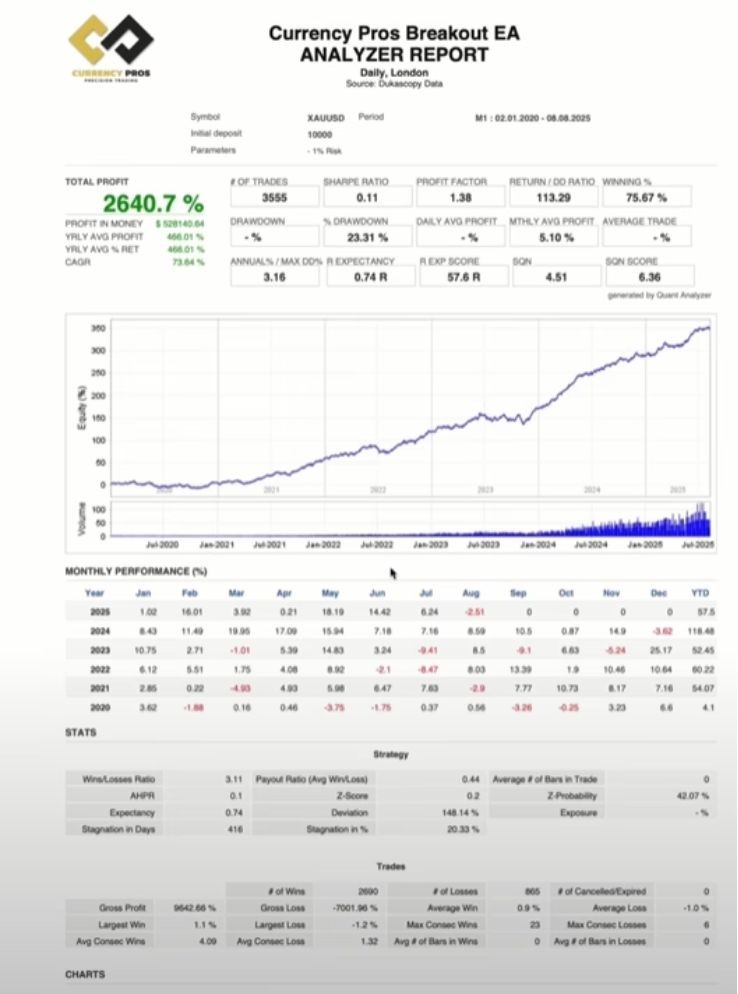
Performance reports from sophisticated EAs show how this adaptation creates the smooth equity curves prop firms love. Notice the consistent monthly returns and controlled drawdown periods: this is what diversification across assets and strategies delivers.
The Prop Firm Game-Changer
Prop firms evaluate traders on risk-adjusted returns, not absolute profits. A single-pair EA that returns 50% with 25% maximum drawdown loses to a multi-asset system delivering 35% returns with 8% drawdown every time.
Challenge phases become manageable when your bot spreads risk across uncorrelated markets. That brutal NFP release that would nuke a EUR/USD-only system? Your multi-asset bot might lose on forex while gaining on gold's safe-haven bid, keeping total account impact minimal.
The psychological advantage matters too. Watching a diversified bot trade multiple markets feels less stressful than betting everything on one pair's price action. This confidence translates to better challenge completion rates and more consistent funded account performance.

Potential Pitfalls to Navigate
Complexity Creep
More markets mean more variables to optimize, more correlations to monitor, and more ways for the system to break down. Over-optimized multi-asset EAs become fragile, performing brilliantly in backtests but failing in live markets when correlations shift unexpectedly.
False Diversification
Many "multi-asset" EAs simply run the same strategy across different pairs without considering correlations. Trading EUR/USD, EUR/GBP, and EUR/JPY simultaneously isn't diversification: it's concentrated EUR exposure with extra steps.
Resource Demands
Processing multiple data feeds, calculating cross-market correlations, and managing dynamic position sizing requires significant computational resources. Cheap VPS solutions might struggle with sophisticated multi-asset systems, leading to execution delays or missed opportunities.
What to Look for in 2025
Transparent Risk Management
Quality multi-asset EAs provide clear visibility into how they allocate risk across different markets. You should see position sizing adjustments based on correlation matrices and portfolio-wide exposure calculations, not just individual pair risk metrics.
Adaptive Allocation
The best systems adjust market exposure based on current volatility and opportunity sets. During forex consolidation, they might shift 60% of capital to metals trading. When major currency pairs break out, forex allocation increases while other markets get reduced exposure.
Real Track Records
Demand verified performance across different market conditions, not just cherry-picked winning periods. Multi-asset EAs should demonstrate consistent performance through trending markets, volatile periods, and range-bound phases across all traded asset classes.
The 2025 Social Buzz: Crossover Bots Are Everywhere
Ever feel like every feed is pushing a “holy grail” crossover bot that passed three prop challenges overnight? The rise is real—but so is the hype. Here’s where the conversation lives, what traders actually share, and how to separate signal from noise.
- Telegram channels
- What you’ll see: forward-test screenshots, VIP upsells, copy-trade invites, multi-asset setfiles (forex, metals, crypto).
- What matters: public, verified links (Myfxbook/FX Blue) with broker/account type/leverage disclosed; consistent lot sizing; no hidden martingale; forward stats through high-impact weeks (NFP revisions, CPI, FOMC).
- Reddit threads
- Where it happens: r/Forex, r/algotrading, prop firm subthreads.
- Red flags vs. reality: mods often flag promos; genuine posts show losing weeks, publish setfiles, and discuss correlation caps, drawdown limits, and logic like EMA cross + Fair Value Gap filters.
- YouTube reviews
- Common pattern: backtest-only, affiliate links, perfect equity curves.
- Trust cues: live or demo forward tests, broker/spread/slippage breakdowns, raw vs. standard account comparisons, losing months included, position sizing explained, and news handling during NFP weeks.
- Trader communities (Discord/prop firm forums)
- Useful share-outs: curated setfiles for multi-asset exposure, equity curves across metals/crypto, broker execution notes, and challenge rule adaptations (daily loss, relative drawdown).
What to watch out for
- Cloned bots with rebranded names and identical logic.
- Fabricated MT4/MT5 statements or equity curves that stop before drawdowns.
- “Dynamic scaling” that’s just grid/martingale after losses.
- Engagement pods: new accounts shilling, recycled comments, zero live links.
- Too-good-to-be-true guarantees. Review the CFTC’s guidance on forex fraud: https://www.cftc.gov/LearnAndProtect/AdvisoriesAndArticles/ForeignCurrencyFraud.html
Signals you’re seeing genuine user feedback
- Broker disclosed, with public TE link (Track Record and Trading Privileges verified).
- Continuous forward track record 60–90 days, including volatile news weeks.
- Setfiles and version history provided; change logs show why parameters moved.
- Portfolio-level risk detail: max DD cap, per-asset exposure, correlation thresholds.
- Clear notes on metals and crypto handling during off-hours volatility.
How FXShop24 helps you filter the noise
- Curated, tested EAs with multi-asset capability and portfolio-aware risk controls.
- Clear documentation: asset coverage, correlation logic, risk caps, and known constraints.
- Practical setfiles aligned to prop firm rules (daily loss limits, max drawdown), plus news-handling options for NFP-heavy weeks.
- 24/7 support to interpret equity curves, map risk to your broker conditions, and size a VPS for multi-market execution.
- Instant digital downloads and an update cadence you can track—so you know what changed and why.
Bottom line: use the buzz to discover candidates, then validate with forward data and risk math. Two shortlisted bots, two weeks of demo-forward, and a side-by-side correlation check will tell you more than a hundred hype posts.
The Bottom Line
Multi-asset EAs represent a genuine evolution in automated trading, but they're not magic bullets. The advantage emerges when sophisticated programming meets proper diversification logic and trader understanding of how different markets interact.
For prop firm challenges, the risk-distribution benefits are undeniable. Instead of betting your entire challenge on EUR/USD's next move, you're spreading exposure across uncorrelated markets while maintaining the consistent performance that funding companies reward.
The secret isn't just trading multiple assets: it's doing so intelligently, with dynamic risk management and correlation awareness that traditional single-pair systems can't match. As market volatility increases and correlations continue shifting, multi-asset capability isn't just an advantage: it's becoming essential for serious algorithmic traders.
The question isn't whether multi-asset EAs offer advantages in 2025. It's whether you can afford to keep betting everything on single-pair strategies while the market evolves around you.