



22
Oct
Do EA Bots Actually Work? Honest Insights, Mixed Reviews, and Realistic Expectations
Ever stare at your trading screen at 3 AM, wondering if there's a robot out there that could trade while you sleep? You're not alone. The promise of expert advisor mt4 systems running 24/7, generating consistent profits without emotional interference, sounds like the holy grail of forex trading. But here's the uncomfortable truth most vendors won't tell you: the results are mixed, the expectations are often unrealistic, and the red flags are everywhere.
The Brutally Honest Answer
Do forex robot mt5 systems actually work? Sometimes. The forex EA landscape is littered with both genuine success stories and spectacular failures, often involving the exact same software. The difference usually comes down to realistic expectations, proper risk management, and understanding what you're actually buying.
Let's cut through the marketing noise and examine real user experiences, because that's where the truth lives.
Real Trader Testimonies: The Good, Bad, and Ugly
The Success Stories
Mark, a part-time trader from London, runs a trendhunter ea that's generated 2.8% monthly returns over 18 months. "Nothing spectacular," he admits, "but it's consistent, and I sleep well at night. The key was setting conservative lot sizes and not expecting miracles."
Sarah, who trades with a prop firm ea, managed to pass her evaluation using a scalping system. "It took three attempts and a lot of tweaking, but the EA helped me maintain discipline during high-pressure situations. Made about 3.2% during my evaluation month."
The Reality Checks
Then there's David, who downloaded a free forex robot for mt4 download promising 15% monthly returns. "Blew my $2,000 account in six weeks. The EA worked great in backtests but couldn't handle real market conditions. Expensive lesson in why free often costs the most."
Jennifer tried five different mt4 ea systems over two years. "Two were complete disasters, two broke even after spreads and slippage, and one actually made modest profits. The profitable one? It was the most boring, conservative system of the bunch."

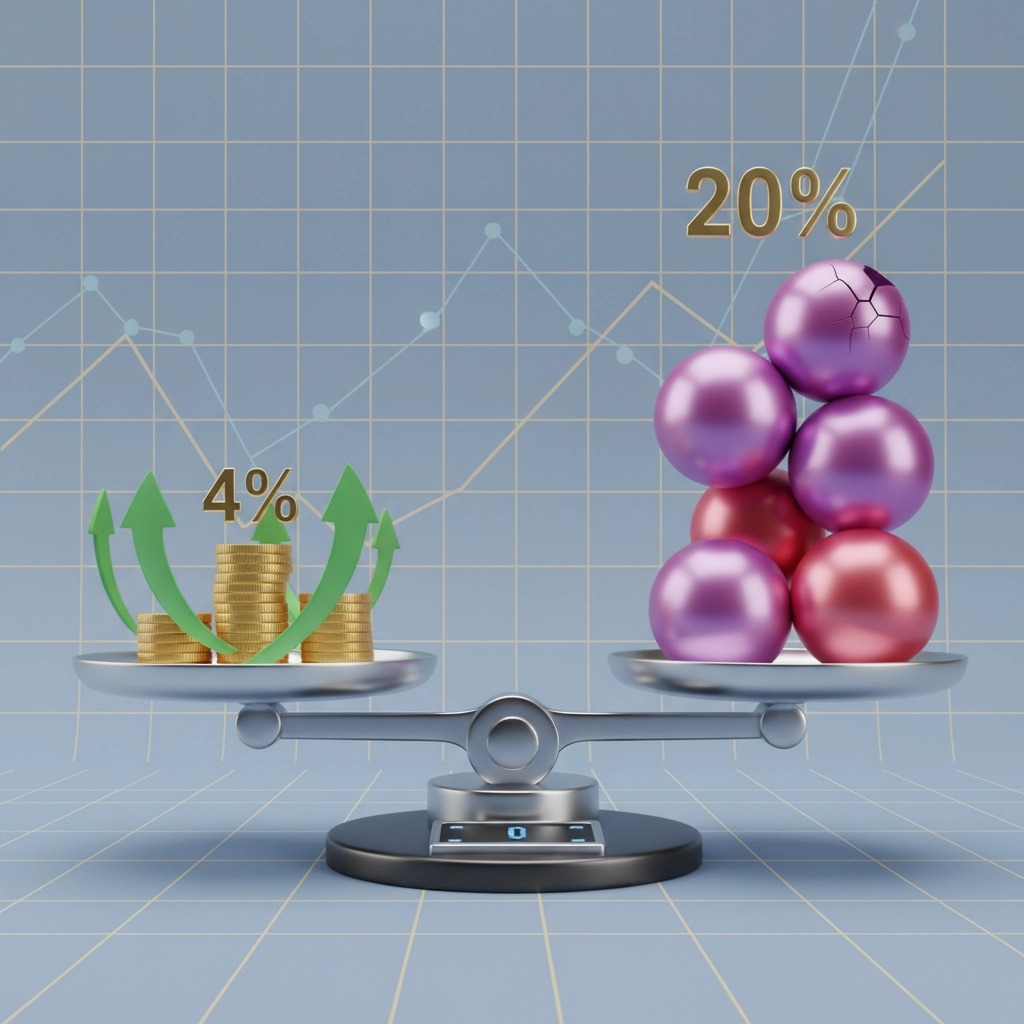
Setting Realistic Expectations: The 4% Rule
Here's what seasoned EA users won't tell you upfront: sustainable monthly returns rarely exceed 4% for retail traders. Yes, you read that correctly. While backtests might show 20-50% monthly gains, live trading tells a different story.
The mathematics of compounding make even 3-4% monthly returns incredibly powerful over time. A system generating 3% monthly would turn $10,000 into over $42,000 in just one year. Yet most traders dismiss such "modest" returns, chasing systems promising double-digit monthly gains.
Professional money managers at banks and hedge funds celebrate annual returns of 15-25%. If institutional traders with unlimited resources and direct market access struggle to exceed these figures, why would a $99 robot trading metatrader 4 consistently outperform them?
Red Flags: How to Spot EA Scams
No Verified Track Record
Legitimate EA developers provide verified trading records from live accounts, not just backtests. According to Myfxbook, a respected trading verification platform, authentic track records show month-by-month performance, including drawdowns, trade frequency, and account details.
Beware of vendors showing only cherry-picked screenshots or PDF statements that can be easily manipulated.
Unrealistic Profit Promises
Any system promising consistent returns above 10% monthly is either lying or using unsustainable risk levels. The best free scalping ea mt4 systems might generate impressive short-term gains, but they typically blow accounts during unexpected market volatility or news events.
If someone had a system generating 20% monthly with low risk, they wouldn't be selling it for $197. They'd be managing billions for institutional clients.
Free EAs from Unknown Sources
While not all free systems are scams, most free forex robot for mt4 download options from unknown developers serve as lead magnets for more expensive, questionable products. Free EAs often lack proper risk management, use dangerous money management techniques, or contain hidden features that activate after initial success.
Why Most Retail EAs Fail
Over-Optimization (Curve Fitting)
Most EA developers over-optimize their systems on historical data, creating algorithms that perform perfectly on past market conditions but fail miserably in live trading. This process, called curve fitting, produces backtests that look too good to be true: because they are.
Inadequate Risk Management
Many retail EAs prioritize high win rates and impressive profit charts over capital preservation. They use fixed lot sizes regardless of account balance, ignore correlation between trades, or lack proper stop-loss mechanisms.
Market Condition Dependency
EAs typically excel in specific market conditions but struggle when those conditions change. A trend-following system might dominate during strong directional moves but hemorrhage money during choppy, sideways markets.
Broker Dependency
EA performance heavily depends on execution speed, spreads, and slippage. Systems optimized for one broker's conditions often fail spectacularly with different execution parameters.
What Actually Works: The Boring Truth
Successful EA implementations share common characteristics that most traders find disappointingly mundane:
Conservative Position Sizing
Working systems typically risk 0.5-2% per trade, not the 10-20% many retail EAs suggest. This approach ensures longevity over spectacular short-term gains.
Diversification Across Strategies
Professional traders rarely rely on single EAs. They deploy multiple systems across different currency pairs, timeframes, and market conditions.
Continuous Monitoring and Optimization
Successful EA users treat their systems like businesses, constantly monitoring performance, adjusting parameters, and replacing underperforming components.
Verified Live Account Testing
Smart traders spend months testing EAs on live accounts with small position sizes before scaling up. Demo testing, while useful, rarely replicates the psychological and technical challenges of live trading.

How to Properly Evaluate Expert Advisors
Demand Verified Performance
Insist on verified live trading records spanning at least 12 months. Look for consistent monthly performance, reasonable drawdowns (typically under 20%), and realistic trade frequencies.
Understand the Strategy
If you can't explain how your EA makes money in simple terms, you're not ready to risk real capital. Understanding the underlying logic helps you recognize when market conditions might challenge the system.
Test Gradually
Start with minimum position sizes on live accounts. Even systems with excellent track records need adjustment periods as they adapt to your broker's specific conditions.
Monitor Key Metrics
Track monthly returns, maximum drawdown, win rate, average trade duration, and profit factor. These metrics provide early warning signs of deteriorating performance.
The Reality of EA Trading in 2025
Expert Advisors aren't magic bullets, but they're not complete frauds either. The key lies in approaching them with realistic expectations, proper risk management, and thorough due diligence.
Successful EA trading requires the same skills as manual trading: patience, discipline, risk management, and continuous learning. The robot handles execution, but you still need to handle strategy selection, position sizing, and performance monitoring.
Instead of searching for the perfect system, focus on finding adequate systems with proper risk controls. A boring EA generating 2-4% monthly with 15% maximum drawdown will outperform spectacular systems that eventually blow accounts.
Remember: in trading, boring often equals profitable, while exciting usually equals expensive. Your EA should be a tool in your trading arsenal, not a replacement for trading knowledge and discipline.
The most successful EA traders treat their systems like employees: they expect consistent, reliable performance rather than miraculous results. Set your expectations accordingly, and you might find that expert advisors can indeed work, just not in the way most vendors promise.