
3
Jul
Trading Software Moat: What Traders Need to Know
TL;DR:
- A trading software moat is a lasting competitive advantage created by proprietary data, deep integration, and high switching costs. AI has shortened the duration of these moats, making data ownership and workflow embedding more crucial for long-term protection. Traders should focus on open APIs, data exportability, and real-world stress testing to assess platform strength and avoid lock-in.
A trading software moat is defined as a sustainable competitive advantage that protects a trading platform’s market position through proprietary data, deep workflow integration, and high switching costs. The concept originates from Warren Buffett’s economic moat framework, which describes how medieval castle trenches protected against attack. In trading software, the moat works the same way. Platforms that store authoritative risk and performance data, embed themselves into daily workflows, and build complex API dependencies become extremely difficult to replace. Understanding what is trading software moat gives traders a sharper lens for evaluating which platforms are worth committing to long term.
What core factors create a trading software moat?
A trading software moat is rarely just a feature list. The real protection comes from depth of integration and the data dependencies that build up over time. Once a platform becomes the single source of truth for your risk metrics, trade history, and performance analytics, replacing it means migrating years of structured data. That migration cost is the moat in action.
Four factors consistently produce the strongest moats in trading software:
- Proprietary data formats. When a platform stores your trade history, backtesting results, or strategy parameters in a format only it can read, you face real friction when switching. Algorithmic traders risk losing their strategic intellectual property if they cannot export cleanly.
- API integration depth. Platforms that connect to brokers, data feeds, risk engines, and execution systems through custom API setups become embedded in your workflow. Each new integration adds another layer of switching cost.
- Data gravity. The more downstream systems depend on a platform’s specific data structures, the harder it becomes to leave. AI-configured agent workflows that rely on platform-specific APIs make this friction even more acute.
- Regulatory and compliance integration. Platforms that handle reporting, audit trails, or broker compliance requirements become load-bearing infrastructure. Removing them requires rebuilding compliance workflows from scratch.
Network effects also play a role, though they are less common in retail trading software than in institutional platforms. When a community of traders, strategy developers, and signal providers all operate within the same ecosystem, each new participant makes the platform more valuable for everyone else.
Pro Tip: Before committing to any trading platform, ask the vendor directly: “Can I export all my historical trade data, strategy parameters, and performance reports in a standard format like CSV or JSON?” A vendor that hesitates has a moat built on lock-in, not quality.

How has AI reshaped trading software moats in 2026?
AI has changed the economics of building trading software, but it has not eliminated moats. It has shifted where they live. Morningstar reduced the moat duration horizon for software companies from 20 to 10 years as of early 2026. That compression matters for traders evaluating long-term platform commitments.
The key shift is this: AI lowers the cost of writing code, so feature parity between platforms arrives faster than it used to. A new entrant can now build a charting engine or backtesting module in months instead of years. What AI cannot replicate quickly is a platform’s accumulated proprietary data and its embedded position in a trader’s workflow.
“Software products serving as deep systems of record with proprietary data are harder to disrupt despite AI advancements. Products lacking proprietary data or with simple seat count models are vulnerable.” — Baillie Gifford, 2026 Q1 Perspectives
This creates a clear split in the market. Platforms that act as deep systems of record for trader data maintain durable moats even as AI commoditizes feature development. Platforms that compete primarily on interface design or indicator count face real disruption risk.
The practical implications for traders choosing software in 2026 are direct:
- Platforms with high retention rates and recurring revenue still hold sustainable moats, even as AI compresses code costs.
- AI-powered features like automated signal generation or adaptive risk management add value, but only if they are built on top of proprietary data that competitors cannot easily copy.
- The advantages of AI trading systems are real, but they are most durable when the underlying platform owns unique data rather than just running generic models.
The moat has moved from “we built this feature first” to “we own this data and your workflow depends on it.” That is a harder position to attack.
What common pitfalls should traders avoid when evaluating trading software moats?
Traders consistently make the same mistakes when assessing platform strength. Recognizing these errors before you commit saves both money and strategic flexibility.
Overestimating the feature set. A long list of indicators and chart types looks impressive. It rarely reflects moat strength. The real question is whether those features are built on proprietary data or can be replicated by any competitor with a competent development team.
Ignoring the all-in cost. The subscription price is rarely the full cost. Advanced indicators, real-time data feeds, and API access often carry separate fees that compound over time. Platforms that price these add-ons aggressively have pricing power, which is itself a moat signal. Budget for the complete cost before comparing platforms.
Trusting demo accounts too much. Demo environments are designed to perform well. They rarely replicate the conditions that matter most: price spikes, server latency under load, or broker connection failures. Stress testing under volatile conditions before deployment is the only way to reveal true platform reliability.
Skipping execution quality analysis. Execution speed, slippage, and fill rates under real market conditions separate strong platforms from weak ones. These metrics do not appear in marketing materials. You have to test them directly.
Choosing by brand recognition alone. A well-known name does not guarantee a strong moat. Objective, evidence-based selection using a structured scorecard produces better outcomes than relying on reputation or peer recommendations.
Pro Tip: Run your shortlisted platform during a major economic data release, such as a Non-Farm Payrolls announcement or a Federal Reserve rate decision. If execution degrades or the platform disconnects, you have found a critical weakness that no demo account would have shown you.
How can traders practically assess trading software moat strength?
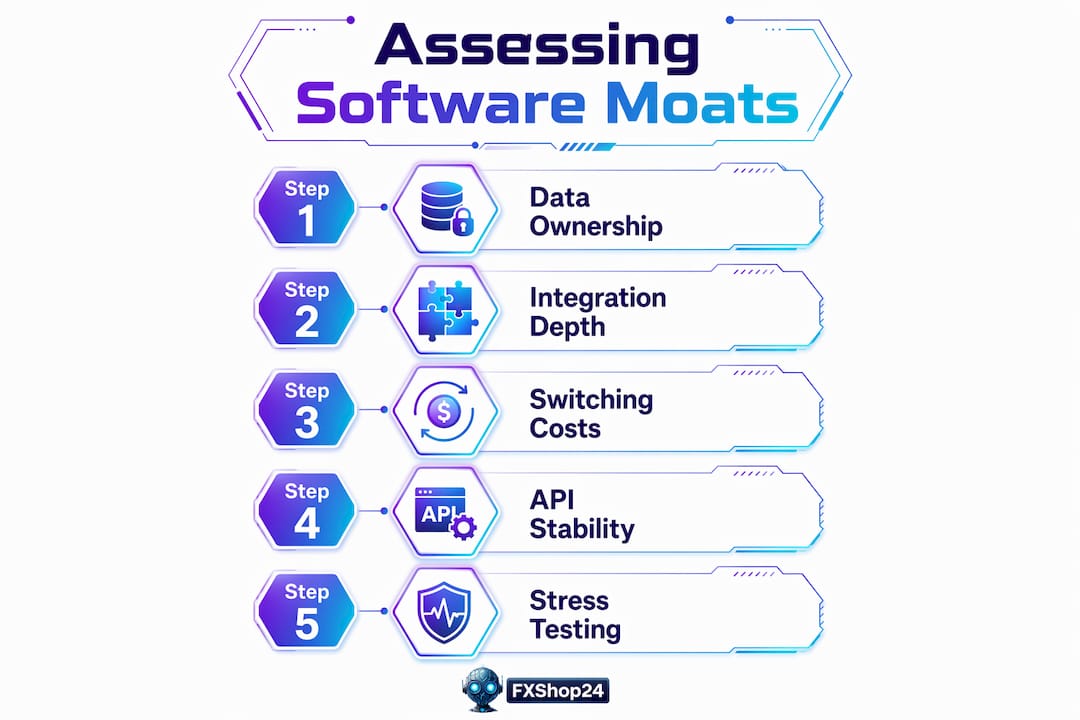
Assessing moat strength requires a structured approach. Gut feel and feature demos are not enough. A 10-step scorecard method that scores platforms on objective criteria produces far more reliable results than informal comparisons.
Core evaluation criteria
Start with the factors that directly affect trading performance and long-term flexibility:
- Execution quality. Measure average fill time, slippage on market orders, and rejection rates during high-volatility periods.
- API reliability. Test uptime, rate limits, and error handling under load. A platform with an unstable API creates operational risk for algorithmic traders.
- Real-time data accuracy. Compare price feeds against a reference source during fast markets. Delays or gaps in data directly affect strategy performance.
- Data portability. Confirm you can export all historical data in a usable format. Protecting your proprietary trading data is as important as the software itself.
Matching software to your trading approach
Different trading styles demand different moat qualities. The table below maps key evaluation priorities to trading approach.
| Trading approach | Primary moat criteria | What to test |
|---|---|---|
| Algorithmic / EA-based | API stability, data portability | Stress test API under load; export full trade history |
| Manual / discretionary | Execution speed, charting depth | Live test during volatile sessions |
| Prop firm / funded account | Compliance integration, drawdown controls | Verify rule enforcement in real conditions |
| Multi-asset (forex + gold) | Data feed breadth, cross-asset API | Check feed accuracy across instruments |
Long-term traders should prioritize platforms with open APIs and clear data export policies. Vendor lock-in that prevents data migration is a direct threat to strategic flexibility, especially for traders who develop proprietary algorithms or AI-powered trading bots over time. The cost of switching a platform that owns your data is not just financial. It includes the time to rebuild integrations, revalidate strategies, and re-establish execution benchmarks.
Key Takeaways
A trading software moat is defined by data ownership, integration depth, and switching costs, not by feature count or brand recognition.
| Point | Details |
|---|---|
| Moat definition | A trading software moat is a sustainable advantage built on proprietary data, API integration, and high switching costs. |
| AI compression effect | Morningstar cut software moat duration from 20 to 10 years; data ownership now matters more than feature development speed. |
| All-in cost trap | Real platform costs include data feeds, API fees, and add-ons that compound the moat effect beyond the base subscription price. |
| Stress testing is non-negotiable | Demo accounts do not reveal platform weaknesses; test under live volatile conditions before committing capital. |
| Data portability protects traders | Open APIs and exportable data formats preserve strategic flexibility and protect algorithmic traders’ intellectual property. |
The moat question most traders never ask
At Fxshop24, we have watched traders make the same expensive mistake for years. They evaluate platforms by counting features and comparing subscription prices. They never ask the question that actually matters: “What happens to my data and my strategies if I need to leave?”
The moat shift from features to data and integration is real and accelerating. I have seen traders lose months of backtesting work because a platform stored strategy parameters in a proprietary format with no export option. That is not a technical inconvenience. It is a deliberate design choice that benefits the vendor, not the trader.
My honest view is that the best trading software moat for a trader is one that works in your favor, not against you. That means open APIs, clean data exports, and execution quality you can verify independently. Platforms that make it easy to leave are the ones worth staying with. The ones that trap you with lock-in are signaling that their product cannot compete on merit alone.
AI will continue compressing the time it takes to build new features. The platforms that survive the next decade will be the ones that own the data layer and embed themselves into workflows that traders cannot easily rebuild elsewhere. Your job is to make sure that embedding serves your interests, not just the vendor’s.
— Fxshop24
Fxshop24’s approach to software with real trading advantages
Fxshop24 builds and curates automated trading systems designed for traders who take platform quality seriously. Every expert advisor and AI-powered trading robot in the Fxshop24 marketplace is tested for execution reliability, prop firm compatibility, and real-market performance, not just demo results.
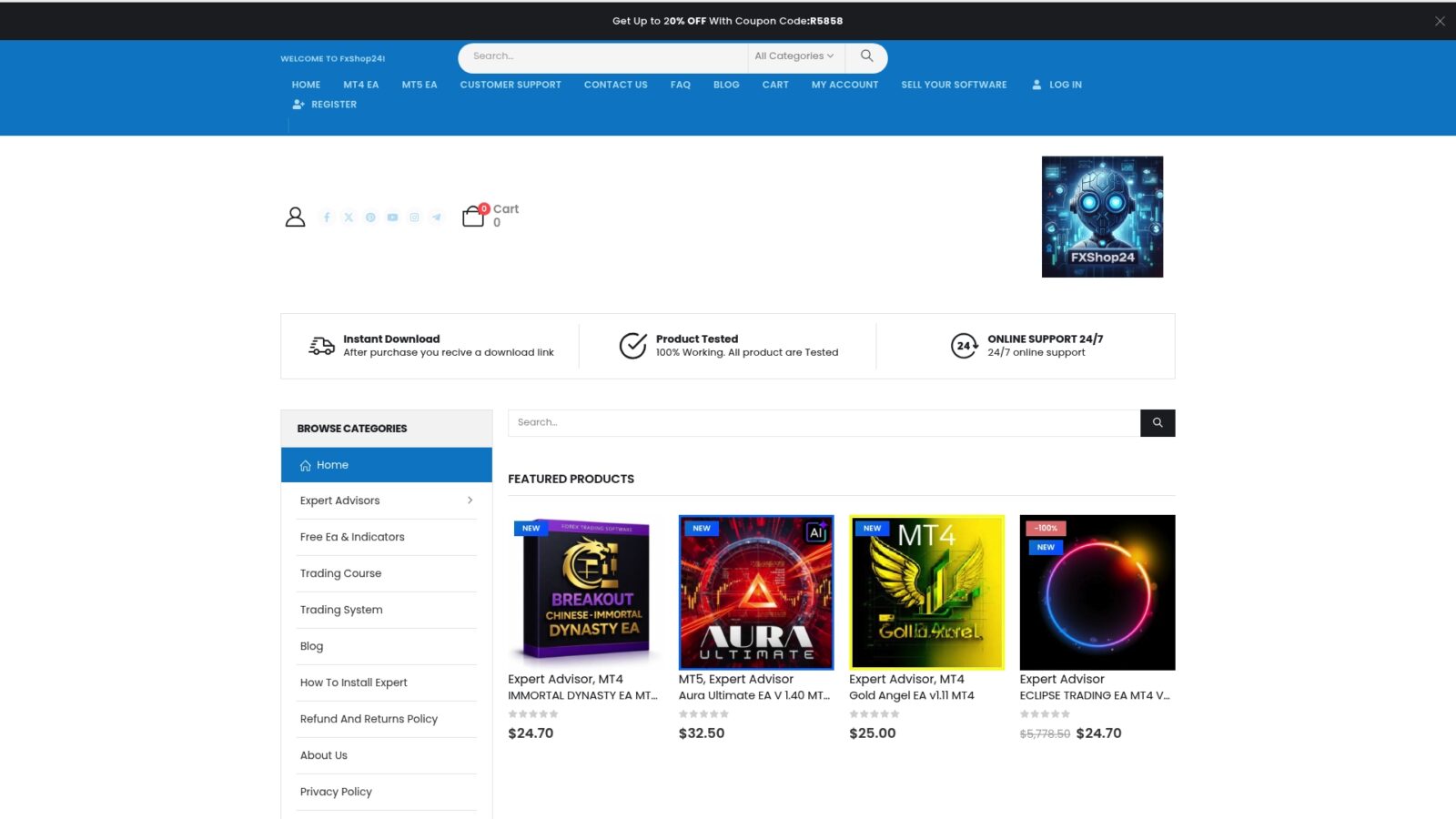
The automated futures trading systems available through Fxshop24 are built on MT4 and MT5, two platforms with open API standards and broad broker compatibility. That means your strategies stay portable and your data stays yours. Fxshop24 also provides lifetime updates and installation support, so the software you buy today keeps pace with market conditions. Traders who want systems with genuine trading platform benefits, not just marketing claims, can browse the full catalog at Fxshop24.net.
FAQ
What is a trading software moat in simple terms?
A trading software moat is a set of competitive advantages, such as proprietary data, deep API integrations, and high switching costs, that make a trading platform difficult to replace. The stronger the moat, the more dependent traders become on that specific platform.
How does AI affect trading software moats?
AI lowers the cost of building new software features, which compresses moat duration. Morningstar reduced the expected moat horizon for software companies from 20 to 10 years as of early 2026. Platforms that own proprietary data maintain stronger moats than those competing on features alone.
What should I look for in trading software to avoid lock-in?
Prioritize platforms with open APIs, standard data export formats, and transparent pricing that includes all add-on costs. These features protect your strategic flexibility and prevent a vendor from holding your trade history or algorithm parameters hostage.
Is trading software worth it if the moat works against me?
A platform with a strong moat that benefits the vendor through lock-in rather than genuine product quality is a liability. The best trading software advantages come from platforms that earn retention through execution quality and reliability, not through data traps or proprietary formats that prevent migration.
How do I stress test a trading platform before committing?
Run the platform live during a high-volatility event, such as a major central bank announcement or a surprise economic data release. Test API stability under load, measure execution speed against a reference, and attempt a full data export to confirm portability before depositing real capital.