
19
Jun
What Is Demo Trading? A Beginner’s Complete Guide
TL;DR:
- Demo trading uses virtual funds to practice market conditions without risking real capital.
- It helps traders develop skills, test strategies, and familiarize themselves with platforms before live trading.
Demo trading is the practice of using a simulated account with virtual funds to trade in real or near-real-time market conditions without risking actual capital. Brokers like IG and Forex.com offer these accounts directly on their live platforms, giving you access to the same tools, charts, and order types you would use with real money. The industry term is “demo account” or “paper trading,” and it serves one clear purpose: letting you build skills before your capital is on the line. Whether you are brand new to forex or testing a new strategy on MetaTrader 4 (MT4) or MetaTrader 5 (MT5), demo trading is where preparation happens.
What is demo trading and how does it work?
Demo trading simulates real trading using virtual funds alongside live or near-live market data on the broker’s actual platform interface. You place orders, set stop-losses, apply leverage, and read charts exactly as you would in a live account. The only thing missing is real financial consequence.

What a demo account actually gives you
Demo accounts typically start with a virtual balance between $10,000 and $100,000, depending on the broker. Some brokers reset or replenish this balance on request, while others let it run until it hits zero. The range matters because it affects how realistically you can simulate your intended live position sizes.
Here is what most broker demo accounts include:
- Virtual balance: Preset amount of simulated capital, often adjustable
- Live or delayed market data: Real price feeds or data delayed by a few minutes
- Full order types: Market orders, limit orders, stop-loss, and take-profit settings
- Leverage access: Same leverage ratios available on live accounts
- Platform tools: Full charting, indicators, and EA (expert advisor) compatibility on MT4/MT5
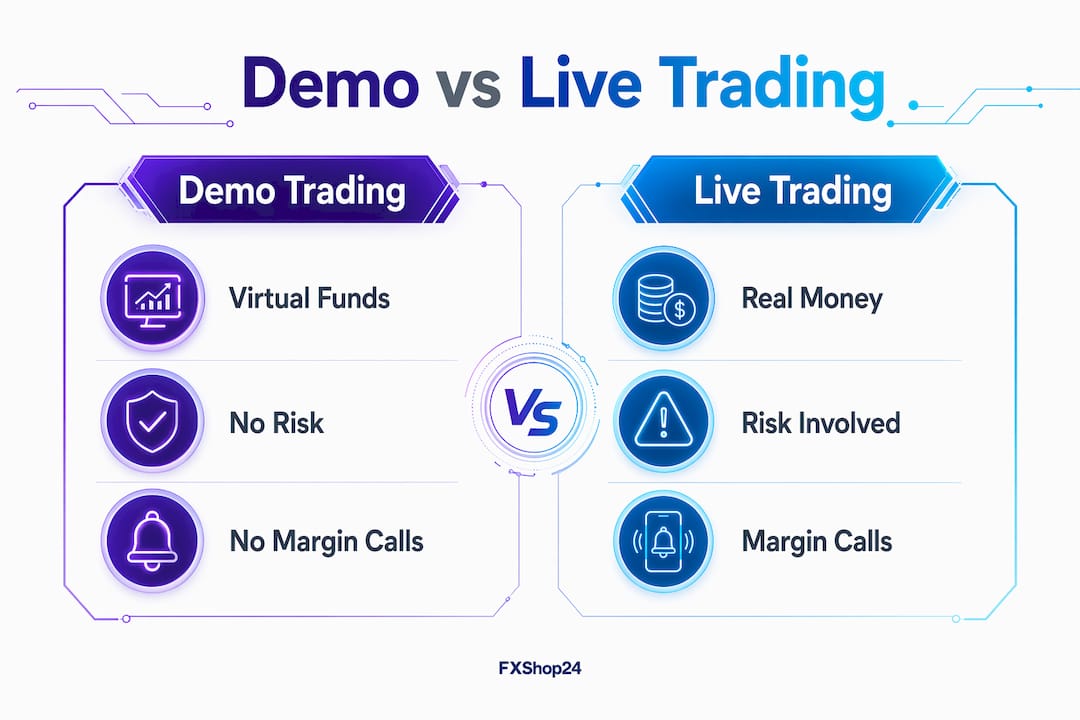
One important distinction: demo trades are not subject to margin calls. In a live account, falling below your margin requirement triggers a forced close. In demo, that safety net simply does not exist in the same way, which means your practice environment is slightly more forgiving than reality.
Pro Tip: Before you start, check whether your broker’s demo account has an expiry date. Some platforms close inactive demo accounts after 30 days. Confirm the reset rules so your practice session does not get cut short.
What are the benefits of demo trading?
Demo trading builds market knowledge and execution skills without the cost of real losses. That is its core value. The benefits apply to both beginners learning the basics and experienced traders validating new approaches.
For beginners, the advantages are straightforward:
- Platform familiarity: You learn where every button, chart, and setting lives before real money is involved
- Order mechanics: Placing a limit order or setting a stop-loss becomes second nature through repetition
- Strategy testing: You can run a moving average crossover system or a news-based approach across dozens of trades to see if the logic holds
- Broker evaluation: Demo accounts are used by both beginners and experienced traders to evaluate brokers before committing capital
For experienced traders, demo accounts serve a different purpose. They are the right place to test an unfamiliar asset class, validate an expert advisor before live deployment, or rehearse a strategy adjustment after a losing streak.
“Treat demo accounts as disciplined training phases, not entertainment. Track performance and learn risk controls for live success.” — The Broker Report
The psychological benefit is real but limited. You will build confidence in your mechanics. What you will not fully build is the emotional discipline that comes from watching real money move. That gap matters, and the next section explains why.
Demo trading vs live trading: what are the key differences?
The biggest difference between demo and live accounts is virtual versus real money, and the risk mechanics that come with it. This is not a minor detail. It changes how you think, decide, and react.
| Factor | Demo trading | Live trading |
|---|---|---|
| Capital at risk | None (virtual funds) | Real money |
| Margin calls | Not enforced | Enforced by broker |
| Slippage | Minimal or absent | Present, especially in volatile markets |
| Execution speed | May lag live conditions | Real-time with broker latency |
| Trader psychology | Low stress, low stakes | High stress, emotional decision-making |
| Cost of mistakes | Zero | Real financial loss |
Strategies that are profitable in demo may behave differently in live conditions because of slippage, spreads, and trader psychology. A system that looks clean on a demo account can fall apart the moment real capital is involved, not because the strategy is wrong, but because the trader’s behavior changes under pressure.
Not all brokers’ demo platforms behave identically to their live environments, either. Margin call behavior, update latency, and execution speed can all differ. Always verify how your broker’s demo compares to its live account terms before drawing conclusions from your results.
Pro Tip: Run the same strategy on demo and a small live account simultaneously for two weeks. The behavioral differences you notice will teach you more about your trading psychology than months of demo alone.
Understanding trading psychology is the piece most traders underestimate when moving from simulated to real conditions.
How to start demo trading: a step-by-step approach
Opening a demo account takes less than ten minutes with most brokers. The process is standard across platforms like IG, Forex.com, and brokers that support MT4 or MT5.
- Choose a broker and platform. Select a broker that offers the asset classes you want to trade, such as forex pairs, gold, or indices. Confirm they support MT4 or MT5 if you plan to use expert advisors.
- Register for a demo account. Most brokers require only an email address and basic details. No deposit is needed.
- Set your virtual balance. Choose a starting balance that matches your intended live account size. Practicing with $100,000 virtual when you plan to trade with $500 real creates unrealistic habits.
- Define your learning goals. Are you learning the platform? Testing a specific strategy? Building order discipline? Each goal requires a different focus and a different time frame.
- Set a time limit. Effective demo use requires time-bounded, goal-driven practice. Give yourself 4–8 weeks per objective, then review your results before extending.
- Track every trade. Log your entries, exits, reasoning, and outcomes in a spreadsheet or trading journal. This is the step most beginners skip, and it is the one that creates the most learning.
- Apply real risk management rules. Use the same position sizing and stop-loss rules you plan to use live. Ignoring risk management in demo trains bad habits that carry over.
The role of testing in trading goes beyond just running trades. It means building a repeatable process you can trust when real capital is at stake.
Some traders also use dedicated simulator tools like Forex Tester, which offer historical data replay and detailed analytics beyond what a standard broker demo provides. These tools are especially useful for testing strategies across years of price history in a compressed time frame.
How to transition from demo to live trading
The psychological transition from demo to live trading is challenging and not fully replicable by demo practice alone. Knowing this in advance puts you ahead of most new traders.
Here is how to make the shift without derailing the progress you built:
- Start with a small live account. Mini accounts or cent accounts let you trade with real money at minimal risk. The emotional experience of a $5 loss is more instructive than a $5,000 virtual gain.
- Keep your position sizes conservative. Your first live trades should be smaller than your demo trades, not larger. Build confidence through consistency, not through chasing bigger returns.
- Maintain the same risk rules. The stop-loss discipline and position sizing you practiced on demo must carry over directly. Abandoning those rules under live pressure is the most common failure point.
- Use demo ongoing as a testing tool. Professional traders use demos selectively for platform validation, algorithm testing, or unfamiliar markets. Demo does not stop being useful once you go live.
- Review your journal before scaling up. Only increase position sizes after you have demonstrated consistent execution across at least 20–30 live trades.
For traders using expert advisors, the guide on transitioning safely with EAs covers the specific steps for moving automated systems from demo to live without introducing new variables.
Key takeaways
Demo trading is the most direct path from zero market knowledge to live-ready execution, but only when used with clear goals, real risk rules, and a defined end date.
| Point | Details |
|---|---|
| Demo trading definition | Simulated trading with virtual funds on a real broker platform using live or near-live data. |
| Core benefit | Practice order execution, test strategies, and learn platforms without any financial risk. |
| Critical limitation | Demo does not replicate live psychology, margin calls, or real slippage behavior. |
| Best practice | Set a virtual balance matching your planned live account size and track every trade in a journal. |
| Transition tip | Start live trading with a small account and maintain the same risk rules you used in demo. |
The honest truth about demo trading most guides won’t tell you
Demo trading taught me more about platform mechanics than any course I have taken. I can place a bracket order on MT4 in under 30 seconds because I did it hundreds of times with nothing at stake. That muscle memory is real, and it transfers directly to live conditions.
What does not transfer is the emotional weight of a losing trade. I have watched traders run six-week winning streaks on demo, open a live account with $2,000, and blow 40% of it in the first week. The strategy did not change. The trader did. When real money is on the line, you second-guess entries, move stop-losses, and close winners too early. None of that shows up in demo.
The mistake I see most often is treating demo as a profitability test. Traders run a strategy, see green numbers, and assume they are ready. They are not. The real test is whether you can follow your rules under pressure, and demo simply cannot create that pressure. What it can do is eliminate every excuse related to mechanics, platform knowledge, and strategy logic. By the time you go live, those variables should be solved. The only remaining variable is you.
My advice: use demo with a deadline. Give yourself 6 weeks, define three specific goals, and grade yourself honestly at the end. If you cannot follow your own rules in a zero-stakes environment, going live will not fix that. Fix it first, then move forward.
— Fxshop24
Ready to put your demo skills to work with the right tools?
Once you have built a solid foundation through demo practice, the next step is finding the right tools to support your live trading. Fxshop24 offers a full range of expert advisors, AI-powered trading robots, and MT4/MT5 indicators built for forex and gold markets.
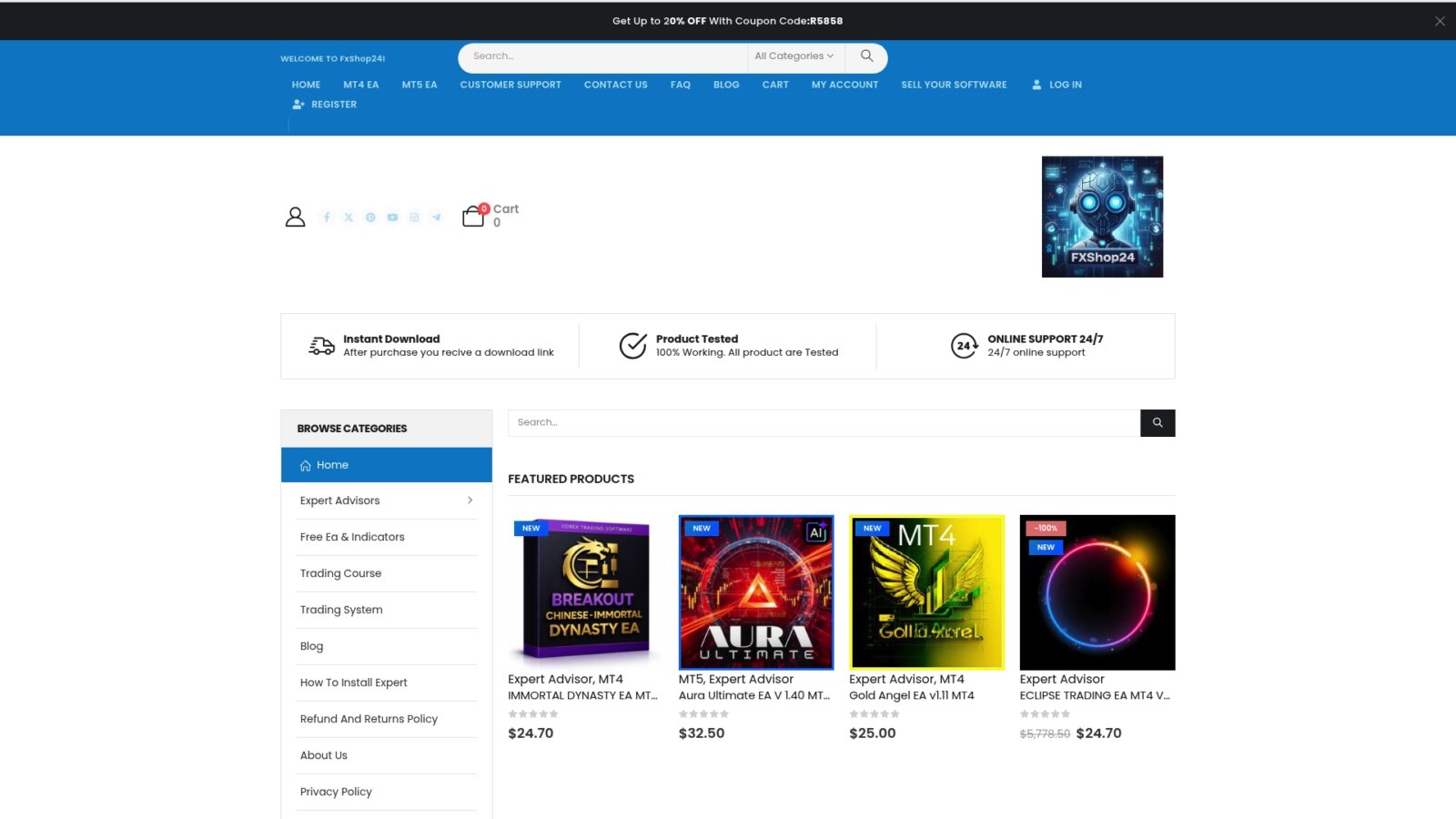
Every system in the Fxshop24 catalog is designed to be tested on demo before live deployment, so the skills you built in your practice phase translate directly into how you evaluate and run automated systems. Explore the automated futures trading systems guide to see which tools fit your strategy and risk profile. You can also browse the full range of MT4/MT5 trading tools to find indicators and EAs that complement the approach you developed during your demo phase.
FAQ
What is the demo trading definition in simple terms?
Demo trading is practicing in a simulated account with virtual money on a real broker platform. It uses live or near-live market data so the experience mirrors actual trading without any financial risk.
How long should I spend demo trading before going live?
Most traders benefit from 4–8 weeks of focused demo practice per specific goal. The key is setting a deadline and defined objectives rather than trading on demo indefinitely.
Is demo trading effective for learning real strategies?
Demo trading is effective for testing strategy logic and learning platform mechanics, but it does not replicate the psychological pressure of live trading. Use it to eliminate mechanical errors, not to predict live profitability.
What is the difference between a demo account and a trading simulator?
A demo account is a virtual live account supplied directly by your broker. A trading simulator may use historical data replay and advanced analytics, making it better suited for backtesting strategies across past market conditions.
Can I use expert advisors on a demo account?
Yes. MT4 and MT5 demo accounts support full EA functionality, which makes them the standard environment for testing automated systems before live deployment. Brokers like Blueberry Markets offer MT4/MT5 demo accounts with complete EA compatibility.
Recommended
- The Role Of Testing In Trading: A Guide For Forex Traders
- Market, Limit, And Stop Orders: The Beginner’s Guide To Smarter Trading | FxShop24 Marketplace
- From Demo To Real: Transitioning Safely With Expert Advisors | FxShop24 Marketplace
- How Do I Even Start Learning Forex As A Complete Noob? | FxShop24 Marketplace