



12
Jan
Why Use Trading Robots: Transforming Forex Results
Fewer than one in ten American forex traders consistently profit from automated systems. The allure of trading robots is strong, yet many users overlook common pitfalls and misconceptions that impact results. Understanding what makes these algorithmic tools succeed or fail in live markets is vital for anyone investing in MetaTrader 4 and 5 expert advisors. This overview reveals essential truths about trading automation, misconceptions, and practical insights to help traders make informed choices with greater confidence.
Table of Contents
- Trading Robots Defined And Common Misconceptions
- Popular Types Of Automated Trading Systems
- Key Features Of Forex And Gold Robots
- How Trading Automation Enhances Performance
- Risk Management And Common Pitfalls
Key Takeaways
| Point | Details |
|---|---|
| Understanding Trading Robots | Trading robots are not infallible money-making machines; they require critical assessment and thorough backtesting to validate performance. |
| Categories of Automated Trading Systems | Various types of automated trading systems, such as High-Frequency Trading and Machine Learning-Based Models, are designed for specific trading strategies and objectives. |
| Performance Enhancements through Automation | Automation improves trading performance by eliminating emotional bias and enabling real-time data processing, allowing for faster and more accurate trading decisions. |
| Risk Management in Automated Trading | Effective risk management is essential in automated trading to mitigate potential pitfalls like overfitting and technological vulnerabilities; continuous monitoring and evaluation are crucial. |
Trading Robots Defined And Common Misconceptions
Trading robots are sophisticated computer programs designed to execute forex trades automatically based on predefined algorithms. These algorithmic systems analyze market conditions, generate trading signals, and place transactions without direct human intervention.
Contrary to popular belief, trading robots are not magical money-generating machines. Autonomous trading strategies require critical assessment that goes beyond simple backtesting. Research demonstrates that many automated systems performing well in historical simulations often fail when deployed in actual market conditions. This reveals a critical misconception: past performance does not guarantee future results.
The complexity of trading robots involves multiple components, including:
- Market data analysis
- Signal generation algorithms
- Risk management protocols
- Automated trade execution mechanisms
Research indicates that trading algorithms do not universally improve market efficiency. In fact, some studies suggest that combining manual and automated trading strategies might yield better outcomes than relying solely on robots. This nuanced approach acknowledges the limitations of pure algorithmic trading.
Pro Tip: Always thoroughly backtest and validate trading robot performance across multiple market conditions before committing real capital.
Popular Types Of Automated Trading Systems
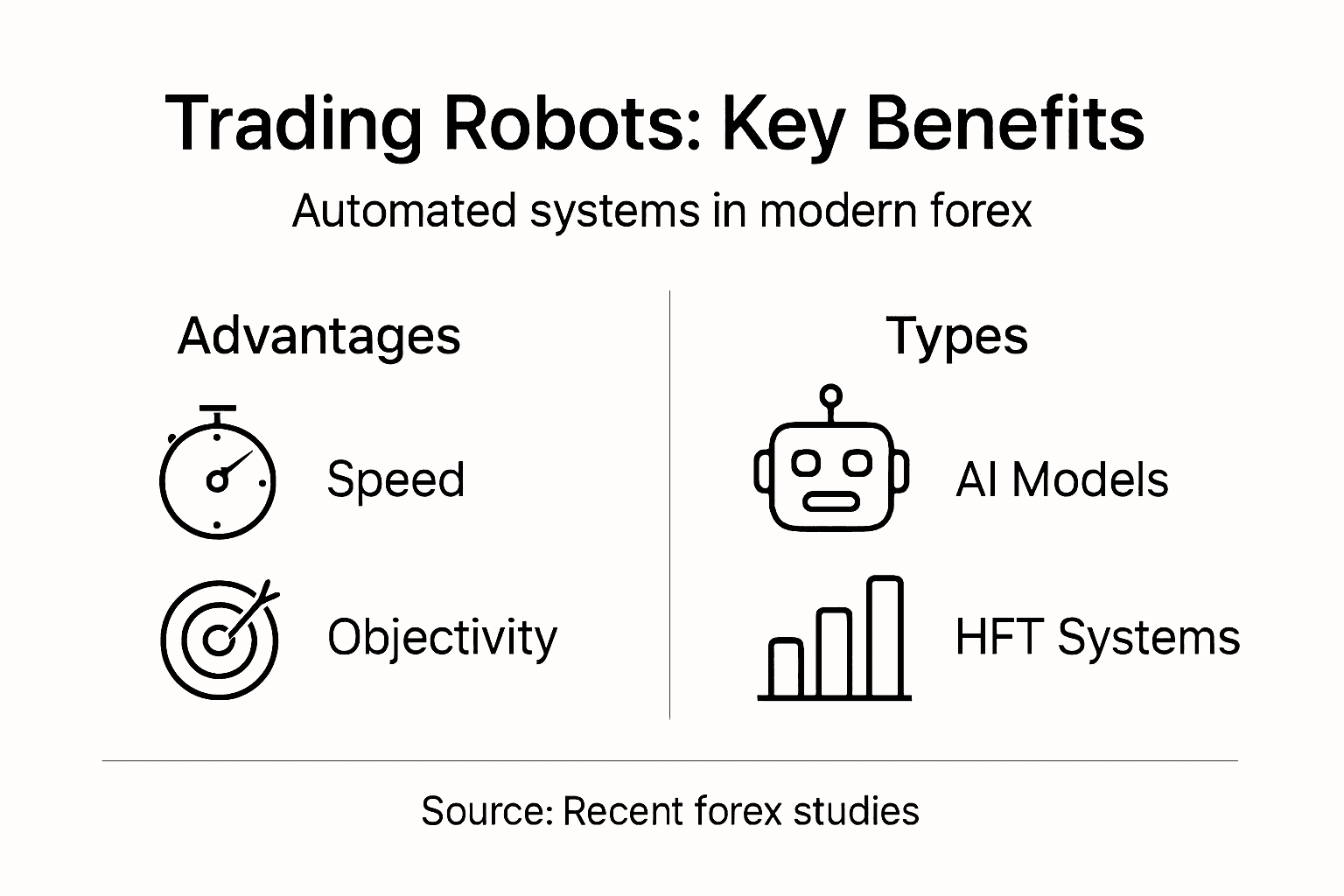
Forex traders have access to multiple automated trading system categories, each designed to address specific market strategies and performance objectives. Advanced algorithmic trading models typically fall into several sophisticated classifications that leverage different computational techniques and analytical approaches.
The primary types of automated trading systems include:
- High-Frequency Trading (HFT) Systems: Execute numerous trades within milliseconds
- Machine Learning-Based Models: Utilize adaptive algorithms that learn from market patterns
- Sentiment Analysis Robots: Analyze market sentiment using social media and news indicators
- Statistical Arbitrage Systems: Identify pricing inefficiencies across multiple markets
- Hybrid Algorithmic Systems: Combine multiple analytical methodologies for complex trading strategies
AI-driven trading models demonstrate remarkable capabilities in processing diverse data sources, including market data, fundamental indicators, and event-driven information. These systems can adapt strategies in real-time, offering traders sophisticated tools for risk management and predictive analysis. However, successful implementation requires understanding each system’s unique strengths and potential limitations.
The evolving landscape of automated trading continues to push technological boundaries, with increasingly complex algorithms capable of processing massive datasets and making split-second trading decisions. Traders must remain adaptable and continuously educate themselves about emerging technologies and computational trading strategies.
Pro Tip: Select an automated trading system that matches your specific risk tolerance and trading style, and always conduct comprehensive backtesting before live deployment.
Here is a comparison of popular automated trading system types by key focus and adaptability:
| System Type | Primary Focus | Data Adaptability | Typical Users |
|---|---|---|---|
| High-Frequency Trading | Speed and execution | Limited to market data | Institutional traders |
| Machine Learning-Based | Pattern recognition | Adapts to new trends | Advanced retail/institutions |
| Sentiment Analysis Robots | News/social reactions | Rapid sentiment changes | Data-driven retail |
| Statistical Arbitrage | Price inefficiencies | Historical and real-time | Quantitative professionals |
| Hybrid Algorithmic | Multi-method strategies | Combines varied sources | Experienced algorithmic traders |
Key Features Of Forex And Gold Robots
Forex and gold trading robots represent sophisticated technological solutions designed to navigate complex financial markets with precision and speed. Machine learning-based trading robots have evolved to incorporate advanced analytical techniques that go far beyond traditional trading approaches.
The core features of modern forex and gold trading robots typically include:
- Advanced Risk Management: Automatic position sizing and stop-loss implementations
- Multi-Timeframe Analysis: Simultaneous evaluation of multiple market perspectives
- Real-Time Data Processing: Instant interpretation of market signals and trends
- Adaptive Learning Algorithms: Continuous performance optimization
- Cross-Market Correlation Detection: Identifying trading opportunities across different financial instruments
These automated systems excel at processing vast amounts of market data with superhuman speed and objectivity. They can simultaneously analyze technical indicators, fundamental economic data, and market sentiment, making decisions in milliseconds that would take human traders significant time to evaluate. The integration of multiple analytical approaches allows these robots to develop more nuanced and potentially more profitable trading strategies.
Traders must understand that while trading robots offer significant advantages, they are not infallible. Successful implementation requires careful configuration, regular performance monitoring, and an understanding of the underlying algorithmic strategies. Market conditions constantly change, and even the most advanced robot needs periodic adjustment and human oversight.
Pro Tip: Regularly backtest and validate your trading robot’s performance across different market conditions, and never rely solely on automated systems without human strategic oversight.
How Trading Automation Enhances Performance
Trading automation represents a revolutionary approach to financial markets, transforming how investors analyze and execute trades. AI-driven trading strategies have dramatically reshaped traditional investment methodologies by introducing unprecedented levels of precision and efficiency.
Key performance enhancements brought by trading automation include:
- Emotional Bias Elimination: Removing human psychological interference
- Millisecond Decision Making: Executing trades faster than human capabilities
- Complex Data Processing: Analyzing multiple market indicators simultaneously
- Consistent Strategy Implementation: Maintaining disciplined trading approaches
- Real-Time Risk Management: Instantly adjusting positions based on market conditions
Automated trading systems excel by processing massive volumes of financial data with computational speed impossible for human traders. These sophisticated algorithms can evaluate market trends, economic indicators, and potential risk factors across multiple timeframes in seconds, generating trading decisions that are statistically more likely to produce positive outcomes. The ability to backtest strategies, optimize parameters, and adapt to changing market conditions gives automated systems a significant competitive advantage.
While automation offers remarkable benefits, traders must recognize that no system is perfect. Investment strategies require continuous monitoring and periodic recalibration to maintain effectiveness. Market dynamics constantly evolve, and successful traders understand that automation is a tool to enhance decision-making, not a guaranteed path to profit.
Pro Tip: Develop a comprehensive understanding of your trading robot’s underlying algorithm and regularly validate its performance across different market conditions.
This summary shows how trading automation features enhance overall trading performance:
| Automation Feature | Direct Performance Impact | Long-Term Benefit |
|---|---|---|
| Emotional Bias Elimination | Reduces impulsive decisions | More consistent returns |
| Millisecond Decisions | Captures fleeting opportunities | Higher trade accuracy |
| Complex Data Processing | Assesses varied indicators | Robust strategy building |
| Real-Time Risk Management | Limits losses quickly | Improved capital safety |
Risk Management And Common Pitfalls
Trading robots introduce complex technological challenges that demand sophisticated risk management strategies. Automated trading risk controls represent a critical defense mechanism against potential systemic market disruptions and algorithmic trading failures.
Common pitfalls in automated trading include:
- Overfitting Strategies: Creating algorithms that perform perfectly in historical data but fail in live markets
- Insufficient Volatility Controls: Lacking mechanisms to manage sudden market fluctuations
- Inadequate Risk Limitation: Failing to implement proper position sizing and loss prevention
- Technological Vulnerabilities: Exposing trading systems to potential network or software failures
- Lack of Continuous Monitoring: Assuming robots operate flawlessly without human oversight
The most significant risk in algorithmic trading stems from complex system interactions that can rapidly amplify market instabilities. Systemic risks in algorithmic trading demonstrate that even well-designed systems can generate unexpected market behaviors. Traders must understand that automation is not a foolproof solution but a sophisticated tool requiring constant vigilance and strategic management.
Effective risk management demands a multi-layered approach that combines technological safeguards, continuous performance evaluation, and proactive intervention strategies. This includes implementing kill switches, establishing strict trading parameters, maintaining robust backup systems, and developing comprehensive contingency plans for potential algorithmic failures.
Pro Tip: Develop a detailed risk management protocol that includes predefined exit strategies, maximum drawdown limits, and regular system performance audits.
Elevate Your Forex and Gold Trading Results with Proven Automated Solutions
The article highlights the challenges of relying solely on trading robots without proper validation and risk management. If you struggle with overfitting strategies, inconsistent performance, or need an adaptive system that matches your trading style, it is critical to choose a tested and reliable solution. At FxShop24, we understand the importance of combining advanced algorithms with continuous updates and robust risk controls for sustained success. Our expert advisors and AI-powered trading robots help you overcome emotional biases and market unpredictability by executing precise, data-driven trades on MetaTrader 4 and MetaTrader 5 platforms.
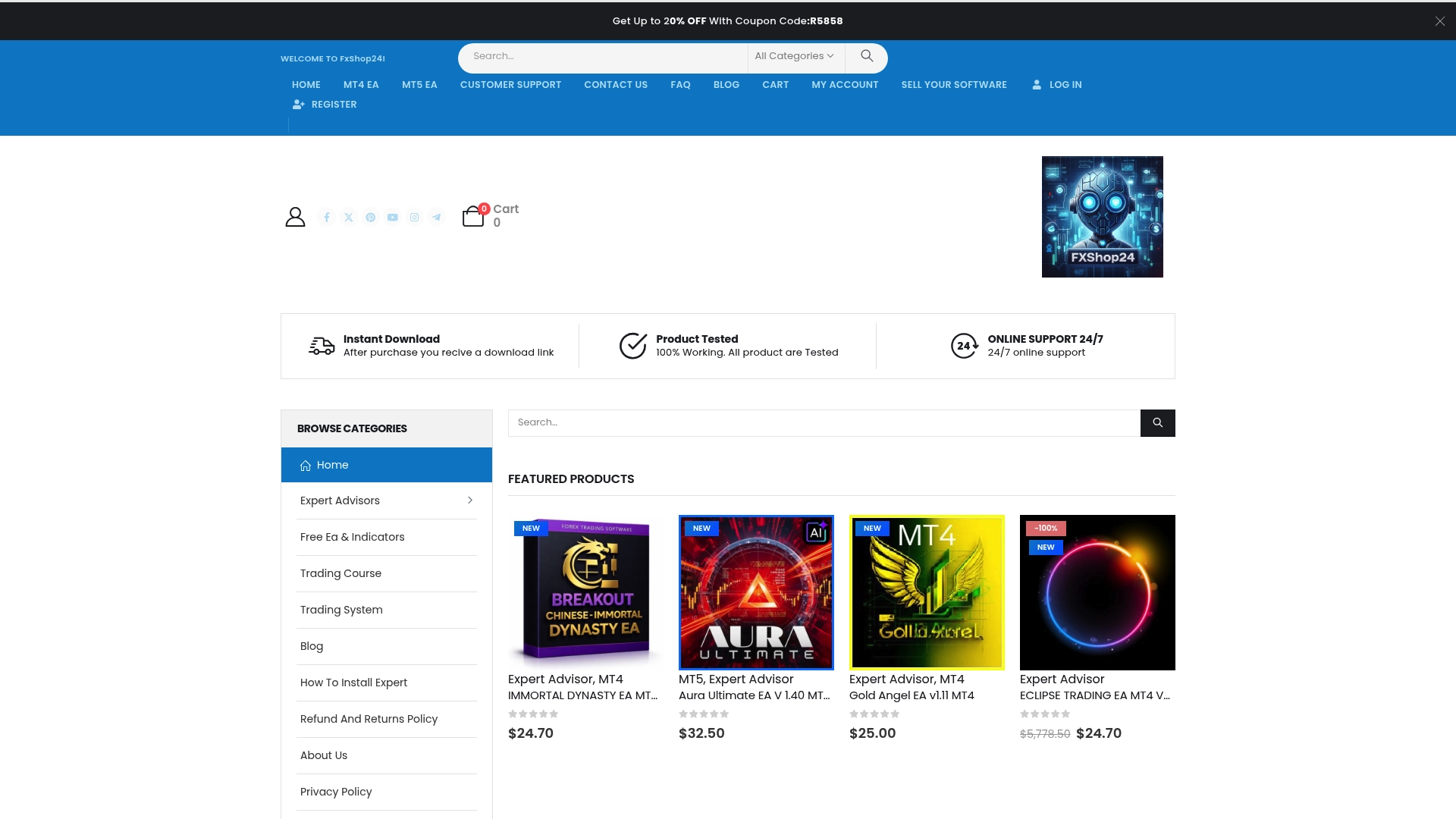
Discover the difference of using fully backtested, prop firm-ready automated systems that come with lifetime updates and unrestricted licenses. Visit FxShop24 now to explore premium trading systems and tools designed specifically to enhance your forex and gold trading performance. Take control today and start trading smarter with expert advisors built to adapt to ever-changing market conditions.
Frequently Asked Questions
What are trading robots and how do they work?
Trading robots are automated software programs that execute trades based on pre-defined algorithms. They analyze market conditions, generate trading signals, and place orders without human intervention, utilizing complex components like risk management protocols and market data analysis.
Do trading robots guarantee profits in forex trading?
No, trading robots do not guarantee profits. While they can enhance trading efficiency and objectivity, their past performance does not guarantee future results. Automated systems require careful evaluation and human oversight to remain effective in changing market conditions.
What are the main types of automated trading systems?
The main types of automated trading systems include High-Frequency Trading (HFT) Systems, Machine Learning-Based Models, Sentiment Analysis Robots, Statistical Arbitrage Systems, and Hybrid Algorithmic Systems, each designed to target specific trading strategies and objectives.
How can I ensure the effective use of trading robots?
To ensure effective use of trading robots, thoroughly backtest their performance across various market conditions, validate their strategies regularly, implement robust risk management protocols, and maintain human oversight to adjust and optimize their functions as needed.
Recommended
Author