


8
Jan
Guide to Optimizing Trading Robots for Maximum Profitability
Most retail forex traders never realize that a single overlooked setting can dramatically reduce their trading robot’s profitability. For American and global enthusiasts using MT4 or MT5, ignoring systematic optimization means missing out on consistent returns. By focusing on performance metrics and precise configuration, you can transform your automated strategy and safeguard your trading capital. This guide breaks down the essential steps to analyze, tune, and review your robot’s results for higher profits and greater confidence in any market.
Table of Contents
- Step 1: Assess Current Trading Robot Performance
- Step 2: Update And Configure Robot Settings For Goals
- Step 3: Apply Strategic Risk Management Techniques
- Step 4: Test Optimized Robots With Demo Accounts
- Step 5: Monitor Live Performance And Make Adjustments
Quick Summary
| Key Point | Explanation |
|---|---|
| 1. Evaluate Trading Robot Performance | Analyze win rates, drawdowns, and total returns to determine effectiveness. Utilize key metrics like Sharpe ratio and profit factor for comprehensive insights. |
| 2. Customize Robot Settings Strategically | Adjust parameters based on your trading goals and risk tolerance. Fine-tune settings for timeframes, risk management, and market conditions for optimal performance. |
| 3. Implement Robust Risk Management | Limit individual trade risk to 1-3% of capital. Use stop loss orders and diversify strategies to protect against significant capital losses. |
| 4. Test Robots with Demo Accounts | Validate performance using a demo account to simulate various market conditions. Document trades and metrics over at least 30 days for reliable insights. |
| 5. Continuously Monitor and Adjust | Regularly review trading metrics to identify performance trends. Make data-driven adjustments to enhance effectiveness while managing risk conservatively. |
Step 1: Assess current trading robot performance
Evaluating your trading robot’s performance requires a systematic and data-driven approach. You need to analyze multiple key metrics that reveal the true effectiveness of your automated trading system.
Start by collecting comprehensive performance data across different market conditions. This means reviewing trade logs, examining win rates, understanding drawdown percentages, and calculating total returns. Robotics and algorithmic trading research emphasizes the critical importance of assessing performance metrics like accuracy and market impact. Focus on tracking metrics such as profit factor, maximum drawdown, Sharpe ratio, and total net profit to get a comprehensive view of your robot’s performance.
Compare your trading robot’s results against benchmark indices and manual trading strategies. Consider testing performance across different timeframes and market conditions to understand its true robustness. Experimental trading robot studies indicate that combining automated robots with manual oversight can yield improved earnings while mitigating potential risks.
Pro tip: Always maintain a detailed performance journal documenting each trading robot’s historical performance, which allows you to track improvements and identify potential optimization areas systematically.
Here’s a concise comparison of key performance metrics used in evaluating trading robots:
| Metric | What It Measures | Business Impact |
|---|---|---|
| Win Rate | Percentage of successful trades | Indicates strategy reliability |
| Sharpe Ratio | Risk-adjusted return | Measures risk vs. reward efficiency |
| Max Drawdown | Largest account decrease | Highlights potential capital risk |
| Profit Factor | Ratio of profit to loss | Shows overall profitability strength |
| Total Net Profit | Final earned capital | Reflects overall trading success |
Step 2: Update and configure robot settings for goals
Configuring your trading robot requires strategic customization to align with your specific trading objectives and risk tolerance. You need a systematic approach to fine-tune the robot’s parameters for optimal performance.
Optimizing trading robot settings involves understanding the underlying algorithm and identifying key customizable features. Begin by selecting appropriate timeframes that match your trading strategy, whether you prefer short term scalping or longer term trend following. Configure essential risk management parameters like stop loss and take profit levels to protect your capital. Adjust position sizing to match your risk appetite, ensuring each trade represents a consistent percentage of your total account value.
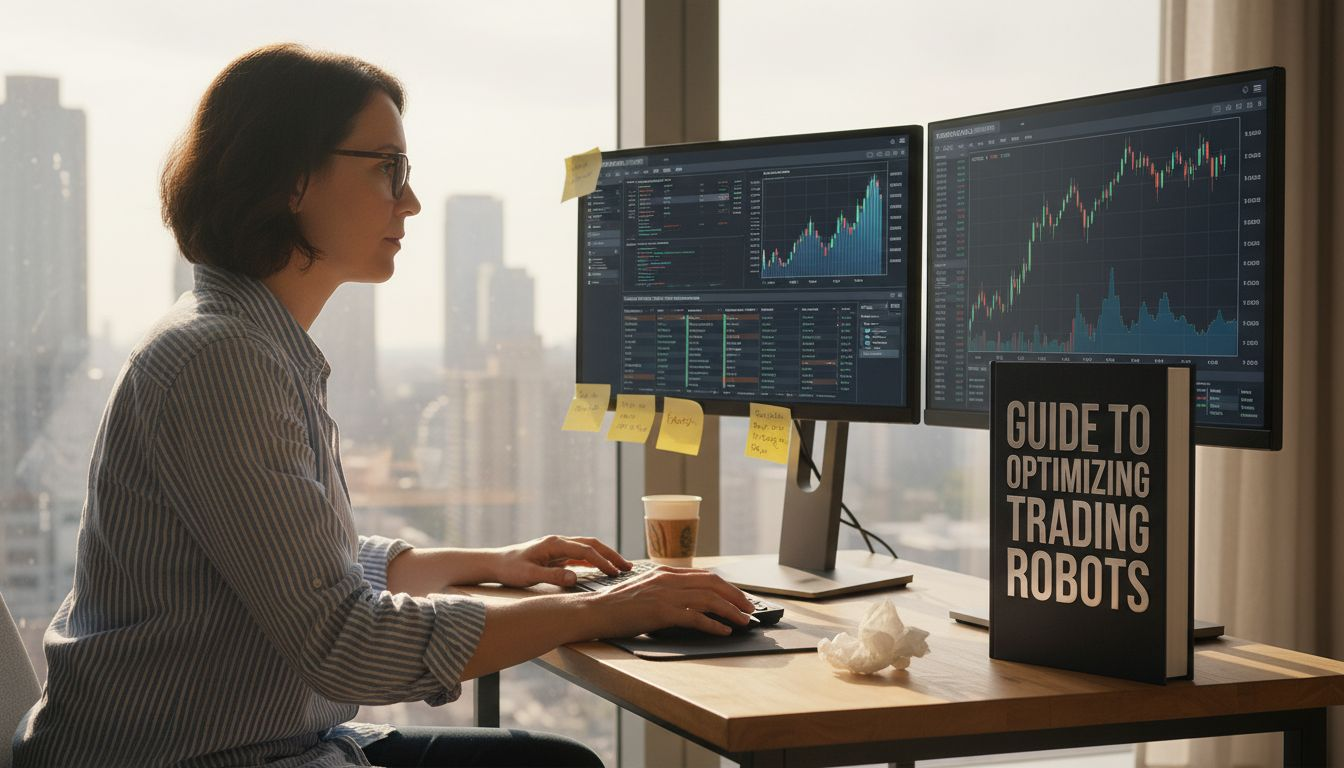
Pay careful attention to currency pair selection and market conditions when updating your robot settings. Some robots perform better in trending markets while others excel in range bound scenarios. Test different configurations through comprehensive backtesting, simulating various market environments to validate your settings. Create multiple configuration profiles that can be quickly deployed based on changing market dynamics.
Pro tip: Maintain a detailed log of each configuration change, tracking performance metrics to help you systematically refine and improve your trading robot over time.
Below is a summary of major robot configuration settings and their influence on trading outcomes:
| Setting | Description | Influence on Trading Results |
|---|---|---|
| Timeframe | Trade execution period | Affects trade speed and accuracy |
| Stop Loss/Take Profit | Predefined exit points | Determines risk and profit limits |
| Position Sizing | Trade size relative to account | Manages overall risk exposure |
| Currency Pair | Markets robot trades | Impacts performance in varied markets |
Step 3: Apply strategic risk management techniques
Successfully managing risk is crucial for protecting your trading capital and ensuring long term sustainability of your automated trading system. You need a comprehensive approach that balances potential rewards with carefully controlled potential losses.
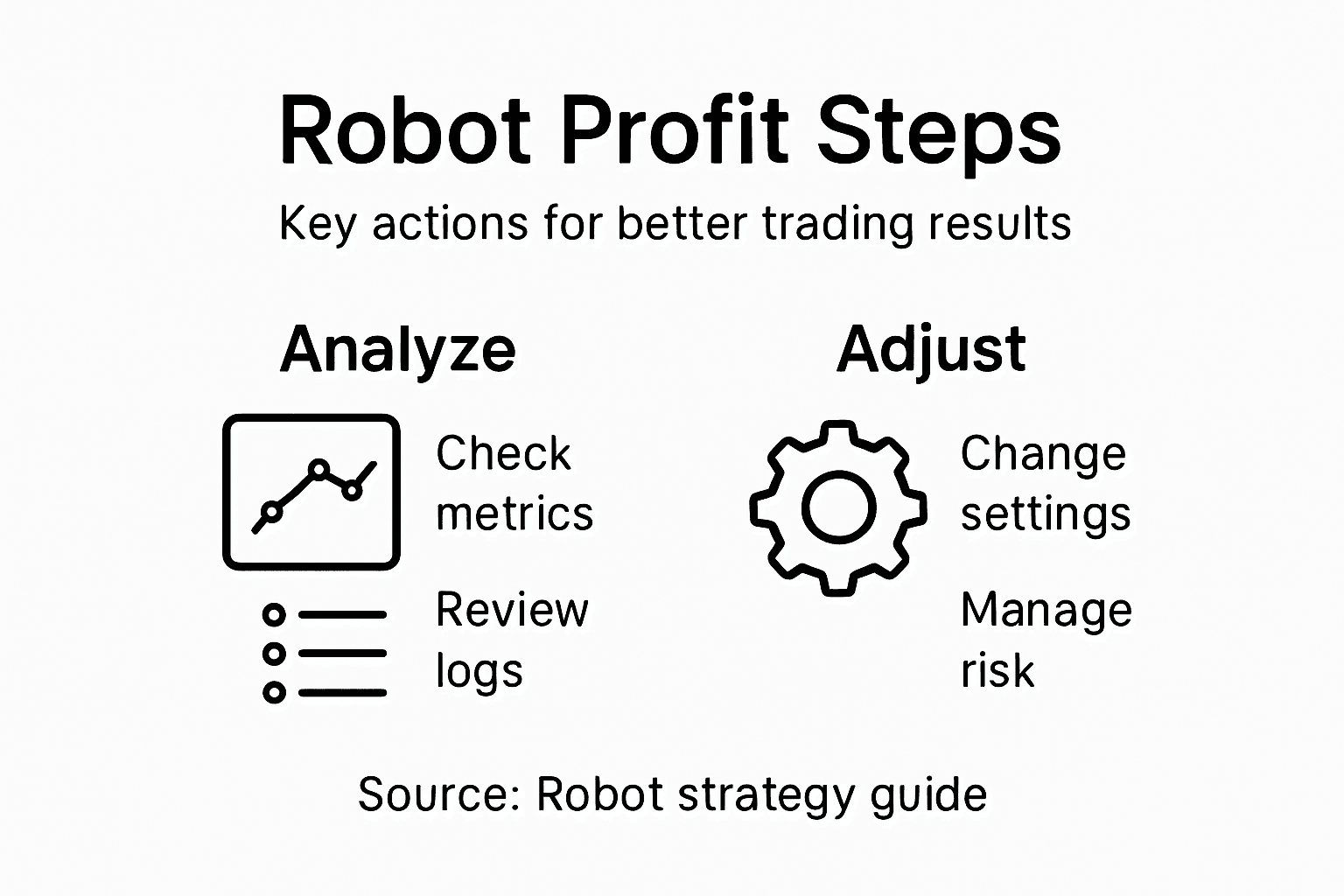
Advanced AI risk management strategies highlight the importance of dynamic risk controls. Implement robust position sizing techniques that limit individual trade risk to a small percentage of your total account value typically between 1% and 3%. Utilize stop loss orders to automatically exit trades when they reach predetermined loss thresholds, preventing catastrophic account drawdowns.
Diversify your trading approach by spreading risk across multiple currency pairs and trading strategies. Configure your robot to adjust position sizes based on market volatility, reducing exposure during high risk periods. Continuously monitor and analyze your robot’s performance metrics, looking for potential anomalies or consistent underperformance that might indicate necessary strategy adjustments. Develop multiple configuration profiles that can be quickly activated based on changing market conditions.
Pro tip: Regularly review and stress test your risk management settings using historical market data to ensure your trading robot can withstand various market scenarios without experiencing significant capital erosion.
Step 4: Test optimized robots with demo accounts
Validating your trading robot’s performance requires a systematic approach that minimizes financial risk while providing comprehensive insights. Your goal is to thoroughly evaluate the robot’s capabilities in a simulated trading environment before committing real capital.
Effective demo account strategies provide a risk-free platform to experiment with your optimized trading robot. Start by selecting a demo account that closely mirrors your intended live trading conditions, including realistic spread and commission structures. Run extended test periods of at least 30 to 60 consecutive days to capture different market scenarios. Document every trade meticulously, tracking key performance metrics such as win rate, average profit per trade, maximum drawdown, and total return.
Apply rigorous scientific testing protocols to your demo account evaluation. Create multiple test scenarios that simulate varying market conditions including trending, ranging, and volatile markets. Compare your robot’s performance against benchmark indices and manual trading strategies. Pay close attention to how the robot handles unexpected market movements, assessing its adaptability and risk management capabilities. Analyze the consistency of performance across different timeframes and currency pairs to ensure robust and reliable trading behavior.
Pro tip: Treat your demo account testing with the same seriousness as live trading, maintaining detailed logs and performance journals to facilitate meaningful performance analysis and continuous improvement.
Step 5: Monitor live performance and make adjustments
Successfully managing a trading robot requires continuous monitoring and proactive performance assessment. Your goal is to maintain real time awareness of your robot’s trading behavior and make strategic adjustments to optimize its effectiveness.
Real time trading bot monitoring involves creating a comprehensive tracking system that captures key performance indicators. Configure automated alerts to notify you of significant changes in trading metrics such as win rate, profit factor, maximum drawdown, and total returns. Establish a regular review schedule where you analyze performance data systematically at least weekly. Pay close attention to trade execution quality, looking for patterns of consistent underperformance or unexpected trading behavior that might indicate necessary strategy modifications.
Develop a structured approach to performance evaluation and strategy adjustment. Break down your analysis into specific components such as trade frequency, average trade duration, risk reward ratios, and performance across different market conditions. Create multiple configuration profiles that can be quickly activated based on changing market dynamics. Be prepared to make incremental adjustments to your robot’s parameters, always maintaining a conservative approach to risk management. Keep detailed logs of every configuration change, tracking the impact of each modification to build a comprehensive understanding of your robot’s evolving performance.
Pro tip: Implement a disciplined review process where you objectively assess your trading robot’s performance at least every two weeks, treating each adjustment as a calculated experiment to improve its long term profitability.
Maximize Your Trading Robot’s Potential with FxShop24
The challenge of optimizing trading robots for maximum profitability demands precise adjustments, strategic risk management, and continuous performance monitoring. If you want to overcome issues like inconsistent trade execution, high drawdowns, or suboptimal configuration settings, expert automated solutions can make all the difference. By focusing on key metrics such as Sharpe ratio, win rate, and profit factor, and adapting your strategy to changing market conditions, you set the stage for sustained success.
FxShop24 specializes in providing high-quality automated trading software designed specifically for forex and gold markets. Whether you aim to configure advanced AI-powered expert advisors, test your strategies in demo environments, or apply robust risk controls, our platform offers a wide range of prop firm-ready trading robots with lifetime updates and unlimited licenses. Discover tools engineered to help you track, backtest, and optimize your trading activities effectively.
Experience smarter automation today at FxShop24 and transform your trading performance. Ready to enhance your robot’s settings and protect your capital with tested systems?
Explore our expert advisors and AI trading robots now and start boosting your profitability.
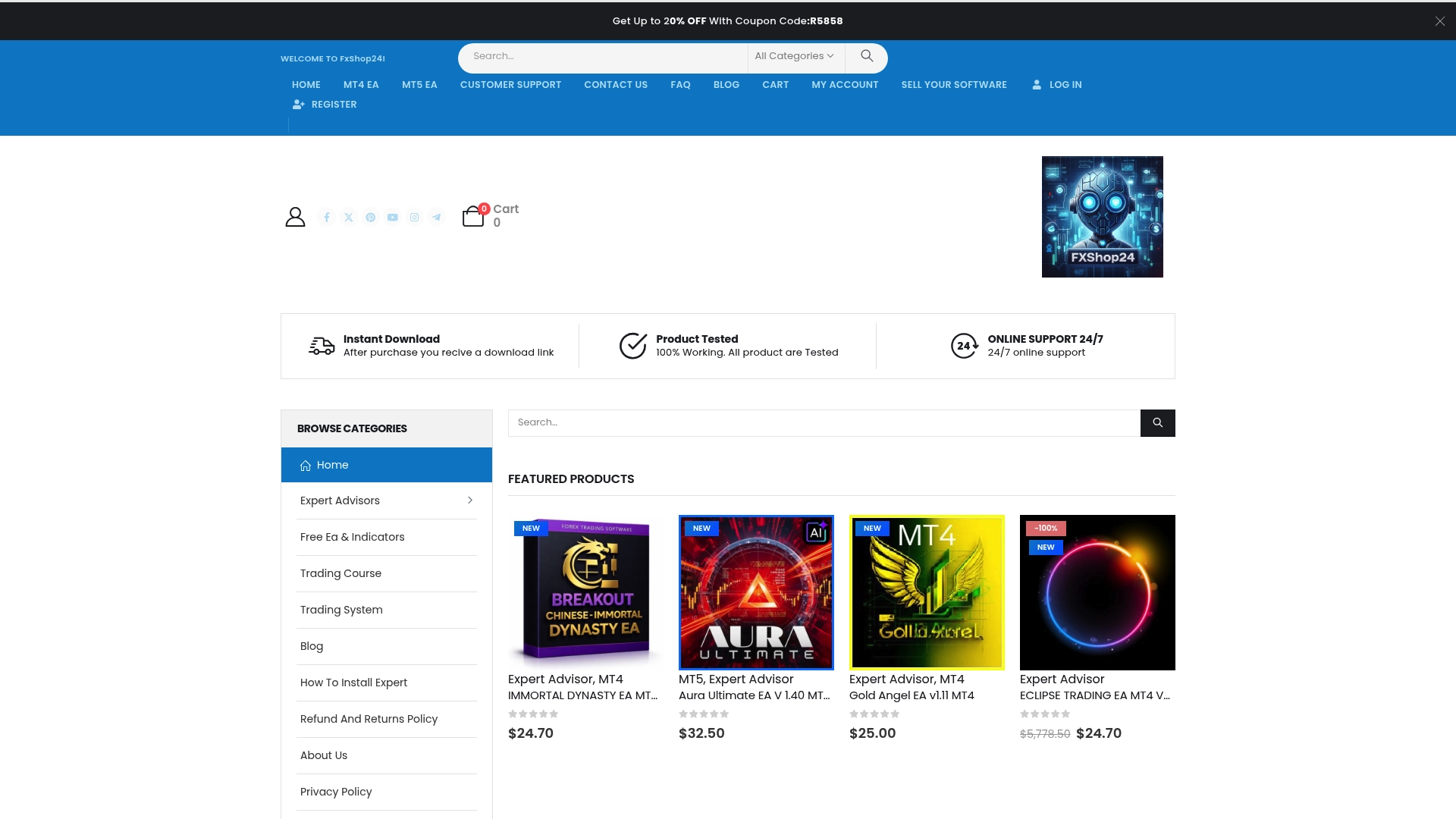
Don’t wait for market conditions to change on their own. Take control by selecting the best automated trading tools designed for your goals at FxShop24. Start your journey toward more consistent, profitable trading with confidence today.
Frequently Asked Questions
How can I assess the current performance of my trading robot?
To assess your trading robot’s performance, collect and analyze key metrics such as win rate, maximum drawdown, and total net profit. Review trade logs and compare the robot’s results against benchmark indices to gain insights into its effectiveness.
What are the essential settings to configure for my trading robot?
Focus on configuring settings like stop loss, take profit levels, and appropriate timeframes tailored to your trading strategy. Adjust position sizes to align with your risk tolerance, ensuring each trade represents a consistent percentage of your total account value.
How do I implement risk management techniques for my trading robot?
Implement risk management techniques by limiting individual trade risk to no more than 1% to 3% of your total account value. Use stop loss orders to automatically exit losing trades and diversify your trading approaches to spread risk across different currency pairs.
What is the best way to test my optimized trading robot?
The best way to test your optimized trading robot is by using a demo account that simulates real trading conditions. Run tests for at least 30 to 60 consecutive days and document every trade to analyze performance metrics like win rate and maximum drawdown.
How frequently should I monitor the performance of my trading robot?
You should monitor your trading robot’s performance at least once a week. Establish a regular review schedule, focusing on key performance indicators and adjusting settings as necessary based on your findings.
What should I do if my trading robot shows consistent underperformance?
If your trading robot shows consistent underperformance, analyze its trading behavior to identify patterns or issues. Make incremental adjustments to its parameters or consider testing it across different market conditions to enhance its effectiveness.