



2
Jan
Role of AI in Trading: Revolutionizing Forex Automation
Most American and international trading firms now rely on Artificial Intelligence to analyze millions of data points each second in the forex and gold markets. This shift is impossible to ignore when more than 80 percent of institutional trades worldwide are powered by automated systems. For traders seeking an edge, understanding how AI transforms trade execution, risk management, and market analysis can lead to smarter strategies and measurable performance gains.
Table of Contents
- Defining AI in Forex and Gold Trading
- Major Types of AI-Powered Trading Systems
- How AI Algorithms Analyze and Execute Trades
- Key Benefits of Automated Trading with AI
- Risks, Compliance, and Common Pitfalls
Key Takeaways
| Point | Details |
|---|---|
| AI Transforms Trading | AI enhances forex and gold trading through advanced algorithms that analyze vast data sets rapidly, leading to improved decision-making. |
| Types of AI Systems | Various AI trading systems like trend following, statistical arbitrage, and sentiment analysis cater to different market needs. |
| Automated Decision-Making | AI algorithms can analyze multiple data streams simultaneously and execute trades with precision, minimizing human bias. |
| Regulatory Challenges | The complexity of AI systems necessitates robust compliance frameworks to address risks like model opacity and algorithmic bias. |
Defining AI in Forex and Gold Trading
Artificial Intelligence (AI) represents a transformative technology reshaping financial markets, particularly in forex and gold trading. At its core, AI involves sophisticated computer algorithms capable of analyzing massive datasets, identifying complex patterns, and making predictive decisions with remarkable speed and accuracy. In trading contexts, AI goes beyond traditional computational methods by leveraging advanced machine learning techniques that can adapt and improve performance autonomously.
The Dutch Authority for the Financial Markets highlights that AI in trading fundamentally operates through supervised learning techniques that analyze complex financial features. These algorithms can process millions of data points simultaneously, including historical price movements, global economic indicators, geopolitical events, and market sentiment, to generate trading strategies that human traders might overlook. Unlike static trading systems, AI-powered tools continuously learn and recalibrate their approach based on new market information.
Specifically for forex and gold markets, AI applications include predictive price modeling, risk management, trade execution optimization, and real-time market trend analysis. Advanced AI systems can detect microscopic market inefficiencies, execute trades within milliseconds, and manage complex multi-variable trading scenarios that would overwhelm traditional algorithmic approaches. They integrate various data sources like economic reports, social media sentiment, and technical chart patterns to create holistic trading intelligence.
Pro tip: When exploring AI trading tools, prioritize solutions with transparent performance metrics and robust backtesting capabilities to validate their actual trading effectiveness.
Major Types of AI-Powered Trading Systems
AI-powered trading systems represent a complex ecosystem of advanced computational strategies designed to revolutionize financial market interactions. Academic research categorizes these systems into distinct computational models that leverage machine learning, deep learning, and sophisticated algorithmic approaches to transform trading performance across forex and gold markets.
The primary categories of AI trading systems include trend following algorithms, statistical arbitrage models, market making systems, and sentiment analysis engines. Trend following AI systems utilize historical price data and complex pattern recognition to predict potential market movements, while statistical arbitrage models exploit microscopic price discrepancies across different market segments. Market making AI systems focus on providing liquidity by continuously generating buy and sell quotes, and sentiment analysis models integrate natural language processing techniques to evaluate market psychology through news, social media, and economic reports.
Deep learning and reinforcement learning represent the most advanced AI trading approaches. These models can autonomously adapt their strategies by learning from past trade outcomes, continuously refining their decision-making processes. Unlike traditional rule-based systems, these AI models can process multiple data streams simultaneously, including technical indicators, fundamental economic data, geopolitical events, and real-time market sentiment. This multidimensional analysis enables more nuanced and dynamic trading strategies that can quickly respond to complex market conditions.
Here’s a summary of major AI trading system types and their primary application focus:
| AI System Type | Main Focus Area | Example of Use |
|---|---|---|
| Trend Following Algorithms | Market prediction | Spotting upward gold price trends |
| Statistical Arbitrage Models | Price discrepancy analysis | Capturing swift forex mispricings |
| Market Making Systems | Liquidity optimization | Tight bid-ask spreads in gold trades |
| Sentiment Analysis Engines | Market psychology | Analyzing news for forex volatility |
Pro tip: When evaluating AI trading systems, prioritize platforms that offer transparent performance metrics, robust backtesting capabilities, and clear explanations of their underlying machine learning architectures.
How AI Algorithms Analyze and Execute Trades
Algorithmic trading represents a sophisticated intersection of computational intelligence and financial strategy, where AI systems transform raw market data into precise trading decisions. Researchers have extensively documented the step-by-step process by which AI algorithms systematically analyze and execute trades, revealing a complex mechanism that goes far beyond traditional trading approaches.
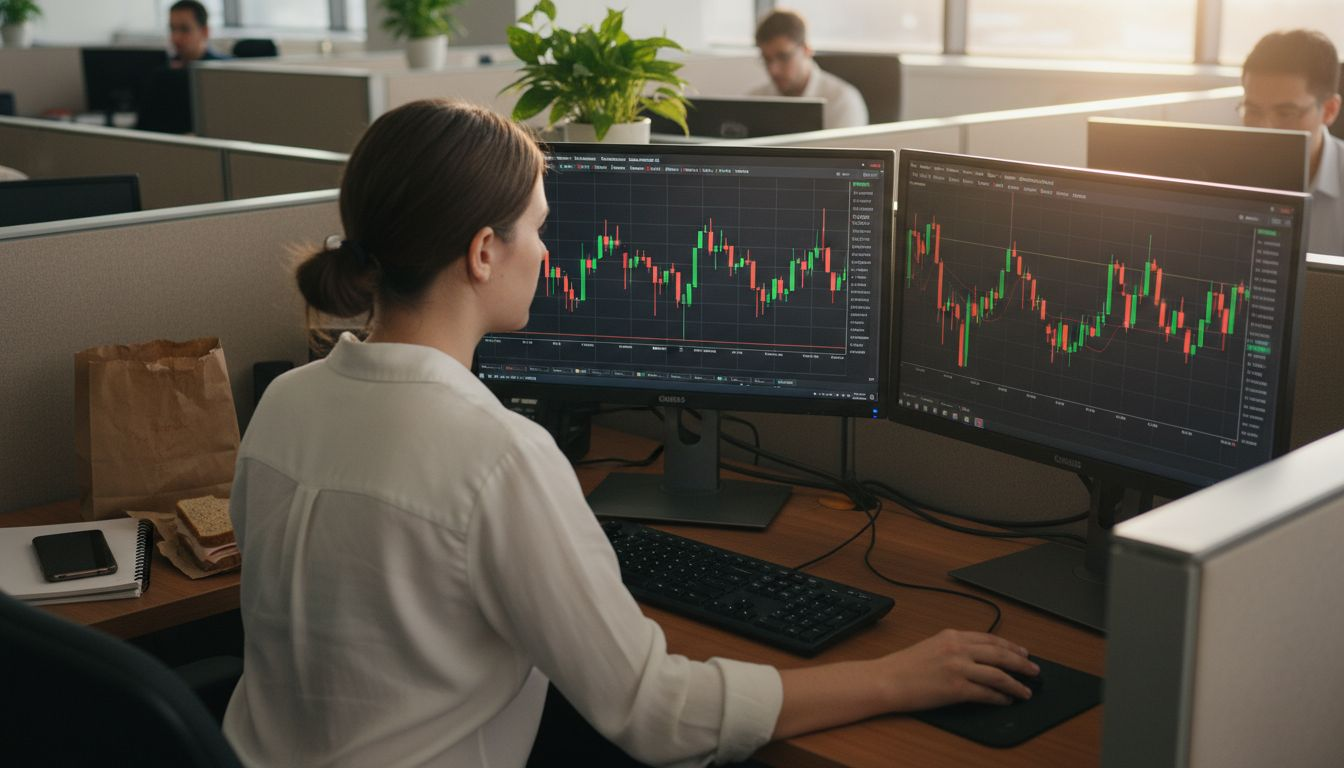
The AI trading process begins with comprehensive data ingestion, where algorithms simultaneously process multiple data streams including historical price movements, real-time market feeds, economic indicators, geopolitical news, and sentiment analysis from social media platforms. Machine learning models then apply advanced statistical techniques to extract meaningful patterns, identifying potential trading opportunities through complex predictive modeling. These models continuously learn and adapt, using techniques like supervised learning, reinforcement learning, and neural network architectures to refine their predictive capabilities with each trade execution.
Trade execution represents the most critical phase of AI algorithmic trading. Once a potential trading signal is generated, the AI system instantaneously evaluates multiple risk parameters, including market liquidity, potential price slippage, and optimal trade timing. Automated decision-making protocols then trigger precise trade entries and exits, managing position sizes, implementing stop-loss strategies, and dynamically adjusting trading parameters in milliseconds. This level of computational precision enables AI systems to exploit market inefficiencies and execute strategies that would be impossible for human traders to implement manually.
Pro tip: Select AI trading systems that provide transparent performance metrics and demonstrate consistent adaptability across different market conditions to ensure reliable automated trading performance.
Key Benefits of Automated Trading with AI
Automated trading with AI represents a transformative approach to financial markets, offering unprecedented advantages that fundamentally reshape trading strategies. Research from leading financial authorities demonstrates the significant performance improvements enabled by AI-driven trading systems, highlighting multiple critical benefits that distinguish these technologies from traditional trading methods.
The primary advantages of AI-automated trading include exceptional speed, precision, and emotional detachment. Unlike human traders, AI algorithms can process millions of data points simultaneously, analyzing complex market indicators, economic reports, and global sentiment in milliseconds. These systems eliminate psychological biases that typically impair human decision-making, such as fear, greed, and overconfidence. By implementing sophisticated machine learning models, AI trading platforms can detect microscopic market patterns, execute trades with millisecond-level precision, and dynamically adjust strategies based on real-time market conditions.
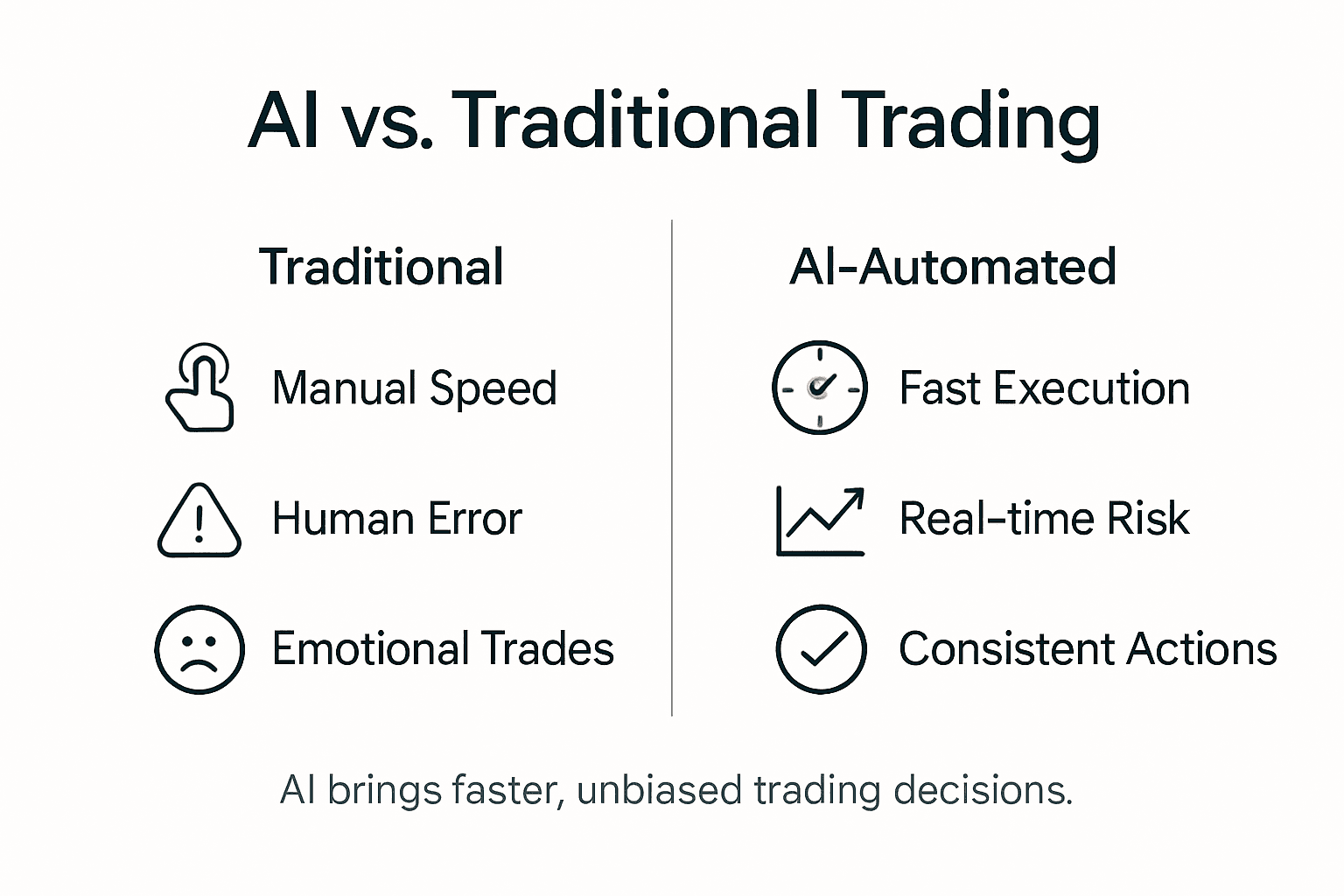
Risk management represents another crucial benefit of AI-powered trading systems. Advanced algorithms continuously monitor multiple risk parameters, implementing intelligent stop-loss mechanisms and portfolio diversification strategies that adapt instantly to changing market dynamics. These systems can simultaneously track and trade across multiple asset classes, including forex and gold markets, while maintaining consistent performance standards. The computational power enables traders to explore complex trading strategies that would be logistically impossible for human traders, including high-frequency trading, multi-asset correlation analysis, and predictive trend modeling.
To illustrate how AI transforms trading, compare traditional versus AI-automated trading features:
| Feature | Traditional Trading | AI-Automated Trading |
|---|---|---|
| Decision Speed | Minutes to hours | Milliseconds |
| Data Processing Scale | Limited indicators | Millions of data points |
| Emotional Factors | Strongly influences trades | Eliminated |
| Adaptability | Fixed strategies | Dynamic real-time learning |
Pro tip: Evaluate potential AI trading systems by examining their historical performance data, machine learning architecture, and ability to demonstrate consistent adaptability across different market conditions.
Risks, Compliance, and Common Pitfalls
AI-powered trading systems introduce complex regulatory challenges that demand rigorous understanding and proactive management. Regulatory research reveals significant systemic risks associated with algorithmic trading technologies, highlighting the critical need for comprehensive compliance frameworks in automated trading environments.
The primary risks in AI trading include model opacity, algorithmic bias, and potential market manipulation. Machine learning algorithms can generate decisions through intricate computational processes that become challenging to interpret or explain, creating substantial regulatory oversight challenges. These “black box” systems might inadvertently develop trading strategies that exploit market inefficiencies in ways not originally intended, potentially triggering unintended market distortions. Algorithmic bias represents another significant concern, where AI systems might unconsciously perpetuate historical market inequities or develop discriminatory trading patterns based on skewed historical data.
Compliance requirements for AI trading systems are increasingly complex, demanding multilayered risk management strategies. Financial institutions and trading platforms must implement robust monitoring mechanisms that can detect anomalous algorithmic behaviors, ensure transparent decision-making processes, and maintain comprehensive audit trails. This involves developing sophisticated validation protocols that continuously assess AI trading models for potential ethical breaches, market manipulation risks, and unexpected computational behaviors. Regulatory bodies are progressively developing more stringent frameworks to address the unique challenges posed by AI-driven trading technologies, focusing on maintaining market integrity and protecting investor interests.
Pro tip: Implement comprehensive backtesting and simulation protocols to identify potential algorithmic biases and unexpected trading behaviors before deploying AI trading systems in live market environments.
Harness the Power of AI to Revolutionize Your Forex and Gold Trading
The article highlights how Artificial Intelligence transforms forex and gold trading by enabling lightning-fast, precise, and emotion-free decision making. If you struggle with the complexity of analyzing millions of data points or want to eliminate costly emotional mistakes from your trades, it is time to explore automated trading systems designed for these challenges. With AI-powered tools like predictive price modeling and real-time market analysis, you gain an edge in spotting trends and managing risks effectively.
Discover a wide range of expert advisors, AI robots, and proven trading systems crafted specifically for MetaTrader 4 and MetaTrader 5 at FxShop24. Our platforms offer instant digital downloads, lifetime updates, and prop firm readiness so you can start automating your trades with confidence today. Take control of your trading future now by visiting FxShop24 to choose powerful solutions that align with the revolutionary AI strategies described in the article.
Frequently Asked Questions
What is the role of AI in forex and gold trading?
AI plays a transformative role in forex and gold trading by analyzing vast datasets, identifying patterns, and making predictive decisions quickly and accurately. It enhances traditional trading by employing machine learning techniques to improve trading strategies based on real-time data.
How do AI trading algorithms learn and adapt?
AI trading algorithms learn and adapt through advanced machine learning techniques such as supervised and reinforcement learning. They analyze historical trade outcomes and continuously refine their strategies to improve predictive accuracy and decision-making across varying market conditions.
What are the primary benefits of using AI in trading?
The primary benefits of using AI in trading include exceptional speed and precision, the elimination of emotional biases, enhanced risk management, and the capacity to analyze large amounts of data simultaneously, leading to more informed trading decisions.
What risks are associated with AI-powered trading systems?
Risks of AI-powered trading systems include model opacity, algorithmic biases, and potential market manipulation. Ensuring compliance with regulatory standards and implementing robust monitoring mechanisms are essential to mitigating these risks.
Recommended
- How Does A Trading Bot Work, And Is It Real? | FxShop24 Marketplace
- Shop | FxShop24 Marketplace
- Is It Possible To Make A Profit Through Forex Trading? | FxShop24 Marketplace
- Perceptrader AI V2.23 – Revolutionary MT4 EA For Forex Traders | FxShop24 Marketplace
- How AI Chatbots Improve Customer Support Response Times — ChatPirate
- Understanding the Impact of AI in Insurance 2025 - Digital Insurance Platform | IBSuite Insurance Software | Modern Insurance System