


28
Oct
The Ultimate Guide to Prop Firm EAs: 5 Steps to Pass Any Challenge in 2025
Ever feel like you're fighting an uphill battle with prop firm challenges? You're not alone. Most traders attempt these evaluations manually, burning out after a few weeks of 16-hour chart-watching sessions. But here's what the successful 10% know: Expert Advisors can be your secret weapon for passing prop firm challenges consistently.
The game has changed in 2025. Prop firms are getting stricter, but EA technology has evolved to match their exact requirements. This isn't about finding some "magic robot" that prints money: it's about using systematic, automated approaches that eliminate the emotional mistakes that kill 90% of challenge attempts.
Let's walk through the exact 5-step framework that's helping traders secure funding faster than ever before.
Step 1: Set Up Your EA Infrastructure for Challenge Success
Your first move determines everything. Most traders jump straight into trading without proper EA setup, then wonder why they blow accounts in week two.
Start with MetaTrader 4 optimization. Your VPS needs at least 2GB RAM and 99.9% uptime: prop firms don't care about your internet connection going down during NFP. Configure your MT4 EA with conservative default settings initially. You can always scale up, but you can't undo a blown account.
Choose challenge-compatible EAs that specifically handle prop firm rules. Standard retail EAs often ignore critical restrictions like:
- Maximum daily loss limits
- News trading restrictions
- Weekend gap limitations
- Specific instrument blacklists
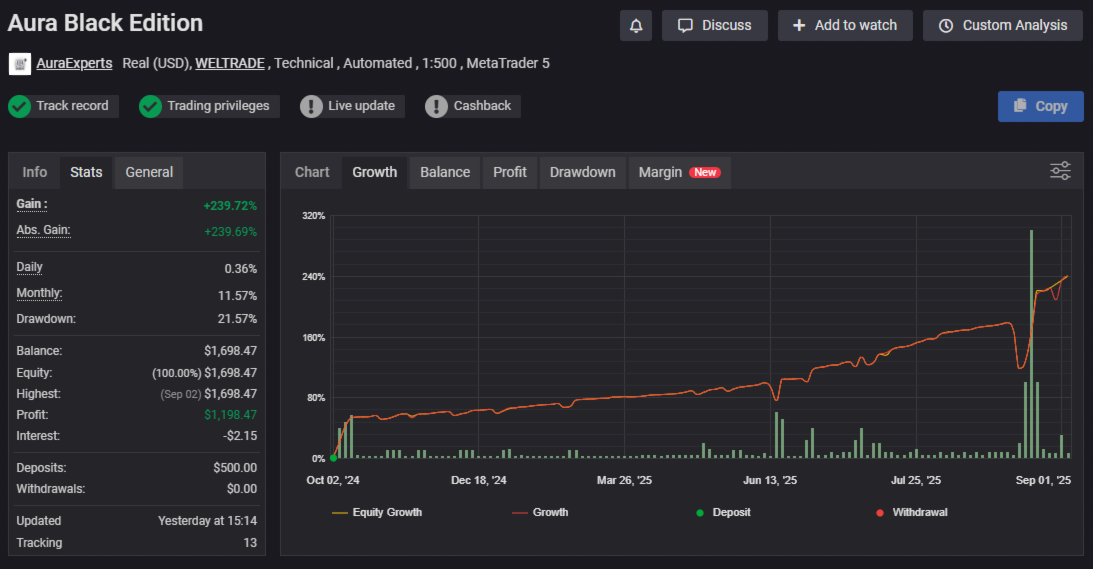
The Trendhunter EA and Hedge EA MT4 are designed with these constraints built-in. They automatically pause during news events and calculate position sizes based on your remaining daily loss allowance.
Set up multiple chart configurations before you start trading. Your EA should monitor at least 3-5 major pairs simultaneously, but avoid overloading your system. Test everything on a demo account that mirrors your challenge conditions exactly: same broker, same spreads, same execution speed.
Step 2: Strategy Selection That Matches Prop Firm Psychology
Not all trading strategies work in challenge environments. Prop firms evaluate based on consistency over pure profit. They want to see steady, controlled growth rather than explosive gains followed by dramatic drawdowns.
Swing trading EAs excel in prop firm challenges because they naturally align with evaluation criteria. They typically:
- Hold positions for 2-7 days, avoiding overtrading penalties
- Target 20-50 pip moves, creating sustainable profit patterns
- Use wider stops, reducing the impact of spread costs
- Generate fewer trades, making drawdown management easier
Avoid scalping EAs during challenges unless your prop firm specifically allows them. The rapid-fire trading style often triggers risk management flags, and the high trade frequency makes it nearly impossible to stay within daily loss limits during volatile sessions.
Currency correlation strategies work exceptionally well with hedge EA MT4 systems. When EURUSD moves against you, a properly configured hedge EA can offset losses with GBPUSD or USDCHF positions, keeping your overall drawdown manageable while maintaining profit potential.
Configure your expert advisor MT4 settings to match the challenge timeline. For 30-day challenges, use more conservative parameters. For 60-day evaluations, you can afford slightly more aggressive position sizing since you have more time to recover from temporary setdowns.
Step 3: Master Money Management Through Automated Risk Controls
This is where most manual traders fail, but where EAs provide their biggest advantage. Automated money management removes emotional decision-making from the equation entirely.
Set your EA to risk no more than 1% per trade during the first week. This conservative approach lets you validate your strategy without risking significant drawdown. Many successful challenge passers report that staying below 0.5% risk per trade for the first 10 trades dramatically improved their completion rates.
Dynamic position sizing is crucial. Your EA should automatically reduce lot sizes as drawdown increases. When you're down 3% from starting equity, cut position sizes by 50%. At 5% drawdown, reduce to 25% of normal sizing. This progressive scaling prevents the death spiral that kills most challenge attempts.
Configure time-based risk controls in your MT4 EA. Limit trading during the first hour after major news releases. Many EAs can automatically pause trading 30 minutes before and after high-impact events like NFP releases, preventing news-related disasters.
Daily loss limits should be hardcoded into your EA settings. Most prop firms allow 5% daily losses, but set your EA to stop trading at 3%. This buffer protects against slippage and gap openings that could push you over the limit unexpectedly.
Step 4: Optimize for Drawdown: The Challenge Killer
Drawdown management separates funded traders from the 90% who fail. Your EA needs specific optimizations that most retail versions don't include.
Equity curve analysis should guide your EA's behavior. When your equity curve shows three consecutive losing days, your EA should automatically shift to more conservative settings. This isn't about timing the market: it's about recognizing when conditions don't match your backtested parameters.
Implement correlation-based position limiting. Your EA should never hold more than two highly correlated pairs simultaneously. When EURUSD and GBPUSD both move against you, the combined loss can quickly breach prop firm limits. Smart EAs monitor correlation in real-time and adjust exposure accordingly.
Recovery protocols matter more than entry strategies. When your account hits 8% drawdown, your EA should switch to "recovery mode": smaller positions, wider stops, and more selective trade entry. The goal shifts from profit maximization to account preservation.
Use floating equity management rather than fixed lot sizing. As your account grows toward the profit target, your EA should gradually reduce position sizes to lock in gains. When you're 80% toward your target, risk per trade should drop to 0.25% to prevent late-challenge disasters.
Step 5: Track Performance and Adjust for Consistency
Raw profit numbers mean nothing if you can't replicate them. Prop firms fund traders who demonstrate repeatable processes, not lucky streaks.
Weekly performance reviews should be automated through your EA's logging system. Track more than just profit/loss: monitor average trade duration, win rate by day of week, performance during different market sessions, and drawdown recovery times.
Your EA should generate detailed trade journals automatically. Every position should log entry reasoning, exit criteria, and post-trade analysis. This data becomes crucial when prop firms review your trading style during the verification process.
Parameter optimization should happen weekly, not daily. Avoid over-optimization based on short-term results. Your EA's core logic should remain consistent, but you can fine-tune risk parameters based on observed market volatility and your current challenge progress.
Set up milestone alerts in your EA system. When you reach 25%, 50%, and 75% of your profit target, your EA should automatically send notifications and suggest parameter adjustments for the next phase. The trading approach that gets you to 50% may not be optimal for closing out the final 25%.
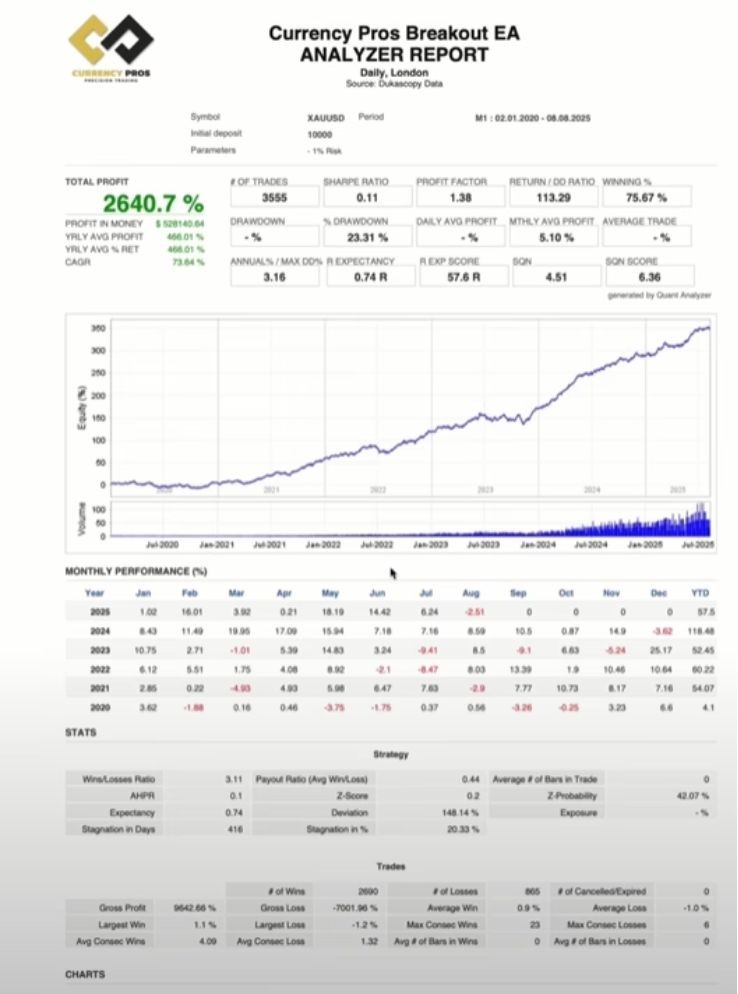
Monitor your Sharpe ratio and expectancy through your EA's analytics. Prop firms increasingly use these metrics to evaluate trader quality. A consistent 1.5+ Sharpe ratio with positive expectancy indicates sustainable trading that firms want to fund long-term.
The 2025 Prop Firm Advantage
Using Expert Advisors for prop firm challenges isn't cheating: it's evolution. The most successful funded traders are shifting toward systematic approaches that remove psychological barriers and execution errors.
Your EA becomes your trading discipline, your risk manager, and your performance analyst all in one. While manual traders struggle with FOMO and revenge trading, your automated system executes predefined strategies with mechanical precision.
The prop firm industry is maturing, and so should your approach to challenges. Those still relying on discretionary trading are fighting yesterday's battle with yesterday's tools. Expert Advisors designed for prop firm challenges give you the systematic edge that makes funding inevitable rather than accidental.
Ready to join the 10% who pass? Your EA strategy starts with the right foundation, consistent execution, and relentless focus on the metrics that actually matter to prop firms. The tools exist; now it's time to use them systematically.