


21
Sep
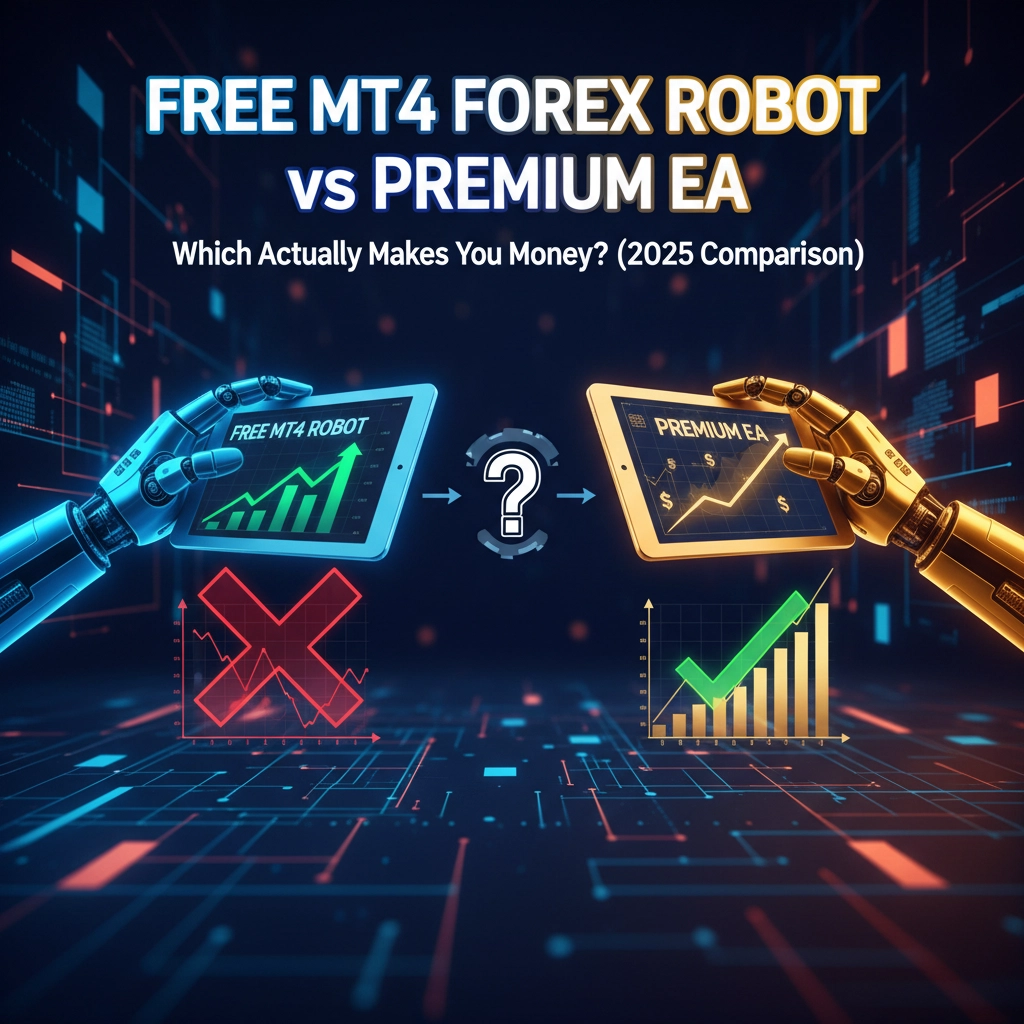
Free MT4 Forex Robot vs Premium EA: Which Actually Makes You Money? (2025 Comparison)
Free MT4 Forex Robot vs Premium EA—which one actually makes money in 2025? If you’ve ever downloaded a “profitable” free forex robot only to watch it blow your account within weeks, you’re not alone. The market is flooded with flashy promises and misleading stats. But beneath the hype lies a brutal truth: most free EAs are either outdated, poorly coded, or dangerously aggressive. So how do premium robots stack up—and are they worth the price?


The Free Robot Mirage: Why "Free" Often Costs Everything
Free MT4 forex robots flood the internet like digital tumbleweeds. Download sites promise "90% win rates" and "no drawdown" strategies that would make even Renaissance Technologies jealous. The appeal is obvious: who doesn't want automated profits without upfront costs?The Hidden Costs of "Free"Free robots typically fall into three categories: outdated systems from years past, simplified strategies that worked once upon a time, or worse: deliberately risky systems designed to show quick gains before inevitable catastrophic losses.Most free EAs lack proper risk management. They often employ dangerous strategies like aggressive martingale systems, unlimited grid trading, or excessive lot sizes that can wipe out accounts during volatile market conditions. Without verified backtests or forward testing, you're essentially gambling with live funds.The support nightmare compounds the problem. When your free robot starts hemorrhaging money, there's no customer service to call, no documentation to reference, and no updates to fix broken code. You're completely on your own.When Free Robots Actually WorkThat said, some free robots do serve legitimate purposes. Educational EAs that demonstrate basic trading concepts, simple trend-following systems for learning automation principles, or open-source projects from reputable developers can provide value. The key is managing expectations: these aren't profit machines but learning tools.
Premium EAs: Professional Development vs. Marketing Hype
Premium Expert Advisors command anywhere from $150 to $1,500, positioning themselves as professionally developed trading solutions. But price alone doesn't guarantee performance: the forex robot market is littered with expensive failures.What Premium Should Actually DeliverLegitimate premium EAs provide verified performance records through MyFxBook or similar platforms, showing real money results over extended periods. They include comprehensive risk management systems with customizable drawdown limits, position sizing algorithms, and correlation filters.Professional development means extensive backtesting using tick data with realistic spreads and slippage. Quality EAs undergo forward testing for months before release, with ongoing optimization and market condition updates.The support infrastructure separates premium from amateur. Professional EA developers provide detailed documentation, video tutorials, customer support, and regular updates as market conditions evolve.Red Flags in Premium EAsHigh prices don't eliminate scams. Watch for EAs that promise unrealistic returns, lack verified track records, or use obvious curve-fitting in backtests. Be especially wary of systems claiming 100% win rates or zero drawdown: these are mathematically impossible in real trading.Some premium EAs are simply expensive versions of basic strategies available for free elsewhere. The price tag becomes marketing rather than value justification.
Performance Reality Check: What Actually Makes Money
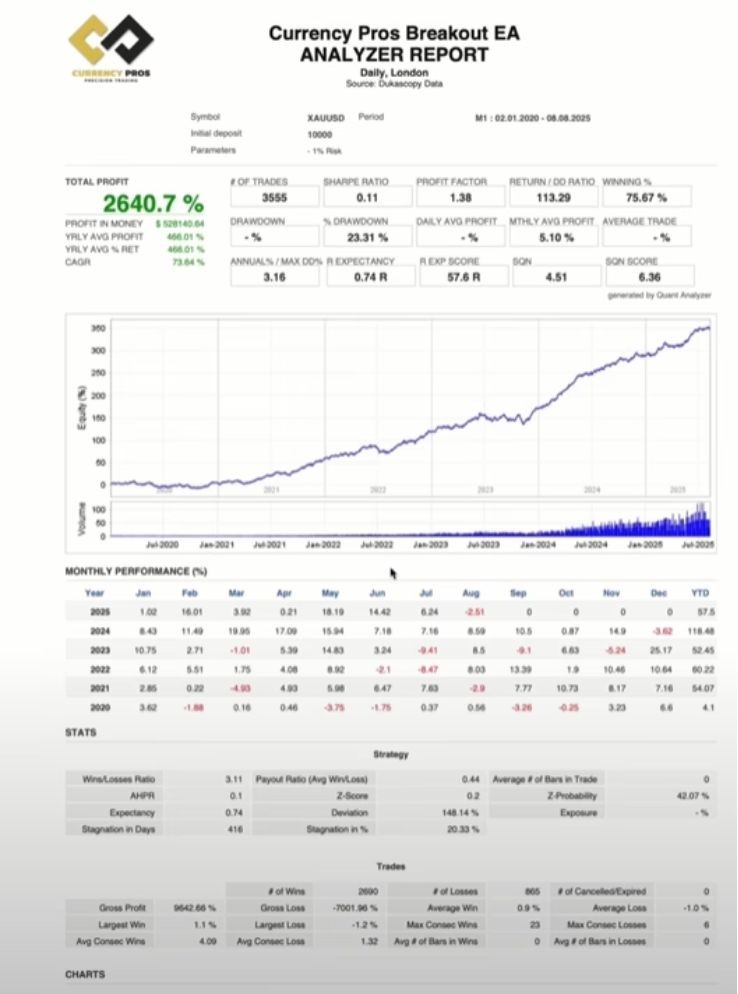
The profitability question boils down to realistic expectations versus marketing promises. Even the best EAs don't print money: they provide systematic approaches to market participation with defined risk parameters.Verified Performance ExamplesLooking at legitimate premium EAs with verified track records, realistic monthly returns range from 2-15% with drawdowns of 10-25%. Systems like GPS Forex Robot show consistent performance over multiple years, though with modest returns compared to marketing claims.The most profitable EAs often focus on specific market conditions or currency pairs rather than attempting universal strategies. Specialized gold trading EAs, for instance, may outperform generalist systems during precious metals bull runs.The Compound EffectSmall, consistent gains compound significantly over time. A premium EA generating 5% monthly returns with 15% maximum drawdown will substantially outperform free robots that promise 50% monthly gains but inevitably crash accounts.Consider this: a $10,000 account growing at 5% monthly reaches $17,958 after 12 months. A free robot showing 20% monthly gains for three months before losing everything leaves you with zero.
Cost-Benefit Analysis: The Real Numbers
Let's examine the true costs beyond sticker prices. A premium EA costing $500 needs to generate enough additional profit to justify the expense compared to free alternatives.Premium EA Investment Breakdown- Initial cost: $200-$800 average
- Minimum recommended account size: $1,000-$5,000
- Expected monthly returns: 3-10%
- Break-even timeline: 2-6 months typically
- Account losses from poor risk management: Often 100% of capital
- Time costs debugging and optimizing: Potentially hundreds of hours
- Opportunity costs from missed profits: Substantial over time
- Stress and emotional trading decisions: Incalculable
2025 Market Conditions: What Works Now
Current market dynamics favor specific EA characteristics. Increased volatility from geopolitical tensions and central bank policy shifts requires robust risk management systems that many free robots lack.Algorithm AdaptabilityModern markets demand adaptive algorithms that adjust to changing volatility regimes. Premium EAs increasingly incorporate machine learning elements or dynamic parameter adjustment: features rarely found in free alternatives.High-frequency news events and flash crashes have become more common, making robust risk controls essential. Premium EAs with proper stop-loss systems and position sizing survive these events, while rigid free robots often don't.Broker Compatibility Issues2025 broker requirements around latency, execution quality, and regulatory compliance affect EA performance. Premium developers maintain broker compatibility lists and provide updates for changing conditions. Free robot users typically discover compatibility issues through account losses.The Verdict: Which Actually Makes Money?
Premium EAs win the profitability contest, but not for the reasons most traders assume. It's not because expensive algorithms are inherently superior: it's because premium EAs typically include the risk management and support infrastructure necessary for long-term survival.Free Robot Success StrategyIf budget constraints require free robots, focus on simple trend-following systems with clear risk parameters. Avoid martingale or grid-based strategies entirely. Implement additional risk controls through position sizing and manual oversight.Test thoroughly on demo accounts for at least three months before risking real capital. Join communities around specific free EAs to benefit from collective troubleshooting and optimization.Premium EA Selection CriteriaFor premium EAs, prioritize verified track records over marketing materials. Look for systems with at least 12 months of MyFxBook verified performance, reasonable drawdown levels, and active developer support.Consider EAs that specialize in specific market conditions rather than "universal" strategies. A gold-focused EA during precious metals trends often outperforms generalist systems.Making the Right Choice for Your Situation
Your decision should align with account size, risk tolerance, and trading experience. New traders with small accounts might start with carefully selected free EAs while learning market dynamics. Experienced traders with substantial capital benefit more from premium EA stability and support.The ultimate strategy? Combine both approaches strategically. Use free robots for education and experimentation on demo accounts, while relying on premium EAs for live trading capital. This hybrid approach maximizes learning while protecting your financial future.Remember: no EA: free or premium: replaces proper risk management and realistic expectations. The most profitable approach remains disciplined position sizing, diversified strategies, and continuous education about evolving market conditions.
Share: