
17
Feb
Algorithmic Trading: Transforming Forex and Gold Profits
Misconceptions about automated trading often tempt retail traders to believe effortless profits are just a click away. For anyone searching for reliable ways to trade Gold on MetaTrader platforms, understanding the basics of algorithmic trading matters more than ever. This guide highlights systematic trading strategies and the real factors behind effective automation, demystifying common myths so you can build confidence and minimize costly manual mistakes.
Table of Contents
- Algorithmic Trading Basics and Common Myths
- Key Types of Algorithmic Trading Strategies
- How Automated Trading Works on MT4/MT5
- Legal Requirements and Compliance Factors
- Risks, Costs, and Common Mistakes to Avoid
Key Takeaways
| Point | Details |
|---|---|
| Algorithmic Trading Requires Continuous Refinement | Successful algorithmic trading is not about guaranteed profits; it demands ongoing strategy adjustments and robust risk management. |
| Automated Trading Demands Vigilance | Traders should continuously monitor their algorithms and adapt to changing market dynamics to ensure effective trading outcomes. |
| Regulatory Compliance is Critical | Strict adherence to regulatory requirements is essential for algorithmic traders, necessitating advanced risk management and transparency practices. |
| Costs Must Be Considered | Beyond transaction fees, traders should budget for technology and development costs to enhance their algorithmic trading effectiveness. |
Algorithmic Trading Basics and Common Myths
Algorithmic trading represents a sophisticated approach to financial markets where computational systems execute trading strategies automatically. These advanced systems leverage complex mathematical models and data analysis techniques to make split-second investment decisions far beyond human capabilities.
The core of algorithmic trading involves developing systematic trading strategies that can analyze multiple market variables simultaneously. Fundamental trading system techniques enable traders to create rules-based approaches that remove emotional decision-making and human error from financial transactions.
Key characteristics of algorithmic trading include:
- High-speed transaction execution
- Ability to process multiple market indicators simultaneously
- Consistent strategy implementation
- Reduced human emotional interference
- Enhanced risk management capabilities
Many traders mistakenly believe algorithmic trading guarantees automatic profits. However, advanced market prediction techniques demonstrate that successful algorithmic trading requires continuous refinement, robust risk management, and sophisticated feature engineering.
Common myths about algorithmic trading include:
- It’s a guaranteed profit mechanism
- No human oversight is required
- One algorithm works universally across all market conditions
- Implementation is simple and straightforward
Realistic algorithmic trading demands ongoing monitoring, periodic strategy adjustments, and deep understanding of market dynamics. Traders must consistently validate their algorithms against changing market conditions and be prepared to modify approaches as economic landscapes evolve.
Pro tip: Develop multiple algorithmic trading strategies and always maintain a robust risk management framework to protect your investment capital.
Key Types of Algorithmic Trading Strategies
Algorithmic trading encompasses a diverse range of sophisticated strategies designed to capitalize on market inefficiencies and generate potential profits. Advanced algorithmic trading approaches have revolutionized how traders interact with financial markets, offering unprecedented precision and speed in executing complex trading decisions.
The primary categories of algorithmic trading strategies include:
- Momentum Trading: Identifies and follows strong price trends
- Mean Reversion: Exploits statistical tendencies of prices returning to average levels
- Statistical Arbitrage: Seeks price discrepancies across related financial instruments
- Market Making: Provides liquidity by continuously quoting buy and sell prices
- High-Frequency Trading: Executes numerous trades within milliseconds
Each strategy leverages different mathematical models and computational techniques to analyze market conditions. AI-driven predictive trading strategies now integrate machine learning algorithms that can adapt and optimize trading approaches in real-time, significantly enhancing decision-making capabilities.
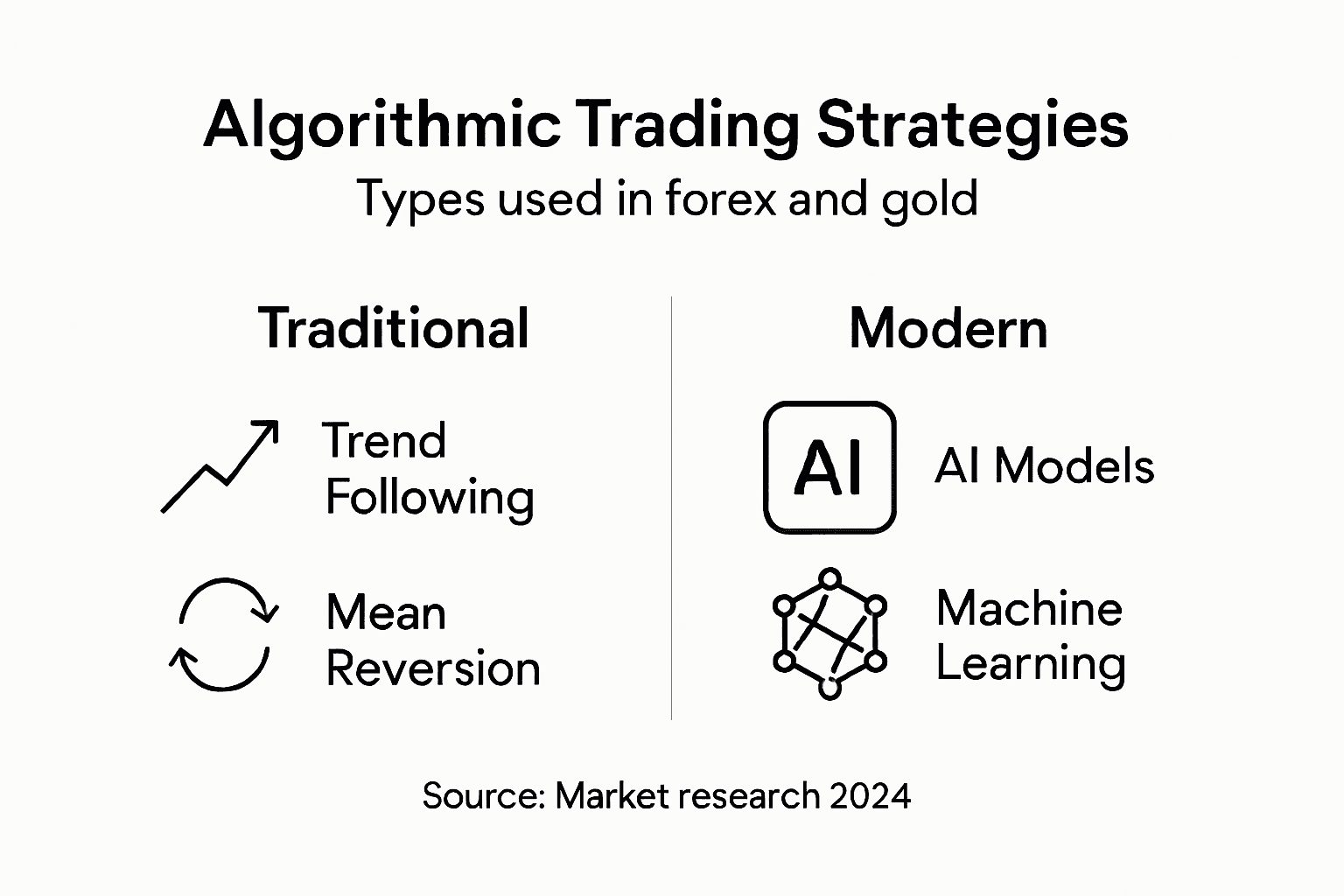
Here’s how popular algorithmic trading strategies differ in approach and application:
| Strategy Type | Primary Objective | Typical Market Use | Main Weakness |
|---|---|---|---|
| Momentum Trading | Capture price trends | Stocks, Forex | Performs poorly in sideway markets |
| Mean Reversion | Profit from price corrections | Equities, Commodities | Fails during strong trends |
| Statistical Arbitrage | Exploit price discrepancies | Derivatives, ETFs | Sensitive to transaction costs |
| Market Making | Generate profit from spreads | Illiquid securities | Risk in volatile conditions |
Traders must understand that no single strategy guarantees consistent profits. Successful algorithmic trading requires:
- Continuous strategy refinement
- Robust risk management protocols
- Deep understanding of market dynamics
- Regular performance monitoring
- Adaptive algorithmic design
Modern algorithmic trading strategies increasingly incorporate artificial intelligence and machine learning techniques, enabling more sophisticated analysis of complex market signals. These advanced systems can process massive datasets, identify subtle market patterns, and execute trades with unprecedented speed and accuracy.
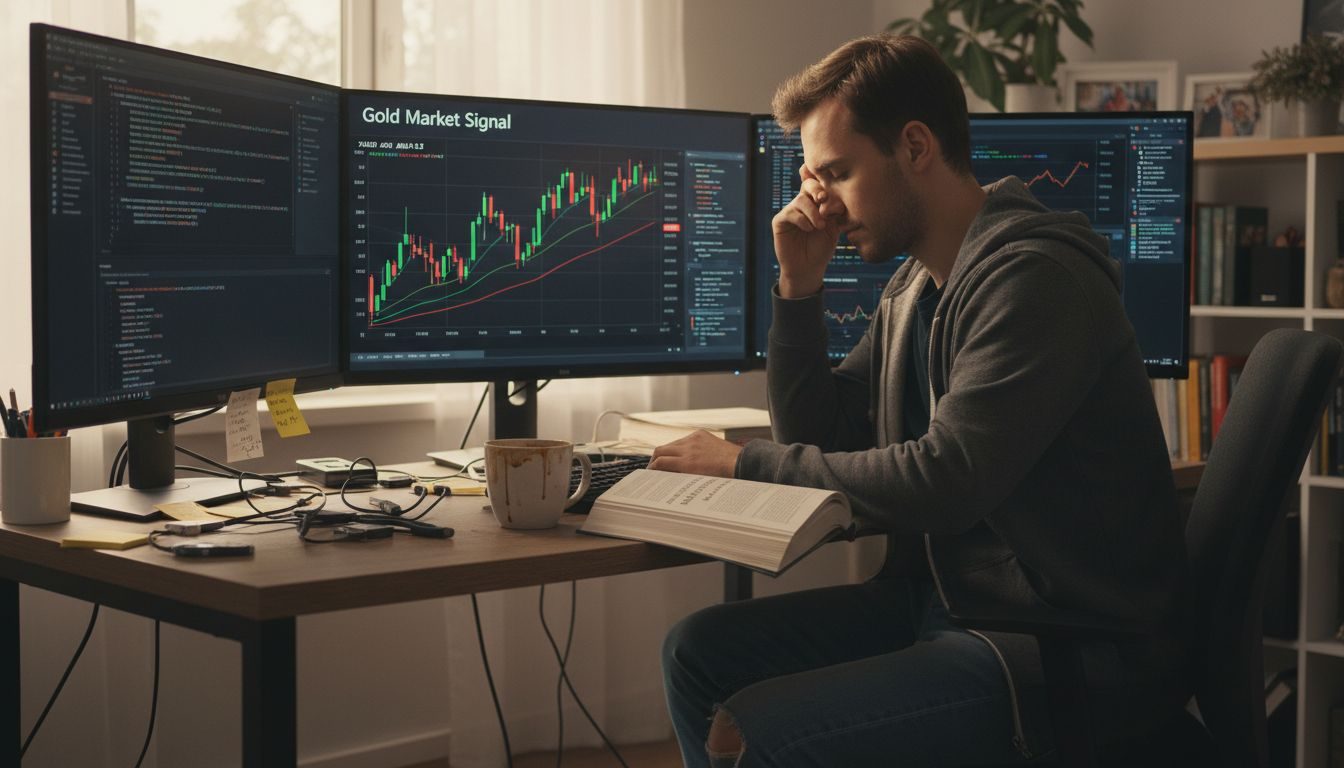
Pro tip: Develop multiple uncorrelated algorithmic trading strategies to diversify your risk and enhance overall portfolio performance.
How Automated Trading Works on MT4/MT5
Automated trading on MetaTrader platforms represents a sophisticated approach to financial markets, enabling traders to execute complex strategies without constant manual intervention. Expert Advisor automation technologies transform how traders interact with forex and gold markets by providing precise, emotionless trade execution.
The core components of automated trading on MT4/MT5 include:
- Expert Advisors (EAs): Custom trading robots that execute predefined strategies
- Market Analysis Algorithms: Complex mathematical models evaluating market conditions
- Backtesting Tools: Platforms for validating trading strategies using historical data
- Risk Management Parameters: Automated stop-loss and take-profit mechanisms
- Real-Time Market Monitoring: Continuous scanning of multiple financial instruments
Algorithmic trading platforms offer traders powerful programming environments where they can develop, test, and deploy sophisticated trading robots. These platforms use specialized programming languages like MQL4 and MQL5, allowing traders to create custom algorithms that can analyze market data, identify trading opportunities, and execute trades with millisecond precision.
The operational workflow for automated trading involves several critical steps:
- Strategy Development
- Algorithm Programming
- Backtesting and Optimization
- Live Market Deployment
- Continuous Performance Monitoring
Modern MT4 and MT5 platforms support advanced features like virtual private server (VPS) hosting, which enables 24/7 trading operation, eliminating computer downtime and ensuring consistent strategy implementation. These platforms bridge the gap between complex mathematical models and real-world trading execution, providing traders unprecedented market access.
Pro tip: Always implement strict risk management parameters in your automated trading strategies to protect your trading capital from unexpected market volatility.
Legal Requirements and Compliance Factors
Algorithmic trading operates within a complex regulatory landscape that demands rigorous compliance and robust risk management protocols. Comprehensive algorithmic trading regulations aim to protect market integrity, prevent systemic risks, and ensure transparent trading practices across global financial markets.
Key regulatory requirements for algorithmic traders include:
- Mandatory system resilience testing
- Real-time risk control mechanisms
- Comprehensive order record maintenance
- Continuous performance monitoring
- Immediate error detection and prevention protocols
- Transparent reporting to financial regulators
Global regulatory frameworks impose strict obligations on algorithmic trading entities, emphasizing pre-trade risk controls and personal accountability. Traders must develop sophisticated governance structures that demonstrate proactive risk management and prevent potential market manipulation.
The most critical compliance factors involve:
- Implementing advanced pre-trade risk controls
- Maintaining comprehensive audit trails
- Ensuring algorithm transparency
- Developing robust business continuity plans
- Adhering to jurisdiction-specific regulatory requirements
Traders must recognize that regulatory compliance is not a static process but a dynamic, ongoing commitment. Different regions like the European Union, United States, and United Kingdom have unique regulatory expectations that demand continuous adaptation and sophisticated technological infrastructure.
Pro tip: Invest in comprehensive compliance management systems and regularly update your algorithmic trading strategies to align with evolving regulatory standards.
Risks, Costs, and Common Mistakes to Avoid
Algorithmic trading presents a complex landscape of potential risks and financial challenges that traders must carefully navigate. The allure of automated trading systems can often overshadow the critical need for comprehensive risk management and strategic implementation.
Common financial risks in algorithmic trading include:
- Technology Failures: System crashes or connectivity issues
- Market Volatility: Unexpected price movements
- Over-Optimization: Strategies that work perfectly in backtesting but fail in live markets
- Latency Problems: Execution delays causing missed opportunities
- Software Vulnerabilities: Potential security breaches
Traders frequently encounter several critical mistakes that can decimate their trading capital:
- Neglecting comprehensive backtesting
- Ignoring market context and changing conditions
- Failing to implement robust risk management
- Relying exclusively on historical performance
- Not monitoring algorithmic performance continuously
The financial costs of algorithmic trading extend beyond simple transaction fees. Traders must budget for:
Here is a summary of the key cost factors and their business impact in algorithmic trading:
| Cost Type | Description | Business Impact |
|---|---|---|
| Trading Platform Fees | Monthly or annual access charges | Affects overall profitability |
| VPS Hosting Expenses | Server rental for 24/7 operation | Reduces risk of downtime |
| Strategy Development Costs | Programmer and testing expenditures | Essential for robust algorithms |
| Monitoring Tool Fees | Software to track performance | Enables timely error detection |
- Trading Platform Subscriptions
- VPS Hosting Expenses
- Programming and Development Costs
- Continuous Strategy Refinement
- Performance Monitoring Tools
Successful algorithmic trading requires a holistic approach that balances technological sophistication with pragmatic risk management. Traders must remain adaptable, continuously learning and refining their strategies to maintain competitive edge in rapidly evolving financial markets.
Pro tip: Allocate at least 20% of your trading budget for ongoing strategy development and risk management infrastructure.
Accelerate Your Forex and Gold Trading with Expert Automated Solutions
The article highlights critical challenges of algorithmic trading such as ongoing strategy refinement, robust risk management, and adapting to volatile market conditions. If you want to eliminate emotional decision-making and reduce costly mistakes like latency issues or over-optimization, embracing proven automated trading tools can be a game changer. Harness the power of Expert Advisors (EAs), AI-powered robots, and meticulously backtested trading systems that operate seamlessly on MetaTrader 4 and MetaTrader 5.
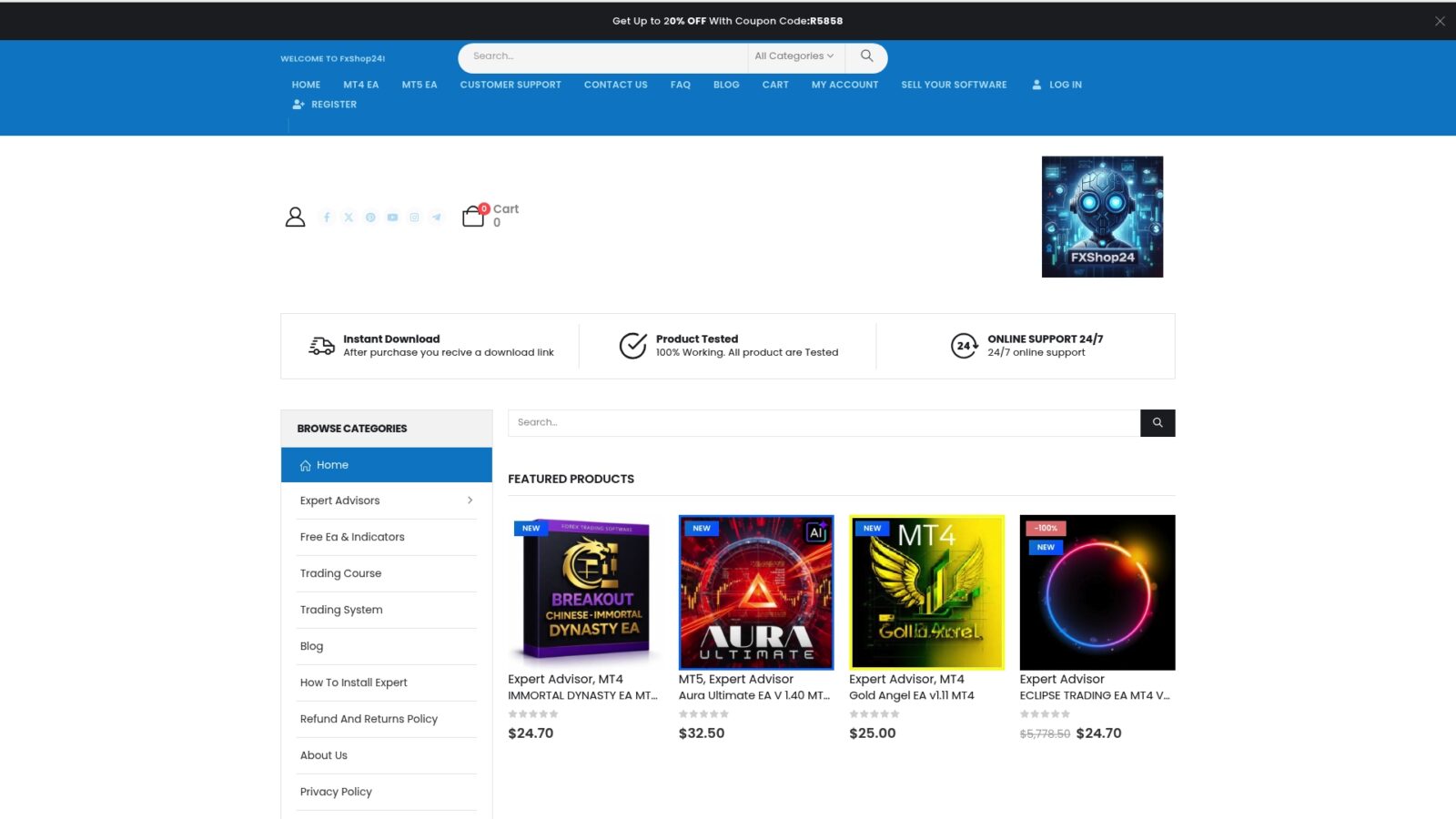
Take control of your trading outcomes today by exploring cutting-edge automated software tailored for forex and gold markets. Visit FxShop24 to access a diverse collection of prop firm-ready EAs with lifetime updates and unlimited licenses. Empower your trading desk with solutions that combine speed, precision, and consistent strategy execution. Don’t miss the opportunity to protect your capital and enhance profitability with top-rated systems optimized for real market conditions. Start your journey now with our expert trading software and turn algorithmic insights into tangible profits.
Frequently Asked Questions
What is algorithmic trading?
Algorithmic trading is a method of executing trades in financial markets using automated systems that follow predefined strategies based on complex mathematical models and data analysis.
How does automated trading on MetaTrader work?
Automated trading on MetaTrader platforms like MT4 and MT5 uses Expert Advisors (EAs) to execute trading strategies automatically. These EAs analyze market conditions, manage risk, and execute trades without human intervention.
What are the common myths about algorithmic trading?
Common myths include the belief that algorithmic trading guarantees profits, requires no human oversight, works universally in all market conditions, and is easy to implement. In reality, successful algorithmic trading requires continuous refinement and robust risk management.
What types of algorithmic trading strategies exist?
Key types of algorithmic trading strategies include momentum trading, mean reversion, statistical arbitrage, market making, and high-frequency trading. Each strategy has its own objectives and market applications.
Recommended
- Gold EA Secrets Revealed: What Experts Don’t Want You To Know | FxShop24 Marketplace
- Gold Trading Software: Boosting Automated Profits
- What Is Gold Trading And Why It Matters
- What Is Forex Automation: Transforming Modern Trading
- How to Optimize Investment Strategies Gold for Maximum Return
- Gold Pulls Back After Record Run as Goldman Lifts 2026 Target to $5,400